July 23, 2026 • Carmen Reyes • 9 min reading time • Specs verified June 25, 2026
Epoxy Pot Life in Practice: Matching Hardener Speed to Your Project Size
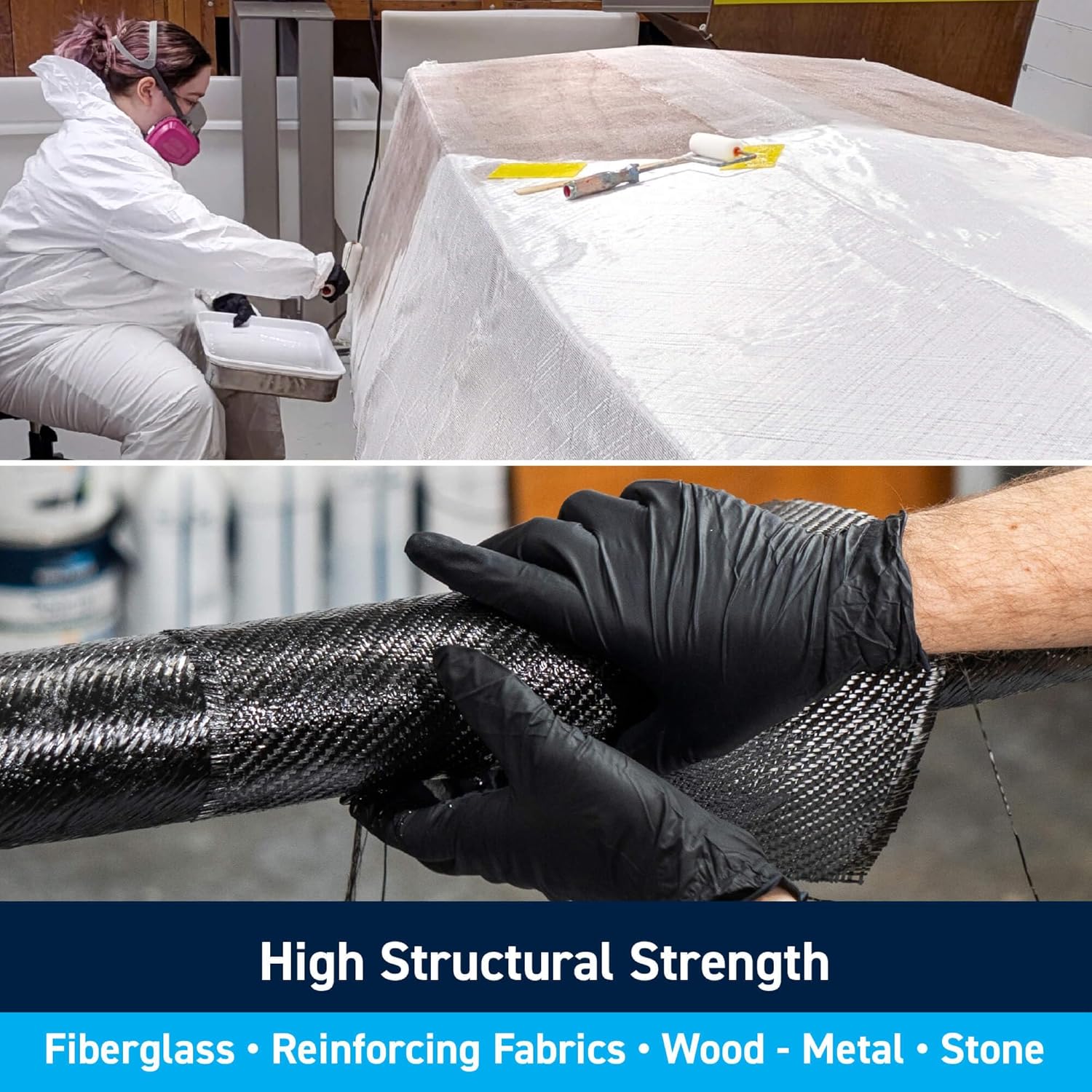
You mixed up a batch of epoxy — let’s say you’re glassing in a new floor section on a 28-foot cabin cruiser — and fifteen minutes in, the cup starts getting warm in your hand. You push through. Five minutes later, the mix is visibly thickening. You panic, rush the application, and end up with a ragged, resin-starved laminate that’ll need grinding back and redoing. Sound familiar? This is a pot life problem, and it’s one of the most common — and most preventable — mistakes in boat repair work.
Pot life is the window of time you have to use a mixed epoxy before it becomes too thick to apply properly. It’s controlled primarily by which hardener (the chemical activator you mix with the base resin) you choose, and by the temperature you’re working in. Pick a fast hardener on a hot summer day for a big pour, and you’ll race the clock. Pick a slow hardener on a cold morning for a small fill, and you’ll wait all day for a cure that barely happens. This guide is about making that call correctly — before you open the cans.
| EDITOR'S PICKTotalBoat 5:1 Marine Epoxy Resi… | Mid-tierWest System 105-B Epoxy Resin E… | Budget pickMAS Epoxies Marine Epoxy Resin… | |
|---|---|---|---|
| Mix ratio | 5:1 | — | 2:1 |
| Hardener speed | Slow | — | Medium |
| Container size | Gallon | — | 1.5-Quart |
| Includes pumps | — | — | ✓ |
| Includes cups | — | — | ✓ |
| Price | $135.99 | $108.20 | |
| See on Amazon → | See on Amazon → | See on Amazon → |
Why Hardener Speed Is the Most Consequential Choice You’ll Make
Most intermediate-level builders treat hardener selection as an afterthought — they grab whatever’s on the shelf, or default to the “standard” option without thinking about project scope or ambient temperature. The West System technical documentation (specifically the 105 Resin series TDS published by Gougeon Brothers) is unusually direct on this point: hardener choice should be driven by working time requirements first, then cure schedule, not the other way around.
Here’s why this matters practically:
Fast hardeners — West System 205, TotalBoat 5:1 Fast, MAS Fast — typically offer pot lives in the 9–12 minute range at 77°F (25°C) in a standard 4-oz mixed batch. They’re designed for small repairs, fast-tack applications, or cold-weather work where you need the cure to initiate aggressively.
Slow hardeners — West System 206, MAS Slow, TotalBoat 5:1 Slow — extend that window to 20–40+ minutes depending on temperature and batch size. They’re the right call for laminating multiple fiberglass layers, filling large voids, or any application requiring careful wet-out of a broad surface.
Medium hardeners — MAS Medium is the canonical example — sit in between and represent the most versatile option for moderate climates and mid-sized jobs.
The real trap: these windows shrink dramatically as temperature rises, and they collapse catastrophically when batch volume increases.
The Exotherm Problem — And Why It’s a Safety Issue, Not Just a Waste Issue
Here is the finding that deserves bold type in any article about epoxy pot life: exothermic reaction in a confined mass is a genuine fire and injury risk, not just an inconvenience.
Exotherm (the heat generated as epoxy cures) is self-reinforcing. Heat accelerates the cure reaction; accelerated cure generates more heat; more heat accelerates cure further. In a spread-out thin film — a laminate, a tabletop — this dissipates harmlessly and actually helps the cure. In a massed quantity sitting in a mixing cup or a deep pour, the heat has nowhere to go.
The documented risk level is significant. Owners of the TotalBoat 5:1 system have reported in aggregated reviews that reusing mixing cups — the kind of thrift that seems sensible in mid-project — can result in residual cured resin in the cup acting as a heat sink, causing a fresh batch to exotherm violently. One frequently cited owner account describes a third reuse of a mixing cup producing smoke and requiring the cup to be thrown into standing water to prevent ignition. The Epoxyworks newsletter, published by Gougeon Brothers (Issue 36, “Controlling Epoxy Exotherm”), documents cases of paper cups, plastic containers, and even cardboard spontaneously scorching from massed epoxy exotherm.
Practical rules to hard-code:
- Never reuse mixing cups. Spend the dollar.
- Never mix more than you can apply in half your rated pot life. The second half of the window is for application; the first half is your working cushion.
- If you’re doing a large fill, split into sequential small batches rather than one large mix.
- Use wide, shallow mixing vessels (roller trays, spread-out mixing boards) rather than tall, narrow cups for larger quantities — surface area dissipates heat.
- If a batch starts getting hot in your hands, set it down in an open area away from your work, any solvents, and your body. Don’t try to apply it.
Temperature Is a Hardener Multiplier — The Texas Example
Here’s a comparison that makes the core argument of this article concrete.
MAS Slow hardener drew a one-star review from a builder working in 80°F shop conditions who found the cure rate so sluggish that a single laminating layer couldn’t be completed before the next day — essentially defeating the multi-layer workflow they’d planned. At 80°F, slow hardener systems can have effective working times that feel indefinite, but the cure-to-next-coat window stretches out similarly, stalling production.
Contrast that with a documented account from a Texas-based builder using MAS Medium hardener in similar ambient conditions — the reviewer specifically praised the working time as well-matched to the job. At elevated temperatures, medium hardener behaves more like slow hardener does in a 65°F shop: the heat consumes some of that extended pot life window, landing you in the practical “sweet spot.”
The decision math:
| Ambient Temp | Recommended Hardener Speed | Expected Pot Life (4-oz batch) |
|---|---|---|
| Below 60°F | Fast | 15–20 min |
| 60–75°F | Medium | 20–30 min |
| 75–85°F | Slow | 20–35 min |
| Above 85°F | Slow + small batches | 12–25 min (caution zone) |
Values are representative across major marine systems; always verify against your specific resin/hardener TDS.
Per the MAS Epoxies Product Guide, pot life figures on data sheets are based on 77°F and standard 100g mixed mass — real-world deviation from those conditions can swing pot life by 30–50% in either direction.
Matching Hardener Speed to Job Type — A Decision Framework
If your job falls into one of these categories, here’s the read on hardener choice:
Small repairs and spot fills (under 50 sq. inches, single component): Fast hardener is appropriate and preferred. Quick cure means faster fair-and-sand cycles. The batch is small enough that exotherm risk is low. West System 205 Fast Hardener is the benchmark here — owners consistently report clean, low-odor cure in confined spaces, which makes it popular for interior repairs on production boats. That said, “confined space” doesn’t mean “no ventilation” — epoxy vapors require adequate airflow regardless of odor level, and the West System Gougeon Brothers technical documentation is explicit that respiratory protection is required during application.
Multi-layer fiberglass lamination: Do not use fast hardener for multi-layer laminating unless you’re working in near-freezing conditions. The goal in lamination is full wet-out of each layer before the resin starts to gel. Fast hardener gives you a narrow margin; any delay — a wrinkle, a stubborn cloth edge, a dropped squeegee — puts you past working time with layers still unsat. Slow hardener is the correct specification here. The Gougeon Brothers’ Boat Construction reference (fifth edition) covers this explicitly in the laminating schedule chapter: extended pot life is a structural quality issue, not just a convenience.
Large structural pours and void fills: This is the highest-risk category for exotherm. Use slow hardener, split into small sequential batches, and use wide mixing containers. If you’re filling a void deeper than ¾”, consider a purpose-formulated low-exotherm or pourable fairing compound rather than standard laminating epoxy.
One-off field repairs with an applicator system: This is where products like KwikWeld (a 5-minute steel-reinforced epoxy in a syringe format) earn their place. Reviewers specifically praise the syringe applicator for making 1:1 mixing essentially foolproof — the dual-barrel delivery handles ratio control automatically. That’s a meaningful contrast to 5:1 systems, where measuring discipline matters. Miss a 5:1 ratio by even 10%, and you get a tacky, under-cured surface that won’t sand clean. KwikWeld-style applicators eliminate that failure mode for small, fast repairs — they’re not a laminating tool, but for through-hull fittings, hardware backing plates, or a quick cleat repair at the dock, they’re worth having aboard.
Frequently Asked Questions
Can I use a fast hardener for laminating multiple layers of fiberglass? Only in cold conditions (below 55°F) where it behaves more like medium hardener. At normal shop temperatures, fast hardener doesn’t give you enough time to properly wet out successive layers, especially if you’re hand-laminating broad sections. The resulting laminate is structurally weaker due to dry spots and inter-laminar voids. Use slow hardener for multi-layer work.
What happens if I mix too large a batch of epoxy at once? The exotherm generated by the curing reaction accumulates in the mass rather than dissipating — the mix heats itself, accelerating the cure further. You get a dramatically shortened working time, a batch that’s often unusable within minutes, and a genuine risk of the container scorching, smoking, or igniting nearby materials. The documented owner account involving TotalBoat 5:1 and reused cups producing smoke is a real-world example of this failure mode. Mix smaller batches; it costs nothing except a minute of time.
How do I know if my mixing cups are safe for multiple uses? You don’t — and the safe answer is not to reuse them. Cured epoxy residue in a cup acts as an additional heat source for fresh batches. Single-use wax-free mixing cups are inexpensive enough that reuse creates a risk-reward imbalance that simply isn’t worth it. Discard after each use.
Does pot life change significantly between summer and winter work sessions? Yes — substantially. A slow hardener that gives you 35 minutes in a 65°F January shop may give you 15–18 minutes in an 85°F July boatyard. Per the TotalBoat 5:1 System TDS, pot life roughly halves for every 18°F (10°C) increase in temperature. Plan your hardener selection seasonally, not just by project type.
What is the actual difference between TotalBoat 5:1 Fast and Slow hardener for structural repairs? The 5:1 ratio is constant across both; what changes is the amine chemistry governing cure speed. The Fast hardener is formulated for short working time and fast initial cure — appropriate for cold weather or small, quick repairs. The Slow hardener extends open time for larger wet-outs and provides a more gradual heat release during cure, which matters in thicker sections. For structural repairs specifically — tabbing, keel fillets, bulkhead bonding — Slow is generally the safer specification because it gives you time to ensure full adhesive contact and correct positioning before the window closes.
The Decision Rule
If your project is small (under a square foot), your shop is cool, and you’re doing a single-component repair: fast hardener, small batch, move quickly.
If you’re laminating, fairing a broad surface, or working in warm conditions: slow hardener, multiple small batches, wide mixing vessel.
If you’re ever in doubt about which to choose, default to slow. A longer cure schedule costs you time. A massed exotherm or a resin-starved laminate costs you the repair.
Get the hardener right before you open the resin. Everything downstream depends on it.