August 25, 2026 • Carmen Reyes • 12 min reading time • Specs verified June 25, 2026
Fiberglass Repair Kits for First-Timers: Bondo, Polymer World, TotalBoat, and J-B Weld Compared on Real Jobs
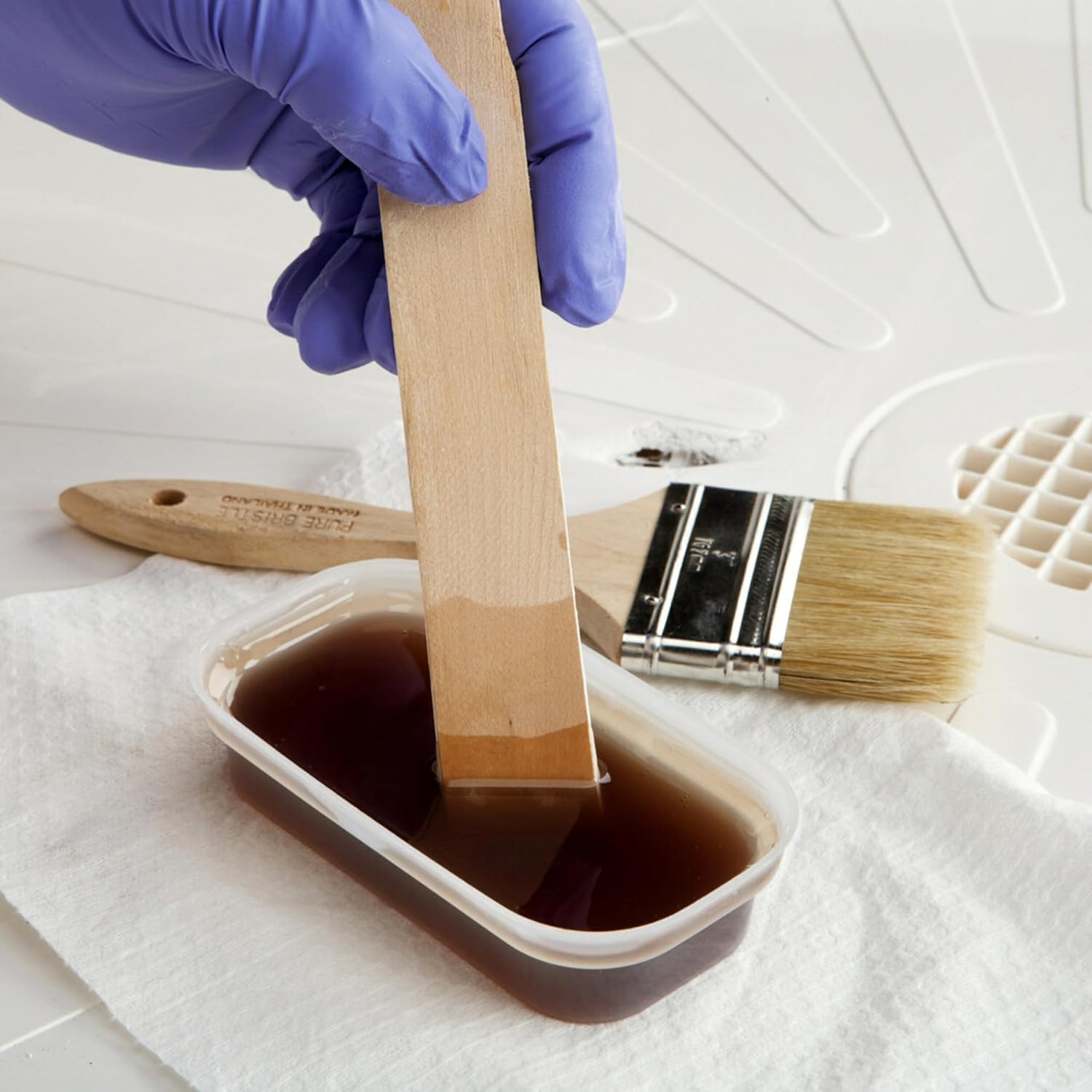
You’re staring at a soft spot in the hull — maybe a stress crack that let water migrate into the laminate over the winter, maybe a dock-rash gouge that punched through the gelcoat (the hard, glossy outer skin) down into the fiberglass (the woven glass-fiber structure underneath). Either way, you’ve decided to fix it yourself, and now you’re on a product page trying to figure out whether the $28 Bondo kit at the hardware store is the same thing as the $90 Polymer World roll or the mid-tier TotalBoat options your marina contact mentioned. They’re not the same. The resins, mat formats, hardener systems, and appropriate use cases differ in ways that will either save your weekend or ruin it. This article breaks down four kits that first- and intermediate-timers consistently land on — Bondo Fiberglass Resin, Polymer World fiberglass mat, TotalBoat Polyester Laminating Resin and TotalBoat 5:1 Epoxy, and J-B Weld Short-Strand Fiberglass Filler — comparing them on real patch jobs using published manufacturer specifications and coverage from recognized marine industry sources.
What You’re Actually Buying: Resin Types and Why They Matter
Every fiberglass repair kit contains two working components: a resin (the liquid binder that hardens into a rigid matrix) and a reinforcement (either woven or chopped glass mat, or pre-mixed short glass strands). The resin type determines chemical compatibility, cure behavior, sanding characteristics, and whether the repair is appropriate above or below the waterline.
Polyester resin — what Bondo Fiberglass Resin and TotalBoat Polyester Laminating Resin both use — is catalyzed by MEKP (methyl ethyl ketone peroxide), a separate liquid hardener added in small measured amounts. It is lower in cost, widely available, and bonds well to existing polyester hulls, which covers the vast majority of production fiberglass boats built from the 1960s onward. The tradeoff: polyester is slightly porous over time and is generally not recommended for below-waterline structural repairs without a barrier coat applied on top. The BoatUS Foundation’s Gelcoat and Fiberglass Repair Guide addresses this compatibility point and recommends an epoxy barrier coat over any polyester repair that will be submerged.
Epoxy resin — used in TotalBoat’s 5:1 system — bonds to almost any substrate, offers superior moisture resistance, and is the material of choice for structural work and below-waterline patches. It costs more and requires stricter mixing ratios measured by volume or weight. West Marine’s Fiberglass Repair Fundamentals guide characterizes epoxy’s moisture resistance as the primary reason it is preferred for any repair in sustained contact with water.
Short-strand filler — what J-B Weld’s fiberglass product is — is a thickened, trowel-applied compound containing chopped glass fibers. It is not a structural laminate but a fairing and filling material that bridges the gap between standard epoxy fairing filler and true laminate work.
Knowing which category your repair falls into narrows your kit choice before you ever read a single review.
Kit-by-Kit Breakdown
Bondo Fiberglass Resin Kit
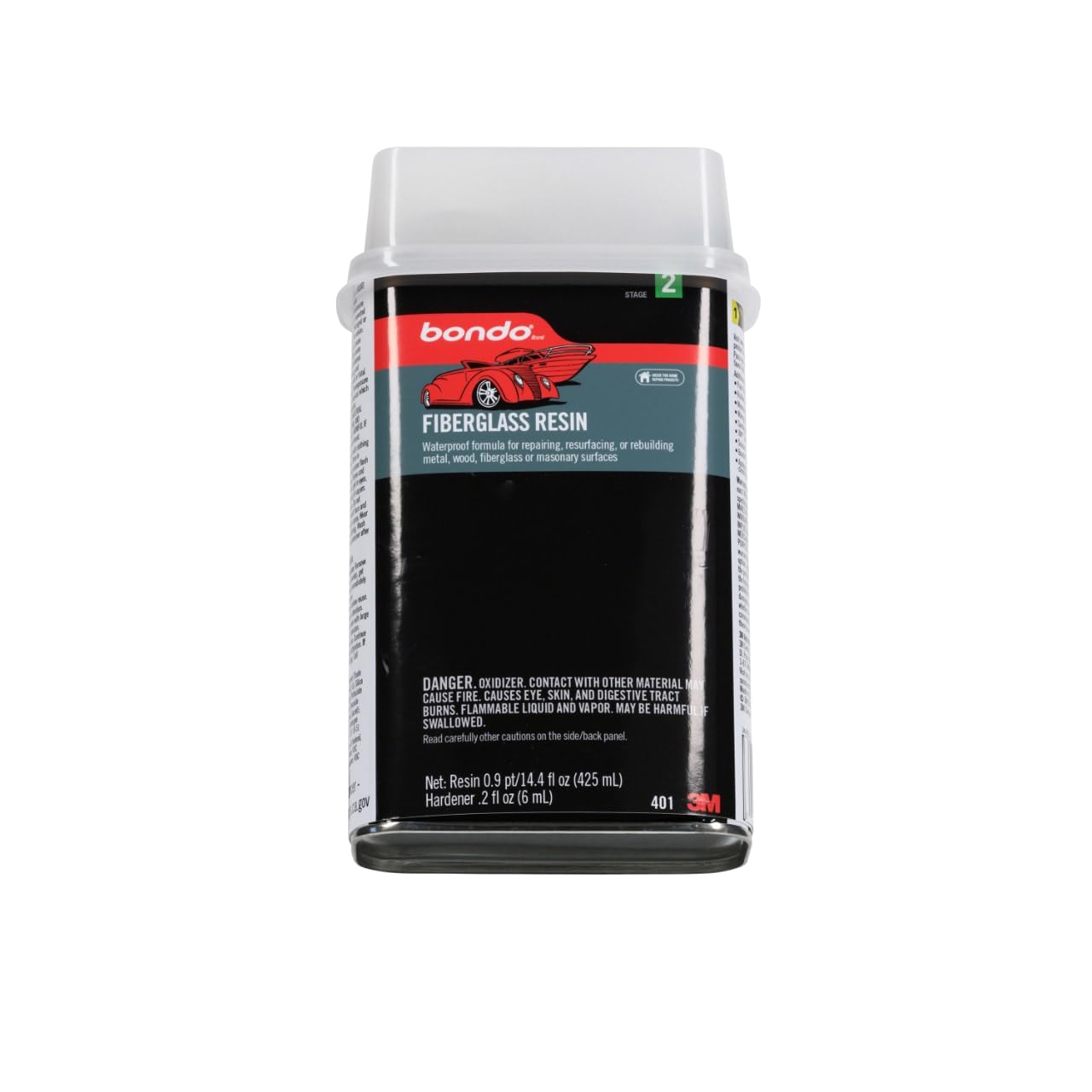
Bondo’s kit is the most accessible entry point — sold at hardware and auto-parts stores nationwide, not just marine suppliers. It includes polyester resin, MEKP hardener, fiberglass cloth, and basic application tools. The BoatUS Foundation’s Gelcoat and Fiberglass Repair Guide notes that polyester applied over an existing polyester hull is chemically compatible and appropriate for above-waterline cosmetic and structural patches.
What buyers consistently flag: the kit volume is calibrated for small repairs, yet people chronically over-estimate how much area they’re covering — or discover the opposite, that even a modest kit overwhelms a single 4×6-inch patch. A recurring pattern in aggregated purchaser feedback describes mixing more resin than the repair requires and wasting the remainder because polyester resin has a short pot life (the window of time before it gels and becomes unusable) once MEKP is added.
The usable lesson: pre-measure your repair area before opening anything. A 4×6-inch patch with two layers of cloth uses roughly 2–3 oz of mixed resin. Bondo’s kit ships with enough material for multiple small patches — don’t let that volume mislead you into mixing one large batch.
Where Bondo is not the right call: below the waterline without a follow-up epoxy barrier coat, and anywhere you need to feather into gelcoat for a cosmetic finish. The resin cures tacky on the surface by design — this is called an air-inhibited cure — and requires either a waxed finishing resin or a PVA release film applied as a final coat to achieve a sandable surface.
3M 401
$20.32
In stock on Amazon
Check price on AmazonPolymer World Fiberglass Mat (1.5 oz Chopped Strand)
Polymer World sells fiberglass reinforcement — typically chopped strand mat (CSM) in roll form — separately from resin. The product appears prominently in comparisons because buyers sourcing their own materials often land on it at a competitive price per yard.
The friction point: Polymer World’s mat frequently ships in 50-yard rolls or large cut quantities. Reviewers consistently note that managing a full roll for a single hull patch is unwieldy and generates significant waste. The single process discipline that experienced buyers document as most essential: pre-cut and stage all mat pieces before you open the resin can. Once resin is catalyzed, you have no time to fumble with scissors.
Chopped strand mat is held together with a styrene-soluble binder, which means it bonds chemically when wetted with polyester resin — the mat softens, conforms to hull contours, and the binder dissolves into the laminate. This is precisely why CSM does not work as well with epoxy resin: epoxy does not contain styrene, so the binder does not dissolve, and the mat resists wet-out (full resin saturation). Jamestown Distributors Boatbuilder Central’s technical overview of polyester versus epoxy resins addresses this compatibility point directly and recommends woven roving or biaxial cloth when working with epoxy systems.
Practical rule: pair Polymer World mat with a compatible polyester resin. If you’re working with epoxy, source woven roving or biaxial cloth instead.
3M 401
$20.32
In stock on Amazon
Check price on AmazonTotalBoat Polyester Laminating Resin
TotalBoat’s polyester system is a step up in documentation quality from Bondo — the product ships with clearer labeling, and TotalBoat’s published Technical Data Sheet for Polyester Laminating Resin with MEKP specifies hardener ratios by temperature range. Even so, buyers report confusion about ratio adjustments at different working temperatures, and the pattern from Jamestown Distributors Boatbuilder Central customer inquiries shows that MEKP ratio questions are among the most common support topics for polyester systems generally.
Here is the ratio framework drawn from TotalBoat’s published Technical Data Sheet, summarized for working reference:
| Temperature (°F) | MEKP % by volume | Approximate drops per oz of resin |
|---|---|---|
| 60–70°F | 2.0% | ~18 drops |
| 70–80°F | 1.5% | ~14 drops |
| 80–90°F | 1.0% | ~9 drops |
Lower temperatures slow the cure and extend pot life. Higher temperatures accelerate it and shorten pot life dangerously. Above 90°F, reduce the ratio further and work in the smallest practical batches. Practical Sailor’s coverage of fiberglass repair materials notes that at elevated temperatures, exothermic runaway — a rapid heat build-up inside the mixing pot — becomes a real risk with polyester systems as well as epoxy systems, and recommends working in the coolest part of the day when ambient temperatures climb above 85°F.
TotalBoat Polyester Laminating Resin is the right call for above-waterline structural patches on a polyester hull when you want better documentation and technical support than entry-level hardware-store kits provide.
Bondo
$34.25
In stock on Amazon
Check price on AmazonTotalBoat 5:1 Epoxy System
TotalBoat’s 5:1 epoxy (five parts resin to one part hardener, by volume) is a different material category than the polyester products above. It is appropriate for structural repairs, below-waterline patches, and any application where maximum moisture resistance is the goal.
The safety behavior that buyers document — and that Epoxyworks, West System’s technical publication, covers in their guide on exothermic reactions in epoxy — is critical for first-timers: do not mix large volumes in a single cup, and do not reuse a mixing container between batches. Epoxy curing is exothermic, meaning it generates heat as a byproduct of the chemical reaction. A small batch spread thinly across a hull surface dissipates that heat harmlessly. The same volume sitting concentrated in a cup builds heat rapidly, which accelerates the cure into a self-reinforcing feedback loop. Reviewers have reported mixing cups becoming hot enough to soften and deform. This is not a product defect; it is inherent chemistry that first-timers are especially vulnerable to because they tend to mix “enough for the whole job” in one go.
Correct practice per Epoxyworks guidance: mix batches of 4–6 oz maximum. Pour immediately onto the work surface. Never let mixed epoxy sit idle in a cup longer than 5–10 minutes. Use a fresh cup for every batch. West Marine’s Fiberglass Repair Fundamentals guide similarly emphasizes that epoxy’s superior moisture resistance makes it the preferred choice for any below-waterline repair where the laminate will be in sustained contact with water.

TotalBoat
$60.46
In stock on Amazon
Check price on AmazonJ-B Weld Short-Strand Fiberglass Filler
This product occupies a distinct niche: a trowel-applied, paste-consistency compound with chopped glass fibers mixed throughout. It is not a laminate system — you are not building structural thickness with it — but it outperforms standard polyester body filler in marine environments because the glass fibers resist cracking under flex and the cured material sands more cleanly.
Buyers uniformly report two things: it spreads more evenly than standard automotive-grade filler compounds, and it sands more easily with 80-grit paper without loading the abrasive. One documented buyer pattern is an immediate upgrade from the quart to the gallon size after a single use — people consistently underestimate how much surface area fairing work covers, particularly when feathering a patch repair into the surrounding hull.
When to use it: over a completed fiberglass laminate patch as a fairing layer before gelcoat or topside paint is applied, or for non-structural cosmetic repairs such as dings and gouges that did not penetrate the laminate layer. It is not a substitute for cloth and resin where structural integrity is the requirement.
Bondo
$34.25
In stock on Amazon
Check price on AmazonDecision Framework: If X, Then Y
This is the question buyers are actually trying to answer:
- Above-waterline, cosmetic gouge, budget matters: Bondo Fiberglass Resin kit. Pair with Bondo finishing resin (waxed) for a tack-free cure. Buy one size smaller than you think you need.
- Above-waterline, structural patch, polyester hull: TotalBoat Polyester Laminating Resin paired with Polymer World CSM mat. Pre-cut all cloth pieces before mixing anything. Follow the temperature-adjusted MEKP table above.
- Below-waterline or structural repair, maximum durability: TotalBoat 5:1 Epoxy paired with woven roving or biaxial cloth — not CSM, which will not wet out properly with epoxy per Jamestown Distributors Boatbuilder Central’s guidance. Mix in small batches only. Use a fresh cup for every batch.
- Fairing and finishing over a completed patch: J-B Weld Short-Strand Fiberglass Filler. Buy the gallon if you are doing more than one repair — the quart disappears fast.
- Mat sourcing only (you already have resin): Polymer World is cost-effective, but purchase a pre-cut quantity if available, or cut the full roll into working pieces before you open the resin can.
Frequently Asked Questions
How much fiberglass resin and mat do I actually need for a typical small hull repair? For a 4×6-inch patch with two layers of 1.5 oz CSM, budget roughly 3–4 oz of mixed resin. Most retail kits contain considerably more than this. West Marine’s Fiberglass Repair Fundamentals guide suggests approximately 1.5 oz of resin per square foot per layer as a practical baseline for planning purposes, making it straightforward to calculate material needs before you open anything.
What is the correct MEKP ratio for TotalBoat polyester laminating resin at different temperatures? Per TotalBoat’s published Technical Data Sheet for Polyester Laminating Resin with MEKP: approximately 2% MEKP at 60–70°F, 1.5% at 70–80°F, and 1% at 80–90°F. In practice this translates to roughly 9–18 drops per fluid ounce depending on temperature. When in doubt, Jamestown Distributors Boatbuilder Central’s technical resources are widely cited as a reliable reference for ratio-specific guidance on polyester systems.
Can I use Bondo Fiberglass Resin for an underwater repair, or only above the waterline? Bondo Fiberglass Resin uses polyester chemistry, which is porous enough over time to allow some moisture transmission. The BoatUS Foundation’s Gelcoat and Fiberglass Repair Guide recommends that polyester repairs below the waterline be followed with an epoxy barrier coat before antifouling paint is applied. For a single-material, below-waterline structural repair, an epoxy resin system such as TotalBoat 5:1 is the more conservative and durable choice.
What is the difference between short-strand fiberglass filler and laminating fiberglass mat, and when do I use each? Laminating mat — CSM or woven cloth — is the structural layer. It builds thickness, bonds to the hull substrate, and carries mechanical load. Short-strand filler such as J-B Weld’s product is a fairing compound that fills surface irregularities after the structural laminate work is complete. Use them in sequence: laminate first, fair second. Practical Sailor’s coverage of fiberglass repair materials describes this layering discipline as the most common process error first-timers make — applying filler over an unfinished laminate rather than waiting for full cure.
Why did my epoxy mixing cup get extremely hot — did I do something wrong? The behavior is not a defect but it does indicate a batch size problem. Epoxy curing is exothermic; heat is a normal byproduct. A thin layer spread across a hull surface dissipates that heat harmlessly. The same volume concentrated in a cup builds heat rapidly and accelerates the cure into a runaway feedback loop. Epoxyworks, West System’s technical publication on exothermic reactions in epoxy, identifies concentrated batch volume as the primary driver of this problem and recommends mixing no more than 4–6 oz at a time, pouring immediately onto the work surface, and using a fresh cup for every new batch.