July 24, 2026 • Carmen Reyes • 10 min reading time • Specs verified June 25, 2026
Hard vs. Ablative Bottom Paint: Choosing Right for Your Slip or Trailer Situation

You’re standing in the boatyard or scrolling through the bottom paint section of a chandlery website, and the choice keeps getting murkier the more you read. Two broad families dominate the shelf: hard antifouling paint — a dense, durable coating that stays put and releases biocide slowly from a fixed surface — and ablative antifouling paint — a softer coating that literally wears away over time, exposing fresh biocide as it erodes, like a slow-dissolving bar of soap. Both exist to keep barnacles, algae, and slime from colonizing your hull below the waterline. Even modest fouling — that greenish fuzz on neglected hulls — can cut fuel efficiency and boat speed meaningfully. Pick the right type and you’re set for seasons of low-maintenance protection. Pick the wrong one and you’ll either waste a perfectly good paint job by trailering, or you’ll find yourself sanding down a dangerously thick buildup of hard paint after a few years in a slip. This guide gives you the decision framework to avoid both mistakes.
How Each Paint Type Actually Works — and Why It Matters
The chemistry difference between hard and ablative paints isn’t academic; it drives the reason one type excels in one scenario and fails in the other.
Hard antifouling paints — sometimes called “hard modified epoxy” or “contact leaching” paints — cure to a tough, water-resistant film. Biocide, typically cuprous oxide in modern tin-free formulations, is embedded in that film and leaches outward through contact with seawater. The film itself does not erode. Flagship products in this category include Interlux Micron Extra and Pettit Trinidad SR. Because the film is durable, hard paints can be burnished — lightly wet-sanded smooth — to reduce drag, which is why racing sailors have historically favored them. They are also the logical choice if your boat sits on a trailer for months at a time: when the hull dries out, a hard paint simply waits. It doesn’t chalk, crack from drying, or bleed out its biocide reservoir the way ablatives can under repeated wet-dry cycling.
Ablative antifouling paints work on a controlled erosion model. As water flows over the hull — whether from the boat moving or from tidal currents in a slip — the outer layer wears away and exposes fresh biocide. The self-polishing subcategory, true copolymer paints such as Interlux Micron CSC or Pettit Ultima Eco, uses a chemical reaction with seawater to trigger that erosion, making the process more predictable than older “sloughing” ablatives. The practical upshot: ablatives self-regulate biocide delivery and don’t accumulate the dreaded “paint hockey puck” of layered coats over successive seasons. But they need water immersion to perform correctly. Dry a well-applied ablative on a trailer or in dry storage for an extended stretch, and the drying-and-rewetting cycle can cause micro-cracking and accelerated biocide loss before the hull ever touches fouled water again. Practical Sailor’s multi-year antifouling paint comparative review series has documented this pattern consistently, noting that ablatives perform best when the boat remains wet between uses.
A third family worth mentioning briefly: hybrid or “multi-season hard” paints — Pettit Horizons and Interlux Trilux 33 (formulated for aluminum boats) — sit somewhere between the two categories in erosion rate. They’re relevant for owners who want some of ablative’s no-buildup benefit with hard paint’s dry-storage tolerance, though they don’t fully replace either category’s core strengths.
The Slip vs. Trailer Decision
This is where most intermediate buyers go wrong: they choose a paint based on brand reputation or price-per-quart without anchoring that choice to their actual storage situation.
Slip-Kept Boats: Why Ablative Wins Long-Term
If your boat lives in a slip for six months or more continuously, ablative is almost always the better long-term choice — and the compounding logic backs it up.
Hard paints applied season after season produce cumulative buildup. Practical Sailor’s antifouling review series has noted that hard antifouling layers compound the way house paint does on old trim: after four or five seasons without stripping, you’re looking at a surface with adhesion problems, checking, and an increasingly uneven texture. Stripping a full hull down to barrier coat is a significant labor event — easily a full weekend of fairing work on a 30-footer, plus disposal costs for chemical stripper and heavy-metal-laden residue. The BoatUS Foundation’s consumer guidance document “Antifouling Paints and the Environment” explicitly identifies paint buildup as one of the primary drivers of unplanned haul-out costs for slip-kept owners.
Ablatives in a slip, by contrast, arrive at haulout thinner than when they went in. You can typically apply a fresh coat directly over the residual layer without building up a dangerous thickness. Cruising World’s refit feature coverage consistently describes this as the defining advantage for liveaboards and bluewater cruisers who cannot afford to schedule an annual strip-and-redo.
The tradeoff: ablatives don’t burnish. If you’re a performance sailor who wants to wet-sand to 400 grit before a race, an ablative is the wrong tool. You’ll sand away your active biocide layer and compromise protection for the season.
TotalBoat
$159.99
In stock on Amazon
Check price on AmazonTrailered Boats: Hard Paint as the Defensible Default
If your boat comes out of the water regularly — weekend warrior, tournament fisherman, or Great Lakes sailor who stores all winter — hard antifouling paint is the defensible default. A few qualifications apply.
Boats trailered after every outing that spend only brief windows in the water — a few days to a couple of weeks at a stretch — arguably don’t need biocidal antifouling at all in low-fouling freshwater environments. The West Marine Bottom Paint Buying Guide (Inspiration editorial) notes that freshwater boats can often get by with a quality barrier coat and a non-toxic hard paint like Trilux 33, skipping copper-based biocide entirely. For saltwater or brackish-water trailer boats that stay wet for stretches of two to four weeks, a hard paint gives consistent protection without the ablative’s wet-immersion dependency.
A secondary consideration for trailered boats: when you haul and load, the hull passes over bunks or rollers, which physically scrubs the bottom. Hard paints handle that abrasion without transferring soft, biocide-laden material onto your trailer hardware and bunk carpet the way softer ablatives can.
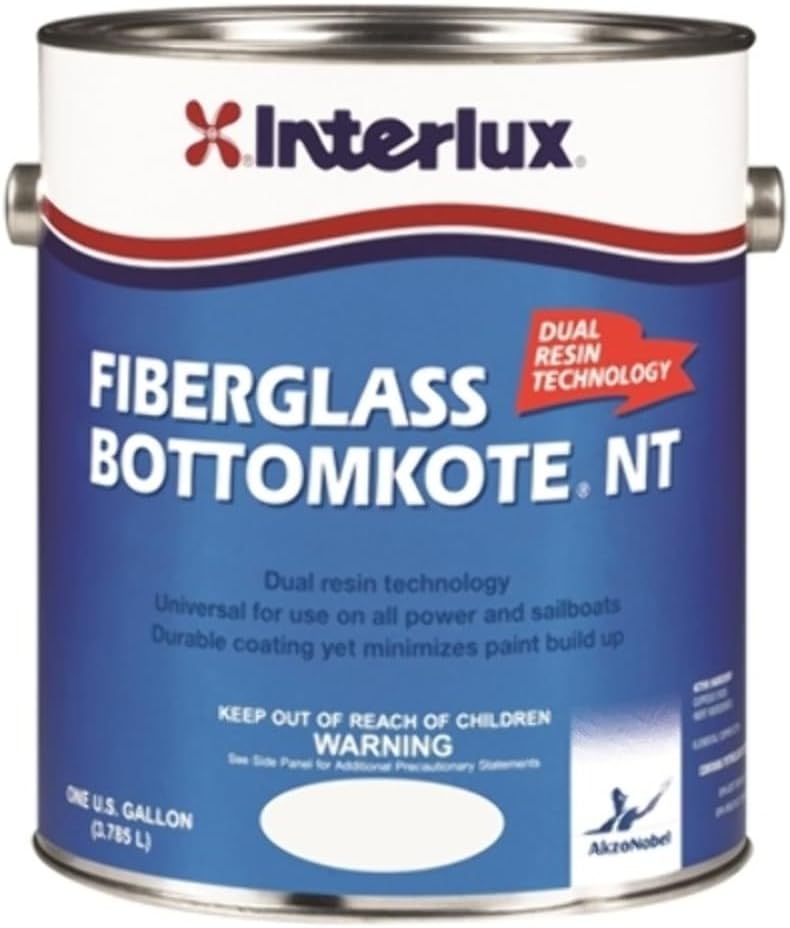
INTERLUX
$134.60
In stock on Amazon
Check price on AmazonYear-Round and Southern-Water Slips: High-Copper Ablatives
Boats kept in the water year-round in high-fouling zones — Gulf Coast, South Florida, Pacific Northwest inlets — face barnacle and grass pressure that entry-level ablatives can’t fully address. In these situations, a copolymer ablative with elevated copper loading (products in the Interlux Micron Extra or Pettit Trinidad SR class, or ablative equivalents from the same manufacturers at the professional tier) is the appropriate specification. Jamestown Distributors’ Boatbuilder Central editorial on bottom paint selection notes that copper loading — expressed as a percentage of cuprous oxide by weight — is the most direct lever on biocide delivery rate, and that owners in high-fouling zones consistently underestimate how much they need.
Annual or biannual recoat intervals apply in these environments regardless of paint family, but ablative chemistry still wins on buildup management over a five-year horizon.
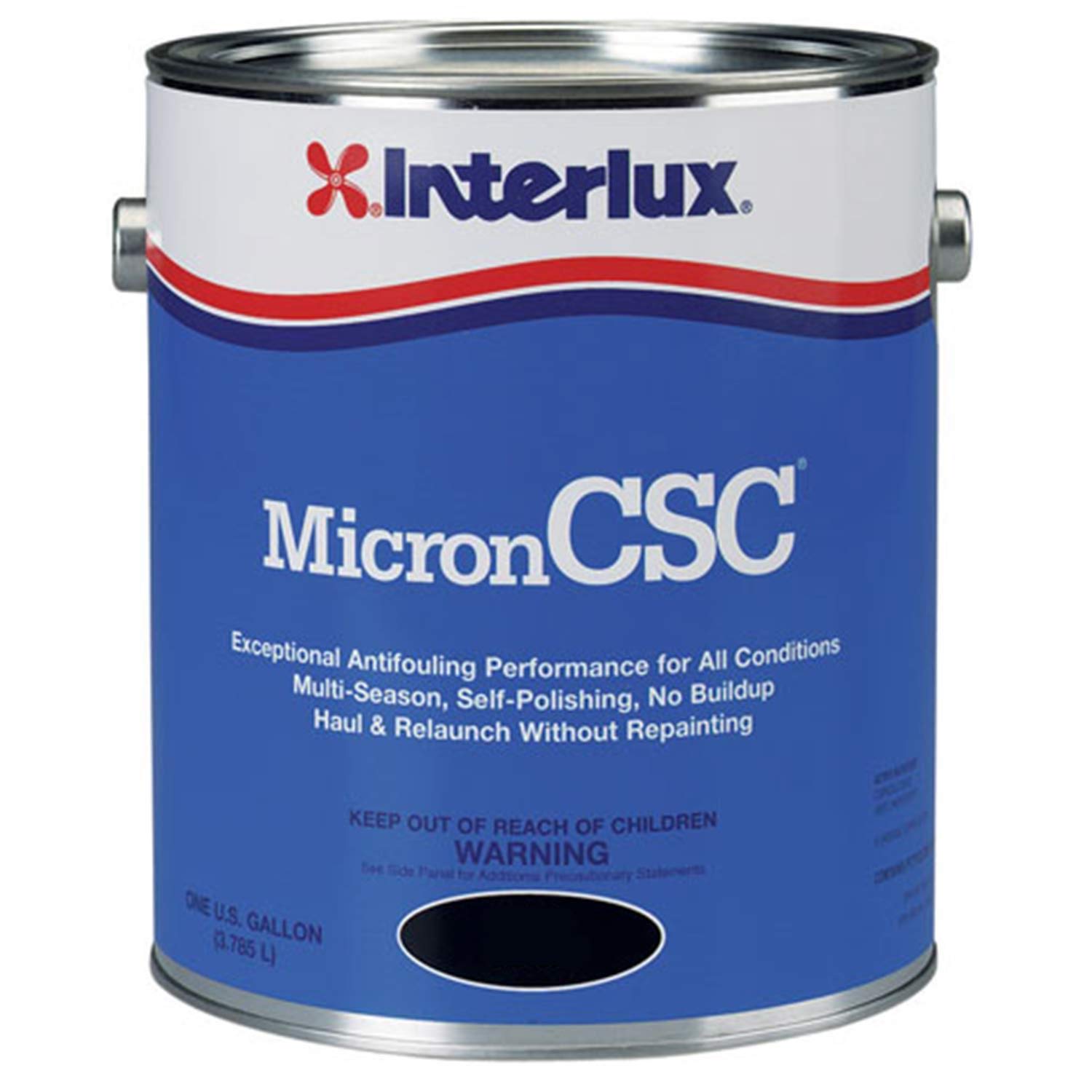
Interlux
$311.91
In stock on Amazon
Check price on AmazonProduct Tiers Worth Naming
Knowing the tier breakpoints prevents both overpaying and under-specifying. Prices below reflect published chandlery retail as of Q1–Q2 2026 from Defender, West Marine, and Jamestown Distributors; always verify current pricing and confirm gallon coverage rates against the manufacturer’s Technical Data Sheet before budgeting.
Budget Tier: Freshwater and Low-Fouling Trailered Applications
Approximate range: $50–$100 per gallon
Rust-Oleum Marine and TotalBoat Alumaprotect serve trailered or freshwater boats well when fouling pressure is modest. These hard or hard-modified formulations are adequate for seasonal use in low-salinity environments where the boat dries between outings. Don’t expect them to hold up against the barnacle pressure of a Florida or Pacific Northwest slip; that’s not what they’re engineered for.
INTERLUX
$134.60
In stock on Amazon
Check price on AmazonMid Tier: Serious Slip Owners and Active Saltwater Trailers
Approximate range: $100–$175 per gallon
Pettit Trinidad SR (hard), Pettit Ultima Eco (ablative copolymer), and Interlux Micron CSC are where the serious slip-keeper conversation starts. Jamestown Distributors’ Boatbuilder Central notes that Micron CSC’s copolymer self-polishing chemistry is one of the most consistent performers in its category over long-run application cycles. Owners report multi-season protection without dramatic buildup penalties when recoat intervals are followed and the boat stays wet. For trailered saltwater boats, Trinidad SR’s hard film tolerates the bunk-scrubbing abuse of repeated haul cycles without losing structural integrity.
TotalBoat
$159.99
In stock on Amazon
Check price on AmazonPremium Tier: Bluewater, Extended-Passage, and High-Fouling-Zone Boats
Approximate range: $175–$250+ per gallon
Awlgrip Awlstar Gold Label and Interlux Micron Extra represent the upper register for offshore and extended-passage boats where haulout opportunity is limited and biocide longevity needs to hold across 18–24-month cycles. These systems are applied over properly prepared epoxy barrier coats — Interlux 2000E or a comparable two-part epoxy system — not over bare gelcoat. Cruising World’s refit coverage underscores that cutting corners on barrier coat preparation under a premium antifouling is one of the most common and costly mistakes in a bluewater refit. The materials investment in a premium antifouling is wasted if the barrier coat beneath it isn’t sound.
Interlux
$311.91
In stock on Amazon
Check price on AmazonCompatibility, Barriers, and the One Mistake That Costs You the Hull
Even experienced practitioners get caught by this: not all antifouling paints are compatible with all substrates or previous coatings. Switching from a hard paint to an ablative — or vice versa — on a hull that already carries multiple existing layers requires a compatibility check or a full strip. Mixing paint families without that check can cause delamination during the following season, often at the worst possible time.
The manufacturer Technical Data Sheet (TDS) is not optional reading here. Interlux, Pettit, and Awlgrip all publish TDS documents that explicitly list “apply over” and “do not apply over” guidance. Interlux’s published TDS for Micron CSC, for example, specifies that the product should not be applied directly over hard epoxy antifouling systems without either barrier coat isolation or mechanical removal of the existing hard paint. This is not boilerplate — it’s the kind of instruction that, ignored, produces a peeling hull at the start of your season.
The BoatUS Foundation’s “Antifouling Paints and the Environment” guidance also flags regulatory variation by region: copper-based antifoulings are banned or restricted in Washington State, certain California coastal zones, and other jurisdictions, with those restrictions continuing to expand as of 2025–2026. If you’re operating in regulated waters, verify your state’s current environmental agency rules before specifying any high-copper-content product — regardless of how well it performs in Practical Sailor’s shootout coverage.
The Decision Rule
If you’ve read this far, here is the condensed framework:
- Boat in a slip for more than six months continuously → ablative copolymer, mid-tier or above, sized to your fouling zone’s pressure. Pettit Ultima Eco and Interlux Micron CSC are well-documented starting points at the serious-owner tier.
- Trailer regularly or store dry for more than four to six weeks → hard antifouling or barrier coat only, depending on water type and fouling pressure. Don’t pay for premium ablative you’ll dry out between uses.
- Switching paint families on a hull with existing layers → strip or isolate with barrier coat first. Verify TDS compatibility before you buy, not after you’ve rolled it on.
- Operating in a copper-restriction zone → confirm your state’s current rules before specifying anything with cuprous oxide. The regulatory environment has tightened since 2024 and the category is still moving.
The most expensive bottom paint mistake isn’t buying the wrong brand. It’s buying the right brand for the wrong storage situation — and spending a haul-out season undoing it.