July 22, 2026 • Carmen Reyes • 10 min reading time • Specs verified June 25, 2026
Marine Epoxy Adhesives for Structural Repairs: G/flex, MarineWeld, and PC-11 Compared
You’re mid-project — maybe a keel-stepped mast partner that flexes more than it should, or a transom bracket that’s been leaking at the bond line for two seasons — and you’ve narrowed it down to three products sitting in your cart: West System G/flex 650, J-B Weld MarineWeld, and PC-11. All three are two-part epoxy adhesives, meaning a resin and a hardener that chemically cross-link into a rigid or semi-rigid bond when mixed. Unlike polyurethane sealants or construction adhesive, epoxy adhesives form a mechanical-and-chemical connection with the substrate — the material you’re bonding to — which is why they’re the go-to for structural repairs where the bond needs to carry real load. The problem is that “marine epoxy” is not one thing. Flexibility, working time, water resistance, and gap-filling ability vary enormously between these three, and choosing wrong doesn’t just waste $30 — it means redoing a repair that’s now buried under paint or hardware.
This article breaks down the tradeoffs so you can match the product to your specific scenario.
The Core Tradeoff: Flexibility vs. Strength vs. Convenience
Before going product by product, it’s worth naming the central engineering tension in marine adhesive selection.
Rigid epoxies — described in materials engineering as high modulus, meaning high stiffness and high resistance to deformation under load — deliver maximum tensile strength (resistance to being pulled apart) but transfer stress directly to the bond line. In a marine environment where hulls flex, temperature cycles run wide, and dissimilar materials like aluminum, fiberglass, teak, and bronze are often bonded together, a rigid bond can peel or crack before the substrate does.
Flexible or toughened epoxies accept more elongation (stretching before failure) and distribute stress across a wider area. They sacrifice some compressive strength for peel resistance and impact resistance — the two failure modes that actually dominate boat repairs over time.
Convenience-focused products trade some structural performance for reduced prep burden and easier working conditions — useful in a field repair where setting up a metered pump system isn’t realistic.
All three products sit in different places on that triangle. The H3 sections below treat each product independently, then a decision framework ties the comparison together.
Product-by-Product Analysis
West System G/flex 650: The Benchmark for Structural Flexibility
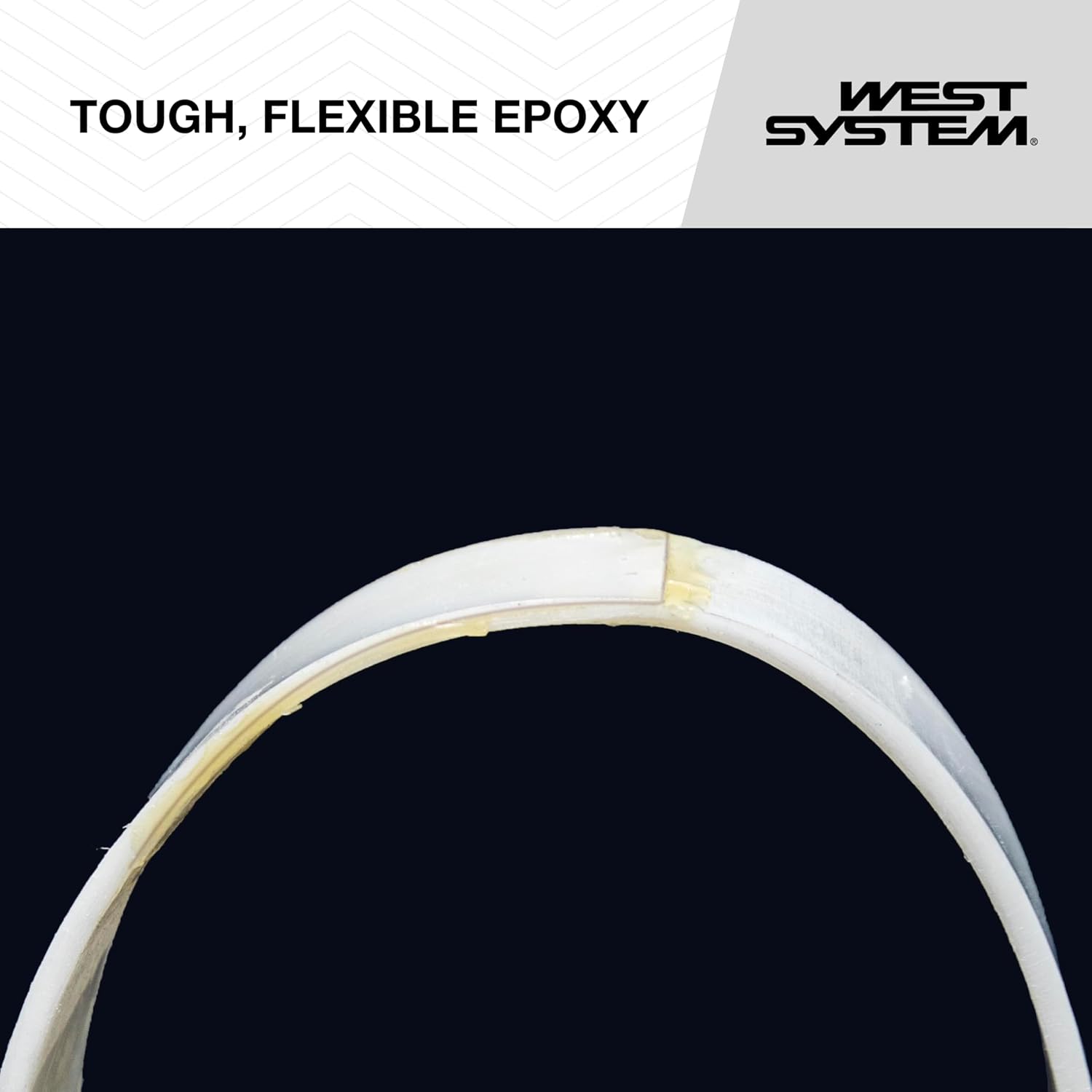
G/flex is West System’s toughened epoxy line, developed and documented by Gougeon Brothers, the Michigan-based manufacturer behind the West System brand. It is available in two viscosities — a liquid (650-L) and a thickened paste (650-K) — both at a 1:1 mix ratio by volume, which eliminates the metering error common with standard West System 105/205 or 105/206 formulations that run 5:1.
Published specs worth knowing:
Per the West System G/flex 650 Technical Data Sheet published by Gougeon Brothers:
- Tensile strength: approximately 3,620 psi
- Elongation at break: approximately 19% — that is the flexibility number; conventional marine epoxies typically sit at 2–4%
- Shore D hardness (cured): approximately 55, noticeably softer than standard West System 105 which runs around 83
- Working time at 72°F: roughly 40 minutes for the 650-K paste variant
Where it wins: Epoxyworks Issue 38, published by Gougeon Brothers and available at epoxyworks.com, documents G/flex’s performance bonding to wet, oily, or lightly contaminated surfaces — a real-world concession that most epoxies refuse to make. That issue also reports improved peel strength and impact resistance over conventional rigid formulations, which matters when a keel bolt backing plate or chainplate block experiences cyclical loading. The Gougeon engineering team explains in that same issue why elongation-at-break is a more meaningful predictor of long-term marine bond performance than tensile strength alone — a counterintuitive point that headline specs on most product packaging obscure entirely.
Practical Sailor’s epoxy adhesive comparison testing, published at practicalsailor.com, placed G/flex consistently high for bonds to dissimilar materials — specifically aluminum-to-fiberglass and teak-to-fiberglass scenarios endemic to bluewater-era production boats from the 1970s and 80s. Owners across multiple seasons report successful use for through-hull fitting beds, rubrail reattachment, and portlight frame bonding where a rigid product had previously failed by peeling.
Where it doesn’t win: G/flex is not a gap filler without modification. The 650-K paste has some body, but for a joint with real voids you’ll need to add West System 406 colloidal silica or 404 high-density filler — which means working a three-component system. Cost is also higher: as of mid-2026, the 32-oz kit runs in the $55–$70 range at major chandleries, with Jamestown Distributors and Defender typically running $5–$10 lower than West Marine counter pricing on the same kit.
Best-fit scenario: Structural bonds on flexing substrates. Keel-to-hull joint reinforcement. Any repair where dissimilar materials or residual moisture contamination are unavoidable.
WEST
$27.90
In stock on Amazon
Check price on AmazonJ-B Weld MarineWeld: The Accessible Workhorse
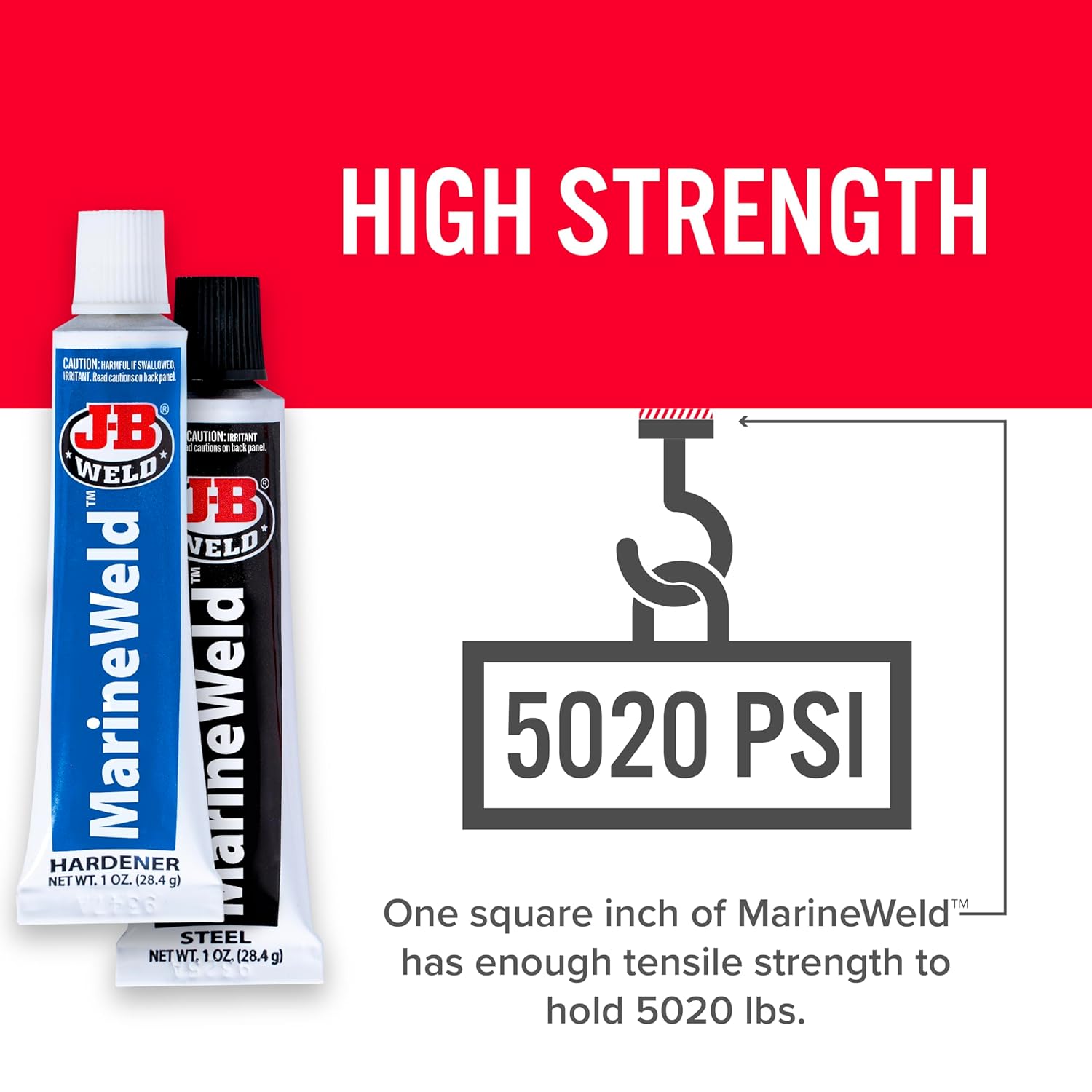
MarineWeld is J-B Weld’s marine-specific formulation, sold in standard dual-syringe packaging at a 1:1 mix ratio. It is the most widely available of the three — stocked at West Marine, hardware chains, and most chandleries — and the lowest barrier-to-entry option at roughly $8–$15 for a standard syringe.
Published specs per J-B Weld’s published product data for MarineWeld:
- Tensile strength: 3,900 psi
- Elongation: not prominently published; the formulation is significantly more rigid than G/flex
- Full cure time: 15–24 hours at room temperature; working time approximately 15–20 minutes
- Temperature resistance (cured): rated to 300°F, which exceeds most marine application requirements
Where it wins: MarineWeld’s strength-by-the-numbers is respectable for its price point, and ubiquity is genuinely valuable for emergency or field repairs. BoatUS guidance on structural adhesive selection, available at boatus.com, acknowledges this category of product for non-primary-structural, non-load-bearing repairs where accessibility matters more than optimized mechanical performance. If you are on a passage and a bracket fails, finding J-B Weld in a regional hardware store is realistic.
Owners consistently report success with MarineWeld for small hardware bonds — transducer mounts, grab handle backing plates, non-structural interior trim — where the joint is not the primary load path. The paste consistency straight from the syringe is useful for vertical surfaces without modification.
Where it doesn’t win: The rigidity is a liability in high-flex applications. Owners who have used it on rubrail bonding or transom hardware on older GRP (glass-reinforced plastic, i.e., fiberglass) hulls report bond-line cracking over two to three seasons — the classic failure mode of a high-modulus adhesive on a substrate that moves. The working time is short enough that large or complex bonds become stressful.
The Jamestown Distributors Boatbuilder Central Epoxy Selection Guide, published at jamestowndistributors.com/boatbuilder-central, notes that peel strength — the relevant figure for most delaminating or peeling failures — does not scale linearly with tensile strength, which is a reminder that a high tensile number does not automatically mean a product is appropriate for high-flex structural work.
Best-fit scenario: Spot repairs, non-structural hardware bonding, emergency field repairs. Good value at entry price. Not the right call for primary structural applications on a flexing hull section.
J-B
$7.29
In stock on Amazon
Check price on AmazonPC-11: The Marine-Specific Paste for Wet and Underwater Work
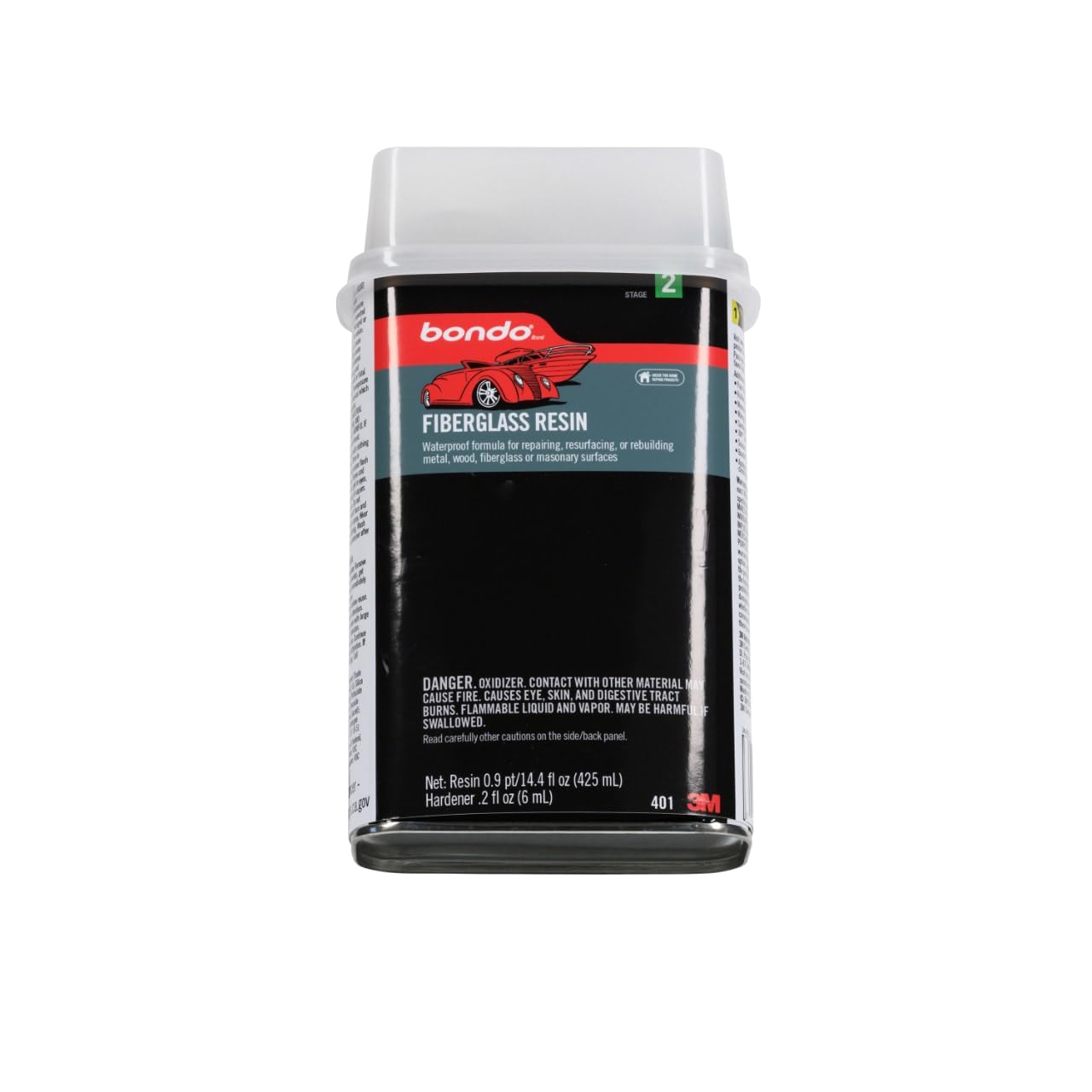
PC-11 is made by Industrial Formulators and is specifically formulated for below-waterline and wet-condition bonding. It is a white two-part paste with a 1:1 mix ratio and one notably unusual credential: it will cure underwater and adheres to wet surfaces without the surface-prep steps that other epoxies require.
Published specs per the PC Products PC-11 Technical Data Sheet, published by Industrial Formulators:
- Tensile strength: approximately 2,200 psi — the lowest of the three products in this comparison
- Working time: approximately 30 minutes
- Full cure: 4 days at room temperature; slower in cold or submerged conditions
- Water resistance: rated for continuous immersion
Where it wins: PC-11 is the only product in this comparison genuinely engineered for wet-surface and underwater application. The PC Products PC-11 Technical Data Sheet explicitly documents this use case; the other two products require dry, clean, ideally solvent-wiped substrates for full bond strength. For a below-waterline through-hull repair where the substrate is still cold and slightly damp, PC-11’s tolerance for those conditions is a real engineering advantage, not just marketing copy. Owners consistently report reliable results for keel-bolt compound bedding repairs and for bonding lead ballast sections where haul-out time is limited.
Where it doesn’t win: The lower tensile strength matters if the joint is load-bearing. PC-11 is a paste that fills gaps and tolerates wet surfaces — it is not the right product for a structural bond that will see cyclic tension, such as a chainplate backing plate under sailing loads. The slower cure rate of four days to full strength also means longer downtime compared to the other two options.
Best-fit scenario: Below-waterline repairs, wet-surface conditions, lead or bronze bonding where other epoxies would require extended surface prep. Secondary structural applications only.
3M 401
$20.32
In stock on Amazon
Check price on AmazonSide-by-Side Specs
| Product | Tensile Strength | Elongation | Working Time | Approx. Price (32 oz equiv.) |
|---|---|---|---|---|
| West System G/flex 650 WEST — $27.90 | ~3,620 psi | ~19% | ~40 min | $55–$70 |
| PC-11 3M 401 — $20.32 | ~2,200 psi | Moderate | ~30 min | $25–$40 |
| J-B Weld MarineWeld J-B — $7.29 | ~3,900 psi | Low (unpublished) | ~15–20 min | $8–$15 (syringe) |
Tensile strength figures sourced from respective manufacturer technical data sheets. Price ranges reflect mid-2026 chandlery retail.
Decision Framework: If X, Then Y
Here is the decision logic in plain form.
If your repair involves a flexing hull section, dissimilar materials, or any area that sees impact loads — outboard bracket, rubrail, keel flange, portlight frame — use G/flex 650. The 19% elongation figure documented in the West System G/flex 650 Technical Data Sheet, published by Gougeon Brothers, is doing real mechanical work that the other two products cannot replicate. Budget the additional cost, add a filler if you need more body, and do it once correctly.
If you need a spot repair on non-structural hardware or you’re doing a field repair with limited access to marine chandlery — MarineWeld is the rational choice. It is strong, widely available, and for a grab handle backing plate or a bilge pump mount it is sufficient. Do not use it anywhere that flexes cyclically.
If you’re working below the waterline or your substrate is wet and cannot be fully dried — PC-11 is the only rational choice among these three. Accept the lower tensile ceiling; that is the engineering tradeoff for wet-surface adhesion. If the joint also needs to carry primary structural load, evaluate whether the surface can be dried and whether switching to G/flex is feasible before committing.
A Note on Sourcing and Price
As of mid-2026, West Marine’s retail pricing on G/flex remains the least competitive of the major online chandleries. Jamestown Distributors Boatbuilder Central and Defender both typically run $5–$10 lower on the 32-oz G/flex kit, and both have historically run seasonal epoxy promotions aligned with spring haul-out windows. If G/flex is the right call for your project — and for most structural repairs on a flexing hull, it is — sourcing through one of those two channels rather than paying West Marine counter pricing is worth a few minutes of comparison shopping.
For readers who want to go deeper on the chemistry of toughened epoxies before committing to a product, Epoxyworks Issue 38 from Gougeon Brothers, available at epoxyworks.com, remains the most authoritative freely available resource on the subject. The case it makes — that elongation-at-break, not tensile strength, is the number that predicts real-world marine bond longevity — is the single most useful reframe this comparison can offer anyone who has watched a “strong” adhesive peel off a hull after one season.