September 19, 2026 • Carmen Reyes • 10 min reading time • Specs verified June 25, 2026
Epoxy Repair on Fiberglass, Snowmobiles, Surfboards, and RV Roofs: When Marine Products Cross Over
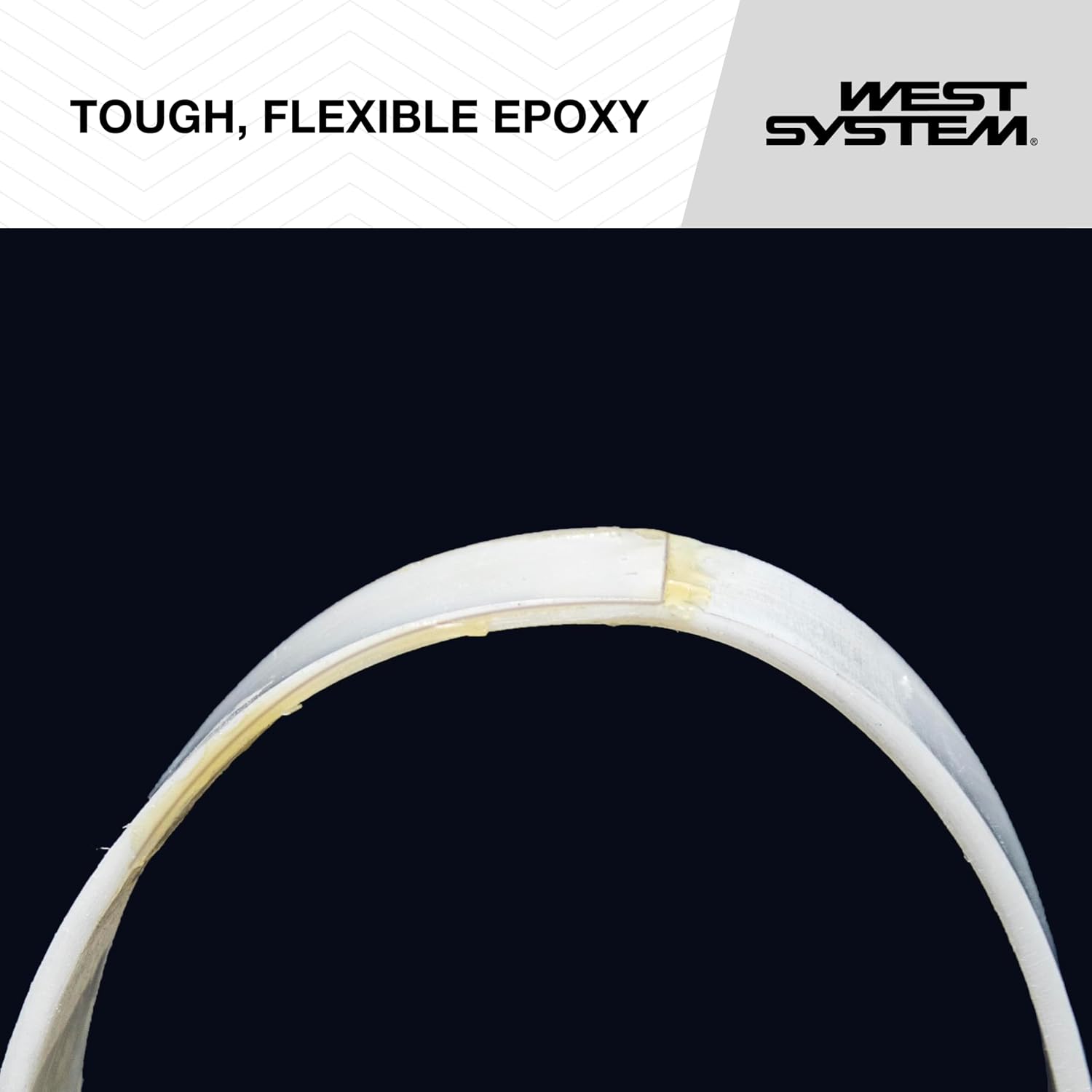
You finally get around to patching the long crack along the nose of your snowmobile hood, and halfway through the project you realize the two-part epoxy sitting on your shop shelf is the same West System 105 resin you used to glass in a deck fitting last summer. So you use it — and it works. That scenario plays out in garages, surf shacks, and RV parks across the country every season, and it’s not an accident. Marine epoxy — a two-part adhesive system (Part A resin + Part B hardener that chemically cross-link into a hard, waterproof solid) — was engineered for an environment far more punishing than most household repairs. Salt water, UV exposure, thermal cycling, and vibration are a marine product’s baseline. Everything else is easier by comparison. This article breaks down which marine epoxy systems cross over cleanly into non-marine applications, where the tradeoffs live, and what safety and technique mistakes you genuinely need to avoid — pulled from aggregated reviewer data, manufacturer technical data sheets (TDS), and published editorial analysis.
| EDITOR'S PICKTotalBoat 5:1 Marine Epoxy Resi… | Mid-tierG/FLEX EPOXY QT KIT G/Flex Epoxy | Budget pickWEST SYSTEM G/flex Epoxy (2- 4o… | |
|---|---|---|---|
| Container size | 1 gal resin | 2 × 16 oz | 2 × 4 oz |
| Mix ratio | 5:1 | — | — |
| Cure speed | Slow | — | — |
| Flexibility | — | ✓ | ✓ |
| Brand line | TotalBoat | G/Flex | G/flex |
| Kit components | Resin + hardener | Two bottles | Two units |
| Price | $135.99 | $89.90 | $27.90 |
| See on Amazon → | See on Amazon → | See on Amazon → |
Why Marine Epoxy Outperforms Hardware-Store Alternatives on Crossover Jobs
The short version: marine epoxy systems are formulated to bond to difficult substrates — cured fiberglass, polyethylene, wet wood — with minimal surface prep forgiveness built in. That engineering translates directly to snowmobile hoods (ABS and fiberglass composite), RV roofs (EPDM rubber membrane or fiberglass-reinforced plastic), and surfboards (polyurethane or EPS foam cores wrapped in fiberglass).
Hardware-store epoxy adhesives — the two-syringe blister packs — are fine for small furniture repairs. But they typically cap out at 3,000–4,000 psi tensile strength and have minimal elongation before fracture. Marine systems like West System 105/206 publish tensile strength figures around 7,000–8,000 psi (per Gougeon Brothers’ 105 Product Guide), and G/flex is specifically engineered for 150% elongation before failure, per Practical Sailor’s flexible epoxy comparison. For repairs on objects that flex, vibrate, or see thermal expansion — an RV roof in full sun, a snowmobile hood over a running engine, a surfboard under repeated impact — that engineering margin matters.
By the numbers:
| System | Tensile Strength (published) | Elongation at Break | Best Crossover Use |
|---|---|---|---|
| West System 105/206 | ~7,000–8,000 psi | ~4% | Rigid fiberglass, RV roofs, laminate repairs |
| TotalBoat 5:1 | ~6,500–7,200 psi | ~3–5% | General purpose, surfboard laminates |
| G/flex 650 | ~3,200 psi | ~150% | Snowmobile ABS, canoes, ceramics, plastic repair |
The tradeoff is explicit: G/flex sacrifices tensile strength for flexibility. On a rigid structural repair — say, a large delaminated section of an RV roof panel — you want West System or TotalBoat. On a plastic component that flexes under load, G/flex’s flexibility is the feature you’re buying.
The Exothermic Cup-Melt Warning: TotalBoat 5:1 and Reused Mixing Vessels
This is the safety section, and it’s worth reading slowly. Across aggregated reviewer data for TotalBoat 5:1 epoxy — compiled by Jamestown Distributors’ TotalBoat product FAQ and reflected in buyer reviews — one scenario surfaces repeatedly and without prompting: reusing mixing cups between batches caused the mixed epoxy to superheat, smoke heavily, and in documented cases require emergency water dousing to prevent a fire.
Here is the chemistry behind it. Epoxy curing is an exothermic reaction — it releases heat as the resin and hardener cross-link. That heat is manageable in thin film applications (spreading it out over a surface dissipates heat quickly). But when residual mixed epoxy remains in a cup and you pour a fresh batch on top of it, the still-reacting residue acts as a catalyst accelerant. The cup walls — typically thin polypropylene or plastic — have no thermal mass to absorb the spike. Temperatures can exceed 400°F inside the cup within minutes, generating toxic fumes and causing structural failure of the mixing vessel.
The rule is simple and non-negotiable: always use a fresh, clean mixing cup for each batch. Do not reuse cups with any residual epoxy. Do not mix a new batch into a cup that held a previous batch, even if the previous batch appears gelled. Per TotalBoat’s published safety guidance at Jamestown Distributors, pour each fresh batch into a new cup, and immediately spread mixed epoxy onto your work surface rather than letting it sit in the cup building heat. A cup of mixed epoxy that sits unused for five minutes in warm conditions is already generating enough heat to shorten pot life (the working time before the epoxy becomes too viscous to use) significantly.
This warning applies across all epoxy systems — not only TotalBoat — but TotalBoat 5:1 reviewers flag it more consistently than others, possibly because the 5:1 mix ratio (5 parts resin to 1 part hardener by volume) makes partial-cup reuse seem intuitive. It is not.
Choosing Hardener Speed: The Decision That Wastes the Most Full Work Days
MAS Epoxy buyers surface a recurring frustration in long-run reviews: selecting slow hardener without fully calculating how ambient temperature affects cure time. One documented buyer scenario — pulling from aggregated review data — involved an 80°F shop, a single-layer application, and a slow hardener selection that extended the cure to four-plus hours before the surface could be touched. An entire work day blocked for a repair that should have been a morning task.
Hardener speed is not a product quality indicator — it is a temperature-matched variable. Here is the decision frame:
Temperature vs. hardener selection:
- Below 60°F: Use fast hardener. Slow hardener at cold temperatures can require 24–48 hours to reach working hardness, and may never achieve full cure if temperatures drop further.
- 60–75°F: Medium hardener is the default. Pot life runs roughly 20–30 minutes at this range for most systems (West System 205 Fast runs about 9–12 minutes; 206 Slow runs 20–25 minutes at 72°F, per the Gougeon Brothers 105 Product Guide).
- 75–90°F: Slow hardener. At 80°F, fast hardener can kick (begin curing) in under 8 minutes in the cup, which is enough time to mix but not enough time to apply on anything larger than a small patch.
- Above 90°F: Either work in early morning / late evening with slow hardener, or accept that epoxy work in full-sun outdoor conditions is high-risk regardless of hardener selection.
The practical math: epoxy reaction rate roughly doubles for every 18°F increase in temperature. A batch with a 25-minute pot life at 70°F becomes approximately a 12-minute batch at 88°F. If you are repairing an RV roof in May at 85°F ambient, and the roof surface temperature is 110°F in the sun, slow hardener and shade are not optional — they are the only path to a usable working window.
Per Epoxyworks newsletter No. 54 (Gougeon Brothers), the single largest cause of failed epoxy repairs among first-time-to-intermediate users is ambient temperature miscalculation, not product selection.
Vertical Surfaces and the Partial-Gelation Technique
West System 105/206 reviewers reliably note one practical problem: the resin’s low viscosity causes it to run on vertical surfaces — hull sides, RV end walls, snowmobile body panels standing upright on a workbench. The product TDS acknowledges this. What most instructions do not spell out clearly is the practitioner solution.
The technique, documented across Epoxyworks guidance and confirmed in Practical Sailor’s epoxy coverage, is partial gelation before vertical application. Mix your batch, pour it into a fresh cup, and allow it to sit on the workbench — not on your vertical surface — for 3–5 minutes depending on ambient temperature. As the epoxy begins its exothermic cycle, viscosity increases. When it reaches a consistency roughly like warm honey (it will feel slightly resistant on a stir stick, not water-thin), apply it to the vertical surface. It will still wet out and bond properly but will not sag or run.
The risk window here: if you wait too long, the epoxy skins over and will not bond adequately. You are looking for the narrow window between runny and beginning-to-skin. In a 70°F shop with 206 slow hardener, that window is approximately the 4–7 minute mark after mixing. Practice with a small test batch before committing to your actual repair surface.
For surfboard repairs — which often involve vertical or curved surfaces with thin laminate schedules — this technique combined with peel ply (a release fabric pressed into wet epoxy to produce a clean, bondable surface without sanding) is the standard approach documented by WoodenBoat’s composite repair guidance.
G/flex vs. Rigid Epoxy: Knowing Which Substrate Needs Which Chemistry
G/flex 650 reviewers who repair canoes, snowboards, and ceramics consistently credit one variable above all others for bond success: surface preparation, not product selection. Per Practical Sailor’s flexible epoxy comparison, G/flex bonds to polyethylene — a notoriously difficult plastic that most adhesives will not stick to — when the surface is first flame-treated or abraded with 80-grit sandpaper. Without that step, even G/flex underperforms.
The chemistry distinction matters for crossover decisions:
- Rigid epoxy (West System 105, TotalBoat 5:1, MAS Epoxy): Cross-links into a hard thermoset solid. Excellent for structural repairs, laminate work, and filling voids. Will crack if applied to a substrate that flexes significantly in service.
- G/flex: Cross-links into a semi-flexible thermoset. Designed for substrates that see mechanical flex — plastic canoe hulls, snowmobile body panels, the rubber membrane layer on EPDM RV roofs. On a repair that will flex in use, G/flex’s lower tensile strength is not a liability; it is the mechanism that prevents crack propagation.
The decision rule: if you can flex the repair substrate by hand and see meaningful deflection, use G/flex or a flexible marine epoxy equivalent. If the substrate is rigid (cured fiberglass panel, rigid foam sandwich, solid wood), standard marine epoxy delivers superior structural performance.
Frequently Asked Questions
Can I use marine epoxy to repair an RV or camper roof? Yes, and it is often the best available option. For fiberglass-reinforced plastic (FRP) roofs, West System 105 or TotalBoat 5:1 with appropriate fiberglass cloth handles delamination, cracks, and void fills effectively. For EPDM rubber membrane roofs, G/flex is the correct chemistry — rigid epoxy will not bond reliably to rubber and will crack at the repair boundary as the membrane moves thermally.
Is it safe to reuse mixing cups between batches of TotalBoat 5:1 epoxy? No. Do not reuse mixing cups under any circumstances. Residual curing epoxy in a cup accelerates the reaction in a fresh batch, generating temperatures that can melt the cup, produce toxic smoke, and create a fire risk. Per TotalBoat’s published safety documentation at Jamestown Distributors, always use a fresh cup for each new batch.
How do I choose between slow, medium, and fast hardener for my ambient temperature? Match hardener speed to temperature: fast hardener below 60°F, medium from 60–75°F, slow from 75–90°F. Above 90°F ambient (or on a hot surface in direct sun), schedule epoxy work for early morning. Per Gougeon Brothers’ published guidance, reaction rate approximately doubles per 18°F temperature increase.
Why does epoxy run on vertical surfaces and how do I prevent it? Low-viscosity epoxy is formulated to wet out porous substrates quickly — that property becomes a liability on vertical surfaces. The solution is partial gelation: mix your batch, wait 3–7 minutes in the cup until viscosity increases to a honey-like consistency, then apply to the vertical surface. You retain full bond strength while eliminating sag and runs.
What is the difference between G/flex flexibility and standard rigid marine epoxy? Standard marine epoxy cures rigid (roughly 3–5% elongation before fracture). G/flex cures with approximately 150% elongation, meaning it stretches significantly before cracking. Use G/flex on substrates that flex in service — plastic panels, rubber membranes, canoe hulls. Use rigid epoxy on structural repairs where maximum strength is the priority.
Can West System 105 resin be used with different brands of hardener? Gougeon Brothers explicitly recommends using West System 105 only with West System hardeners (205, 206, 207, 209). Cross-brand mixing introduces unvalidated mix ratios and unknown reactivity profiles — the resulting cure may be incomplete, under-strength, or unpredictably exothermic. Stick to matched systems from a single manufacturer for any structural repair.