October 22, 2026 • Carmen Reyes • 11 min reading time • Specs verified June 25, 2026
TotalTread vs. Tuff Coat on Surfaces That Aren't Boats: Diving Boards, Bus Roofs, and Docks
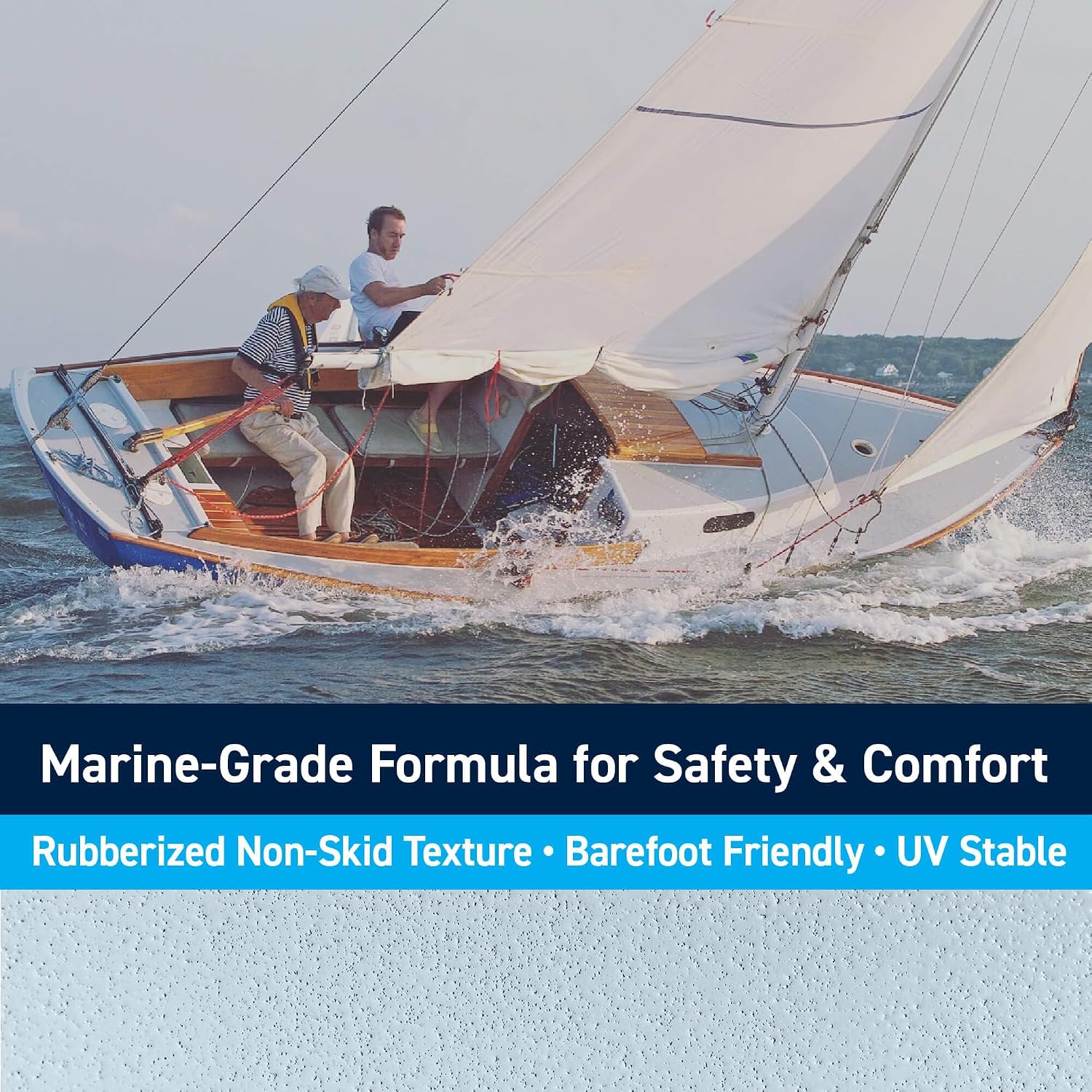
You’ve got a fiberglass diving board that’s become a slip-and-fall liability, an aluminum jon boat floor as slick as a bathtub when wet, or a school bus roof that needs a UV-resistant topcoat rated for something tougher than hardware-store latex. You’ve done some digging and landed on two products that keep appearing in the same searches: TotalTread and Tuff Coat. Both are marketed as marine non-skid coatings — designed to give boat decks grip even when soaked in saltwater — but an increasingly large population of buyers is reaching for them on surfaces that have never seen a marina. This article is for that buyer. We’ll walk through what the real-world application record says about off-label performance, where prep shortcuts get punished, and which coating makes more sense for your specific surface — diving board, dock, trailer roof, or otherwise. We’ll also look at how marine epoxy primers and standard alternatives stack up as the foundation layer beneath either product.
| EDITOR'S PICKTotalBoat TotalProtect Epoxy Ba… | Mid-tierTotalBoat TotalTread Non-Skid D… | Budget pickRust-Oleum 396969 Marine Coatin… | |
|---|---|---|---|
| Size | 1 gal (128 fl oz) | 1 qt (32 fl oz) | 1 qt |
| Product type | Epoxy barrier coat | Non-skid deck paint | Primer |
| Non-skid texture | — | ✓ | — |
| Intended surfaces | — | Boats, wood, fiberglass, aluminum, metals | Wood, fiberglass |
| Brand | TotalBoat | TotalBoat | Rust-Oleum |
| Price | $139.99 | $51.99 | $43.65 |
| See on Amazon → | See on Amazon → | See on Amazon → |
Why Marine Non-Skid Coatings Are Showing Up Everywhere
Marine coatings are overbuilt for most surfaces — that’s exactly the point. A deck paint rated to survive salt spray, UV radiation, standing water, and foot traffic across a 40-foot cruising sailboat is going to handle a residential dock or a diving board with room to spare, at least in theory.
The two products that dominate this crossover conversation are TotalBoat TotalTread (a water-based, rubber-aggregate non-skid deck paint) and Tuff Coat WT-202 (a two-component urethane rubber coating with a distinctive texture). They share a job description — add grip to a wet, trafficked surface — but they are built differently, apply differently, and fail differently when prep isn’t right.
A quick vocab note before we go further: “Non-skid aggregate” refers to the gritty particles — rubber, sand, or polymer beads — suspended in the coating that create surface texture. “Two-component” or “2K” means the product requires mixing a base and a hardener before application. You have a working window once mixed, and you cannot put the lid back on for later. TotalTread is a single-component (one-part) paint. Tuff Coat WT-202 is a two-component system. That distinction matters enormously for prep logistics, especially on non-marine surfaces where you may not have a spray tent or a helper standing by.
According to the Jamestown Distributors Boatbuilder Central technical resource library, single-component water-based coatings like TotalTread are generally more forgiving of application conditions — humidity tolerance is wider, dry time is predictable, and there is no pot-life clock running. Two-component urethane systems cure harder and resist chemical attack more effectively, but demand precise mixing ratios and controlled conditions.
Head-to-Head: Three Surfaces, Three Tiers
The most useful way to compare these two coatings for off-label use is to follow them onto the specific surfaces where buyers actually deploy them. The performance profile shifts meaningfully depending on substrate, environment, and traffic load.
H3: Aluminum Docks and Jon Boat Floors — Where TotalTread Earns Its Keep

Rust-Oleum
$43.65
In stock on Amazon
Check price on AmazonAluminum is a friendlier substrate for single-component water-based coatings than glossy fiberglass, provided you remove grease and surface oxidation first. Buyers who applied TotalTread to aluminum jon boat floors with proper degreasing — a solvent wipe, thorough dry time, and in most cases a light mechanical scuff — consistently report excellent adhesion and grip that holds through a full boating season.
TotalTread’s published coverage rate, per the TotalBoat TotalTread Non-Skid Deck Paint technical data sheet (Jamestown Distributors, 2025), is approximately 300–400 square feet per gallon at a single coat. A 12-foot aluminum jon boat floor typically runs 30–40 square feet of actual deck surface. One quart is more than adequate for two coats with material remaining.
For a residential aluminum dock — grated sections, ladder treads, finger pier boards — TotalTread applied over a clean, scuffed surface holds up well to the combination of freshwater splash, foot traffic, and moderate UV load. It is not the most chemically resistant coating in this comparison, but for freshwater dock environments that do not involve pool chemicals, its performance-to-cost ratio is strong. Single-component application means no mixing logistics, no pot-life anxiety, and easy touchup of worn areas in subsequent seasons.
Best for: Aluminum docks, aluminum jon boat floors, trailer deck surfaces in freshwater environments where budget and application ease are primary constraints.
Rust-Oleum
$43.65
In stock on Amazon
Check price on AmazonH3: Fiberglass Diving Boards and Pool-Adjacent Surfaces — Where Urethane Chemistry Pulls Ahead
TotalBoat
$51.99
In stock on Amazon
Check price on AmazonFiberglass is notoriously difficult for paint adhesion without mechanical abrasion or chemical etching, because its smooth, cured surface gives coating almost nothing to bond to. Buyers who applied TotalTread to fiberglass diving boards after only a pressure wash — no sanding, no etching, no primer — reported satisfactory grip through a pool season while explicitly noting that more prep would have been ideal. That is the honest version of a success story: it worked, but in spite of the shortcuts, not because of them.
Tuff Coat WT-202 performs more reliably on pool-adjacent fiberglass once properly prepared, for two reasons. First, its urethane rubber chemistry resists chlorinated water better than single-component water-based binders — a meaningful advantage when the coating is exposed to pool splash, chemical drift, and direct UV daily. Second, the cured film is harder and more abrasion-resistant, which matters on a diving board that flexes under load and gets repeated wet foot traffic.
The critical caveat with Tuff Coat WT-202 on any surface is mixing. The rubber aggregate in the can settles hard to the bottom during shipping and storage. Hand-stirring does not fully re-suspend it. Per the Tuff Coat WT-202 technical data sheet and application guide (Springfield Marine, 2024), thorough mixing is listed as a critical prep step — the manufacturer explicitly calls for a mechanical paddle mixer. Buyers who skip this step and apply straight from a hand-stirred can report lumpy, uneven texture and grip that falls well short of the product’s capability. The fix: use a paddle mixer on a variable-speed drill for a minimum of two to three minutes, scraping the bottom of the can, before any pour or brush work.
On glossy fiberglass, both products benefit from a tie-coat or adhesion primer. Tuff Coat’s application guide indicates direct adhesion to properly prepared aluminum is often acceptable without primer, but fiberglass — especially gel-coated surfaces — warrants the extra step.
Per Practical Sailor’s aggregated non-skid coating coverage (Practical Sailor, “Non-Skid Paint Showdown,” testing archive), the honest expectation for a marine non-skid coating on a chlorinated fiberglass diving board under regular use is two to four seasons before meaningful grip loss or peeling begins. Thorough prep extends that range; shortcuts compress it.
Best for: Fiberglass diving boards, fiberglass dock sections, pool surrounds, and any surface where chlorine exposure and UV load demand urethane chemistry’s higher chemical resistance.
TotalBoat
$51.99
In stock on Amazon
Check price on AmazonH3: Bus Roofs, Trailer Roofs, and Year-Round Outdoor Surfaces — The Primer Decision
TotalBoat
$139.99
In stock on Amazon
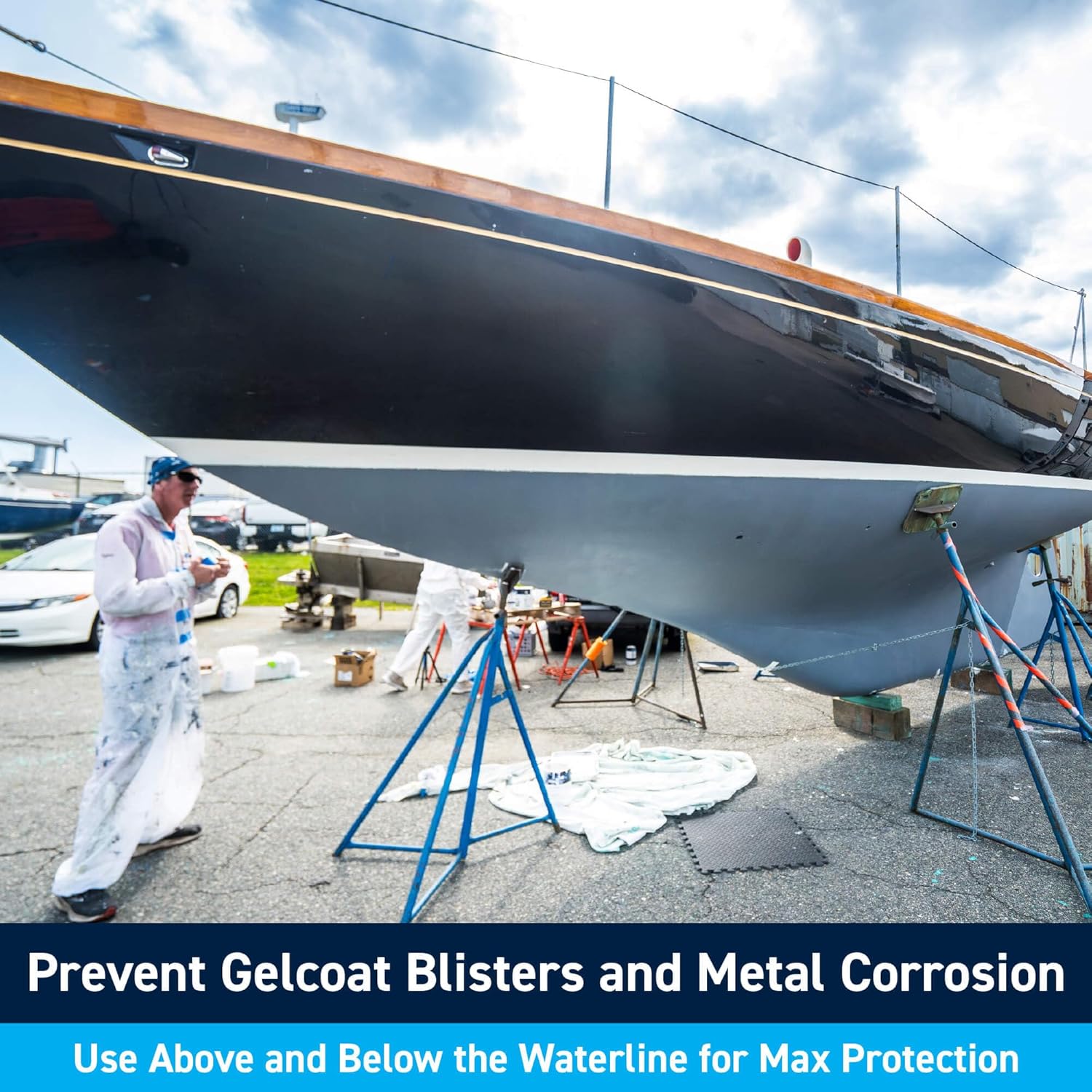
Check price on AmazonAmong the more notable off-label applications in the TotalBoat product family is documented buyer use of TotalProtect Epoxy Barrier Coat (TotalBoat / Jamestown Distributors, 2025) as a primer on a school bus roof, specifically chosen for marine-grade UV resistance under a non-skid topcoat. The buyer’s stated rationale — “buy once, cry once” — acknowledges that marine epoxy primers are substantially more expensive per gallon than standard alternatives, but are formulated to resist the prolonged UV exposure, thermal cycling, and moisture intrusion that causes standard primers to chalk, peel, and fail in a few seasons on a surface that lives outside year-round.
For a bus roof or trailer roof that will never see shade, the math can work in marine primer’s favor once you factor in recoat labor. A standard primer that fails in three seasons versus a marine epoxy primer that holds for six or seven seasons represents real money when labor is included.
The credible budget alternative is Rust-Oleum Wood and Fiberglass Primer (Rust-Oleum Corporation, 2024), which buyers on non-marine surfaces including pressure-treated fencing and trailer decks consistently report for strong adhesion and fast dry time. It is a well-reviewed base coat for non-immersion surfaces and costs a fraction of a marine epoxy system. The honest decision frame: if the surface is exposed to standing water, chemical splash, or prolonged UV without shade, marine primer’s durability premium is defensible. If it is a shaded dock surface or a light-duty interior, standard primers are adequate.
Either TotalTread or Tuff Coat WT-202 can serve as the topcoat over a properly cured marine epoxy primer on a roof surface. TotalTread is simpler to apply in field conditions where mixing logistics are a constraint. Tuff Coat’s harder cure resists the kind of abrasion that comes from equipment being slid across a trailer roof during loading.
According to the Jamestown Distributors Boatbuilder Central technical guidance on epoxy primer systems, epoxy barrier coats applied over properly prepared substrates require scuffing between coats and a defined recoat window — exceeding that window means re-sanding to restore mechanical bond before the topcoat goes on. On a large flat roof surface this is easy to manage; don’t let the primer sit ungoverned for weeks before you apply the non-skid topcoat.
Best for: Bus roofs, cargo trailer roofs, van roofs, and any large flat surface with year-round UV exposure where coating failure means a full removal and restart.
TotalBoat
$139.99
In stock on Amazon
Check price on AmazonThe Primer Question Deserves Its Own Moment
Every surface in this guide benefits from thoughtful primer selection, and the right answer is not always the most expensive one. Here is the decision logic compressed:
Marine epoxy primer (TotalProtect Epoxy Barrier Coat or equivalent): Justified for surfaces with prolonged UV, thermal cycling, or moisture exposure. Costs more. Lasts longer. Recommended by TotalBoat / Jamestown Distributors technical guidance for surfaces requiring maximum adhesion life.
Rust-Oleum Wood and Fiberglass Primer: A well-documented, cost-effective alternative for non-immersion surfaces. Fast dry time. Strong adhesion on wood, fiberglass, and properly prepared aluminum. Appropriate for shaded or light-duty applications where marine-grade chemistry is not strictly necessary.
The epoxyworks.com technical archive (Gougeon Brothers, published technical notes on epoxy adhesion to fiberglass) reinforces a point that applies regardless of primer choice: surface cleanliness and mechanical abrasion are more determinative of adhesion success than which primer you select. The best primer on a greasy, glossy surface will fail; a budget primer on a properly scuffed, solvent-wiped surface will hold.
Frequently Asked Questions
Can TotalTread be used on a fiberglass diving board? Yes, with proper prep. Mechanical scuffing with 80–120 grit sandpaper and a solvent wipe before application is strongly recommended. Glossy fiberglass gives paint almost nothing to grip without surface preparation. Per the TotalBoat TotalTread technical data sheet (Jamestown Distributors, 2025), adhesion to smooth, unprepared fiberglass is not guaranteed.
Does Tuff Coat WT-202 require a primer on aluminum or fiberglass? On cleaned and degreased aluminum, the Tuff Coat WT-202 application guide (Springfield Marine, 2024) indicates direct application is often acceptable. On fiberglass, especially glossy or gel-coated surfaces, a tie-coat or adhesion primer is recommended to prevent delamination.
Why does Tuff Coat look wrong when I open the can, and how do I fix it? The rubber aggregate settles to the bottom during shipping and storage. Use a paddle mixer on a variable-speed drill for a minimum of two to three minutes, scraping the bottom of the can, before applying. Per the Tuff Coat WT-202 application guide (Springfield Marine, 2024), this step is listed as critical and is the most common source of poor results when skipped.
How much TotalTread do I need for a 12-foot aluminum boat floor? Per the TotalBoat TotalTread technical data sheet (Jamestown Distributors, 2025), coverage is approximately 300–400 square feet per gallon. A typical 12-foot jon boat floor is 30–40 square feet. One quart provides two full coats with material remaining.
Is marine epoxy primer worth it on a bus roof or trailer? If the surface faces prolonged UV, thermal cycling, and moisture year-round, the TotalProtect Epoxy Barrier Coat (TotalBoat / Jamestown Distributors, 2025) is a defensible investment. For shaded or light-duty surfaces, Rust-Oleum Wood and Fiberglass Primer (Rust-Oleum Corporation, 2024) is a cost-effective alternative.
How long do marine non-skid coatings last on a diving board? Based on aggregated non-skid coating durability data in Practical Sailor’s “Non-Skid Paint Showdown” testing archive, expect two to four seasons of meaningful grip under regular use in a chlorinated pool environment. Thorough prep extends that range; shortcuts compress it.
The Decision Frame
Aluminum surfaces (dock, jon boat floor, trailer deck): TotalTread with proper degreasing is well-documented, straightforward, and single-component. One quart covers most small surface areas. Start here unless chemical resistance is a primary concern.
Fiberglass surfaces (diving board, fiberglass dock section): Both products can work, but neither belongs on bare, glossy fiberglass without mechanical prep and a primer coat. Tuff Coat WT-202’s urethane chemistry handles pool chemistry better long-term. TotalTread is more forgiving of application conditions and easier to touchup.
Roof surfaces (bus, trailer, van): Marine epoxy primer before any topcoat is the premium option for surfaces that live outside year-round. Rust-Oleum Wood and Fiberglass Primer is the honest budget alternative for non-immersion applications. Either TotalTread or Tuff Coat WT-202 can serve as the non-skid topcoat above either primer.
If you open your Tuff Coat and it looks wrong: Mix it with a drill paddle before concluding the product is defective. Improper mixing accounts for the majority of application complaints in the documented record for this product, per the Tuff Coat WT-202 application guide (Springfield Marine, 2024).