August 4, 2026 • Carmen Reyes • 9 min reading time • Specs verified June 25, 2026
Non-Skid Deck Coatings for Serious Refits: TotalTread, Tuff Coat, and Durabak Compared
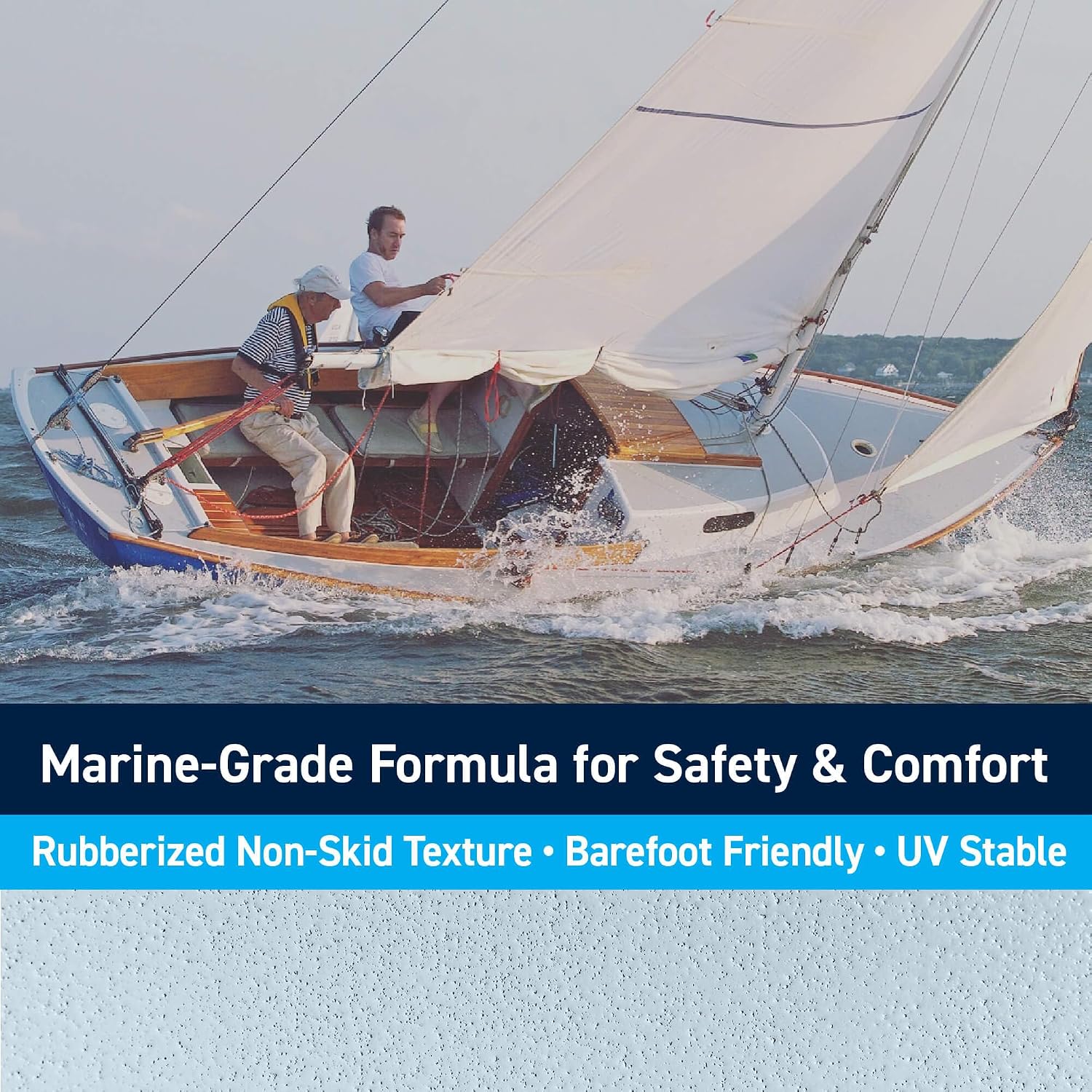
You’re three-quarters of the way through a serious deck refit — new teak seams stripped, old non-skid pattern ground back to bare gelcoat, the whole foredeck looking like a blank canvas — and now you’re staring at three very different product options trying to figure out which one won’t send you back to square one in 24 months. Non-skid deck coating is exactly what it sounds like: a textured, slip-resistant surface coating applied to boat decks so crew don’t slide overboard when the boat heels or the deck is wet. It’s not decorative paint, and it’s not the grippy tape you peel and stick. It’s a structural surface finish meant to last years under UV, salt, standing water, bare feet, and deck shoes. Get it right and it disappears into the boat — you stop thinking about it entirely. Get it wrong and you’re sanding, re-priming, and re-coating while your sailing season evaporates. This guide compares three systems that consistently come up in mid-to-high-end refit discussions: TotalBoat TotalTread, Tuff Coat UT-100, and Durabak Marine. We’ll show you the numbers, name the real tradeoffs, and end with a clear decision rule.
What Separates These Three Systems
Before diving into the head-to-head, it’s worth understanding that these three products sit in fundamentally different coating categories — which is why direct price comparison alone will mislead you.
TotalBoat TotalTread is a water-based, single-component polyurethane (one-part, meaning no mixing ratio to manage) specifically formulated for marine deck surfaces. It ships with fine-ground aluminum oxide aggregate pre-blended into the can. You roll it, tip it if you’re chasing a clean finish, and the texture is built in. It’s available through Jamestown Distributors and West Marine.
Tuff Coat UT-100 is a water-based, rubber-modified coating — think of it as a softer, more flexible grip surface that’s closer in feel to a rubberized spray than a hard paint film. Northern Labs, the manufacturer, publishes it primarily for marine, pool, and wet-deck environments. It’s sprayed via HVLP or airless gun, or rolled, and its texture comes from the coating’s inherent rubber particle structure rather than added aggregate.
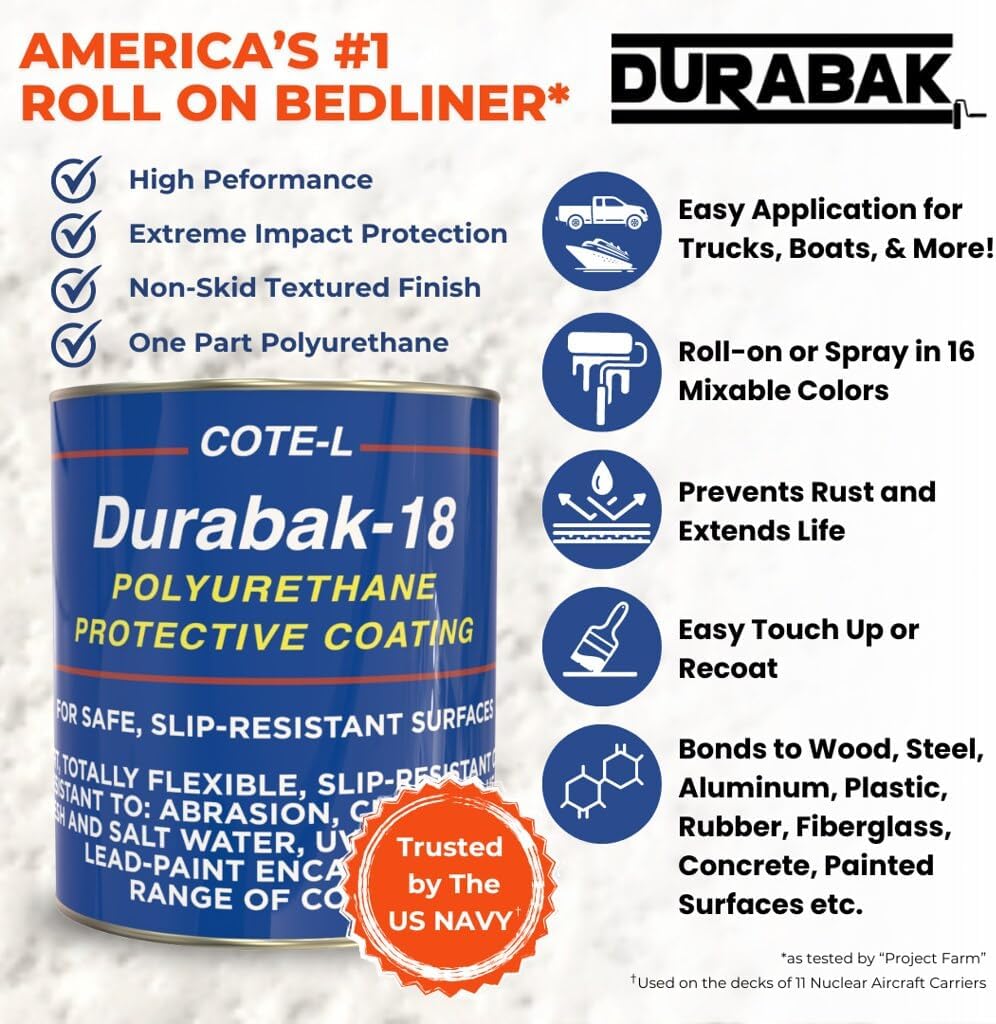
Durabak Marine is a solvent-based, single-component polyurethane with chopped rubber and aggregate particles already in the formula. It’s thicker than the other two — closer to a bed-liner product in viscosity — and is brushed or rolled in fewer, heavier coats. Scorpion Coatings markets it to both marine and industrial buyers, which matters when you’re reading their application specs.
The BoatUS Foundation’s deck safety guidance, published in their Deck Safety and Slip Prevention resource (BoatUS Foundation, 2024), notes that the coefficient of friction — how much grip a surface provides against a wet foot — varies significantly by coating type, application thickness, and surface prep quality. That last point cannot be overstated: every manufacturer Technical Data Sheet for all three products puts surface preparation as the primary determinant of adhesion life.
By the Numbers: Coverage, Cost, and Working Properties
| Property | TotalTread | Tuff Coat UT-100 | Durabak Marine |
|---|---|---|---|
| Chemistry | 1-part waterborne polyurethane | Water-based rubber-modified | 1-part solvent-borne polyurethane |
| Recommended coats | 2–3 | 2–3 | 1–2 |
| Coverage (sq ft / gal) | ~125–150 | ~100–125 | ~50–75 |
| Dry-to-recoat | 4–6 hrs | 2–4 hrs | 6–8 hrs |
| Estimated retail (1 gal, May 2026) | $55–$75 | $60–$80 | $90–$120 |
| Texture character | Medium-coarse, consistent | Soft, granular, lower profile | Coarse, aggressive, high build |
| Topcoat compatibility | Polyurethane, epoxy primers | Epoxy, most primers | Limited — verify TDS |
Coverage figures sourced from manufacturer Technical Data Sheet documents as of 2025. Retail pricing reflects May 2026 market conditions at Jamestown Distributors and West Marine.
The coverage gap between TotalTread and Durabak is significant at scale. On a 40-foot offshore vessel with 250–350 square feet of cockpit and side deck to coat, that difference can mean four gallons of TotalTread versus seven or more gallons of Durabak to achieve full film build — a cost delta that closes the apparent per-gallon price gap in a hurry.
Head-to-Head: Which Product Earns Its Reputation Where
TotalBoat TotalTread — The Integrated Repaint Choice
TotalTread has built a strong following among intermediate-to-serious owner-refitters precisely because it behaves like a paint. If you’ve already used TotalBoat Topside paint or any rolled-and-tipped single-part polyurethane, the application workflow is familiar. The Jamestown Distributors Boatbuilder Central resource library documents it as compatible with their standard epoxy primer system (Deck Coating Surface Prep, Jamestown Distributors Boatbuilder Central, 2025), which makes it easy to integrate into a full repaint sequence. Across owner accounts documented in Practical Sailor’s non-skid product coverage (Non-Skid Deck Coatings Compared, Practical Sailor, 2023), the pattern is consistent: TotalTread is praised for finish uniformity, good UV resistance relative to price point, and the fact that it touches up well — important for a working boat where you’ll inevitably scuff a patch and want to feather in a repair without a full recoat.
The tradeoff: it is the softest of the three when fully cured. On a bluewater passage where gear is dragged across the deck repeatedly, or a dinghy davit system lives permanently on the aft deck, long-run owners report that TotalTread can wear through at high-traffic points faster than the rubber-body alternatives. Budget for a touchup coat after two seasons in hard-use applications.
TotalBoat
$45.89
In stock on Amazon
Check price on AmazonTuff Coat UT-100 — The Comfort-Forward Specialist
Tuff Coat UT-100 is the specialist pick for situations where the softness of the grip is actually the point. The rubber-modified matrix absorbs some impact and feels noticeably different underfoot — less “sandpaper on gelcoat” and more like a quality gym floor. For a liveaboard vessel where people walk the deck daily, or a powerboat with frequent family use where bare feet and children are the norm, the comfort factor matters. The Northern Labs Technical Data Sheet for UT-100 (Northern Labs, 2024) specifies a dry-to-recoat window of 2–4 hours, which is genuinely fast for a multi-coat system and lets you complete a deck section in a single day in summer conditions.
The tradeoff is application method. Tuff Coat’s best results come from spray application — specifically HVLP or airless — and owners consistently report that achieving uniform texture with a brush and roller is harder than with TotalTread. If you don’t own spray equipment and aren’t renting or borrowing it, that’s a real friction point. Additionally, because the product’s texture profile is lower and softer, it may not satisfy owners coming from aggressive factory non-skid patterns who want maximum “gnarly grip” feel underfoot.

Rust-Oleum
$43.65
In stock on Amazon
Check price on AmazonDurabak Marine — The High-Build Offshore Option
Durabak Marine is the heavy-duty outlier in this comparison. Its closer-to-bed-liner viscosity means it fills minor surface irregularities that the other two products would telegraph through. On a fiberglass deck that has stress-crack repair work underneath — areas where you’ve applied thickened epoxy, faired with fairing compound, and sanded back — Durabak can help bridge the visual transition between original and repaired surface texture in a way that thinner coatings simply won’t. The Scorpion Coatings Marine Application Guide (Scorpion Coatings, 2025) specifies single-coat minimum thickness at approximately 20 mils dry film (a mil is one-thousandth of an inch), which is dramatically higher build than TotalTread’s 4–6 mil system.
The tradeoffs are real and worth naming plainly. Solvent-based chemistry means more aggressive PPE requirements — a respirator with organic vapor cartridges, not just a dust mask — along with longer cure windows before recoat and stricter topcoat compatibility. You need to verify that your primer system is on the manufacturer’s tested and approved list before committing. The Durabak TDS includes a short list of tested primers; if your existing primer isn’t on it, you’re running an adhesion test on your own boat, which is a poor experiment. At the price and coverage numbers cited above, a full-deck refit with Durabak can easily run 30–40% more in material cost than TotalTread for equivalent square footage.
Durabak-18
$137.95
In stock on Amazon
Check price on AmazonSurface Prep: The Variable That Overrides Everything
Practical Sailor’s non-skid coating coverage (Non-Skid Deck Coatings Compared, Practical Sailor, 2023) makes the point bluntly: adhesion failure is almost never a product problem. It is a prep problem. All three manufacturers agree on the same baseline requirements:
- Mechanical abrasion — 80-grit is the minimum standard for gelcoat; 60-grit if you’re cutting into bare fiberglass laminate. Anything smoother and you’re gambling on long-term adhesion.
- Solvent wipe — acetone or a manufacturer-specified surface cleaner, applied with clean lint-free rags, immediately before coating.
- Primer — TotalTread and Tuff Coat both have compatible epoxy primer systems that improve adhesion to bare gelcoat significantly. Durabak is more self-priming on properly prepared surfaces, but the Scorpion Coatings application guide still recommends a self-etching or epoxy primer on bare fiberglass.
The BoatUS Foundation’s Deck Safety and Slip Prevention guidance (BoatUS Foundation, 2024) notes that many DIY failures in non-skid coatings trace back to skipping primer on previously painted surfaces — a scenario where the adhesion chain runs through an old, compromised paint film rather than directly to the substrate. The Jamestown Distributors Boatbuilder Central library (Deck Coating Surface Prep, 2025) reinforces this with a step-by-step sequence specific to epoxy-primer-based systems, and it’s worth reading in full before you open the first can of any of these products.
One prep point that catches owners off guard: moisture content. All three of these coatings — particularly the two water-based formulas — require the substrate to be fully dry before application. A deck that feels dry to the hand after a morning rain can still hold enough surface moisture to impair adhesion. The rule from Practical Sailor’s field testing is simple: if there’s any doubt, wait another hour, then wipe and check again.
The Decision Rule: If X, Then Y
Here’s the framework based on published Technical Data Sheets, manufacturer documentation, and the documented pattern of owner-reported outcomes:
If you’re integrating non-skid into a full repaint sequence using a rolled polyurethane topcoat system and you want maximum product compatibility with minimum variables → TotalTread. It’s the easiest to work into an existing workflow, it touches up well, and the coverage economics favor it on larger decks. It’s the default recommendation for the intermediate-practitioner doing a phased refit.
If the deck sees heavy foot traffic, liveaboard use, or family barefoot sailing and comfort underfoot is a genuine priority — and you have access to spray equipment → Tuff Coat UT-100. The rubber-modified grip is genuinely different from aggregate-in-paint products, and owners with that use profile consistently prefer it. But go in knowing the application method demands more equipment and skill to achieve uniform results.
If you have significant surface irregularity from repair work, want maximum abrasion resistance in a high-wear commercial or offshore scenario, and you’re willing to manage the solvent-chemistry handling correctly → Durabak Marine. It’s not the right product for a casual seasonal recoat, but it earns its cost premium in demanding conditions where the other two products would show wear first.
One final practical note: all three products are available at meaningful price differences depending on whether you source from West Marine retail, Defender, or Jamestown Distributors. Seasonal sale patterns mean that stocking up in winter for a spring application can save 15–25% on material cost on larger jobs. The Jamestown Distributors Boatbuilder Central resource library tracks in-stock availability and discount windows on TotalBoat products specifically — worth bookmarking before you finalize your order.