July 28, 2026 • Carmen Reyes • 12 min reading time • Specs verified June 25, 2026
Polyester vs. Epoxy Laminating Resin: Choosing the Right System for Fiberglass Boat Repairs
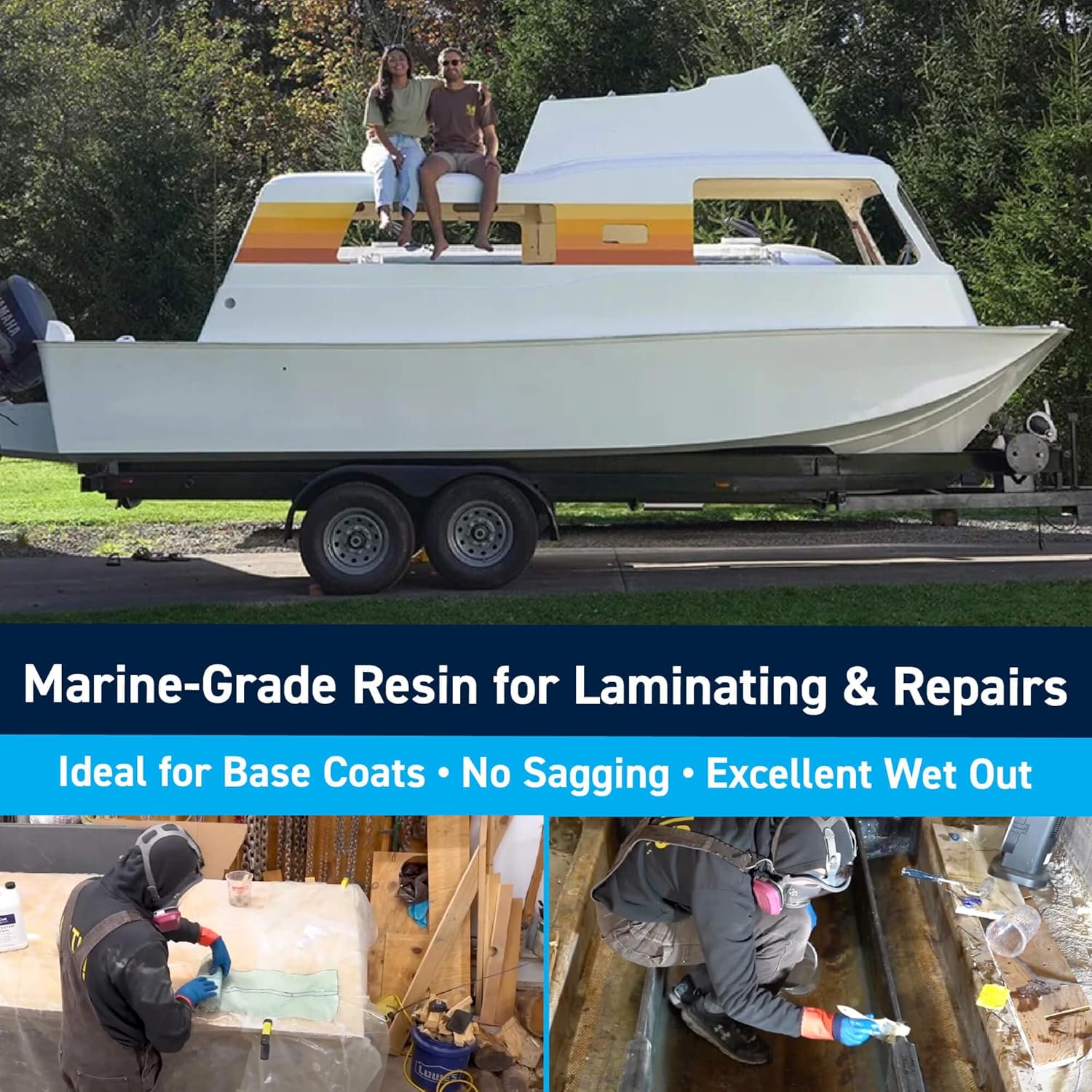
You’ve decided it’s time to repair that soft spot on the deck, or maybe rebuild a rotted stringer — the internal structural beam that runs the length of the hull floor — and now you’re staring at two very different bottles of resin at the marine supply store. One says polyester, one says epoxy. Both are used to make and repair fiberglass boats. Both are used with fiberglass fabric or mat to build up strong, waterproof laminates. And the price difference between them is substantial. The instinct is to grab the cheaper one and figure out the details later. That instinct costs people real money and real time. This article lays out the core tradeoffs clearly — chemistry, cost, compatibility, and common failure modes — so you walk into your project with a made decision, not a guess.
The Core Chemistry Difference (And Why It Actually Matters)
Polyester resin is the material most production fiberglass boats were built with from the 1960s onward. It cures through a chemical reaction triggered by a catalyst called MEKP (methyl ethyl ketone peroxide). You add a small amount of MEKP to the resin — typically 1–2% by weight — and the resin kicks off a crosslinking reaction that transforms it from liquid to a rigid plastic. The result is a material that is strong in compression, reasonably water-resistant, and inexpensive to produce at volume. It is also somewhat porous at the molecular level, which matters a great deal for long-term moisture ingress.
Epoxy resin cures differently. Instead of a catalyst, it uses a hardener, and the two components react with each other at a fixed ratio — commonly 2:1 or 5:1 by volume depending on the system. The cure is a true chemical marriage: neither part cures without the other, and getting the ratio wrong means a sticky, partially cured mass that doesn’t come clean. The cured result is denser, less porous, and bonds with far greater tenacity to almost any surface — including, critically, existing cured polyester. Epoxyworks, Gougeon Brothers’ technical publication, describes the adhesion difference in plain terms: epoxy’s longer polymer chains create a more thorough mechanical and chemical bond to aged substrates than polyester can achieve on its own.
That adhesion gap is the single most important fact in this article.
Choosing the Right Resin for Your Repair: Three Scenarios Compared
The practical question most boat owners face is not “which resin is chemically superior?” but “which resin fits my specific repair?” The answer depends on three variables: substrate age, structural load, and the environment the boat lives in. The following three H3 sections map to the three most common repair situations you’ll encounter and end with a tier recommendation for each.
Cosmetic and Light-Duty Repairs on Freshwater Trailer Boats
This is the scenario where polyester earns its place. A small void in a gelcoat surface, a hairline crack along a non-structural deck seam, or a minor chip in a freshwater boat’s hull — these repairs don’t require epoxy’s premium adhesion characteristics, and paying for them adds cost without adding durability in this specific context.
Polyester kit products — the type sold at hardware stores and marine suppliers in quart or pint sizes — are appropriate here because the repair area is small, the substrate doesn’t need to endure sustained osmotic pressure (freshwater trailer boats come out of the water regularly), and cosmetic work doesn’t carry structural load. BoatUS technical staff, writing on fiberglass repair basics at boatus.com, note that polyester is a reasonable choice for surface-level repairs as long as the substrate is either freshly cured or has been properly abraded and the repair is not load-bearing.
The MEKP ratio still matters even for small cosmetic work: 1–2% by weight, adjusted for temperature, measured on a digital gram scale. Do not estimate.
Bondo
$34.25
In stock on Amazon
Check price on AmazonStructural Repairs on Aged Production Hulls (Stringers, Transoms, Floors)
This is the scenario where epoxy is not optional — it is the correct material. If the boat is more than roughly ten years old, the original polyester laminate is long cured and chemically inert. Polyester resin applied over fully cured polyester relies almost entirely on mechanical adhesion (the surface roughness from sanding), and that bond is significantly weaker than what epoxy generates on the same surface.
Jamestown Distributors Boatbuilder Central, the technical resource section at jamestowndistributors.com/boatbuilder-central, addresses this directly: epoxy is the preferred repair resin for existing polyester laminates because it wets out the fibers more completely and generates stronger interlaminar bonds in a repair context. The West System Technical Manual (Gougeon Brothers) reinforces this position, noting that epoxy’s elongation characteristics and adhesion strength make it the appropriate choice wherever structural integrity is the design criterion.
One compatibility rule must be kept clear: epoxy over cured polyester is fine and is the standard approach. Polyester over cured epoxy is not — polyester doesn’t bond reliably to cured epoxy, and delamination follows. The rule is one-directional and not reversible.
Full epoxy laminating systems — including options from West System, TotalBoat, and MAS Epoxies — are the tools for this category of work.
Cabot
$55.98
In stock on Amazon
Check price on AmazonBoats That Live in the Water Full-Season or Are Subject to Osmotic Pressure
For any vessel kept in the water for an extended season — whether saltwater or freshwater — the moisture permeability difference between polyester and epoxy moves from theoretical to consequential. Polyester’s porosity allows water vapor to migrate into the laminate over time, which is a primary driver of osmotic blistering: the bubbles that form between laminate layers when moisture accumulates and hydrostatic pressure builds.
Practical Sailor staff evaluation of marine epoxy systems, published at practicalsailor.com, identifies lower water vapor transmission rate as one of epoxy’s primary practical advantages over polyester in a marine environment. For a boat that will be hauled annually and inspected, this is a manageable risk with polyester. For a liveaboard or a vessel that spends an entire sailing season on a mooring, epoxy’s reduced moisture permeability provides meaningful long-term protection.
This also extends to barrier coat applications. If you are repairing a hull before applying an epoxy barrier coat to address blistering, the repair laminate itself should be epoxy — applying epoxy barrier coat over a polyester repair patch creates a mixed-system situation that undermines the intent of the barrier.
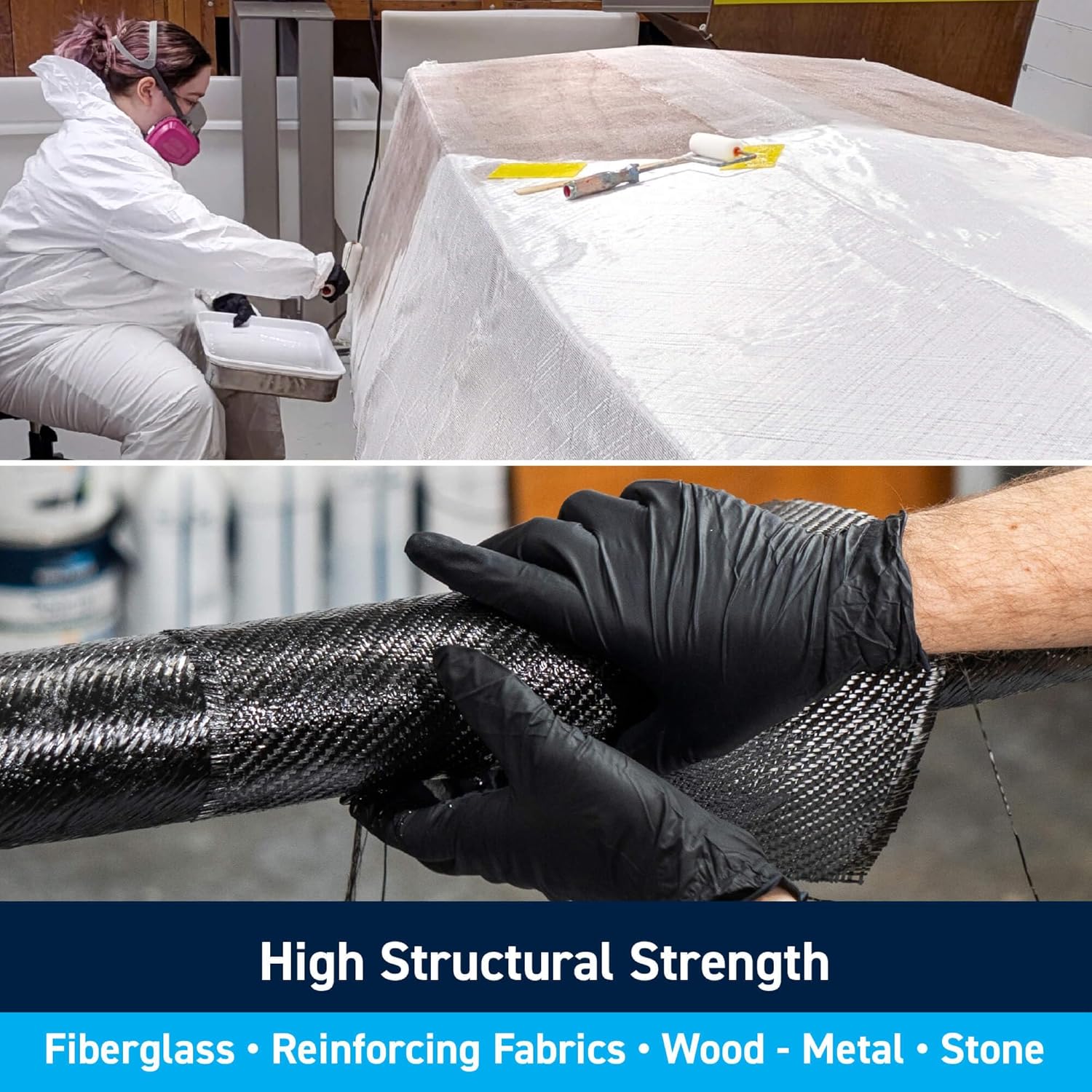
TotalBoat
$135.99
In stock on Amazon
Check price on AmazonMEKP Ratio: Measurement Is Not Optional
If you are working with polyester resin, the MEKP ratio is a performance variable, not an approximation. The pattern that repeats among inexperienced laminators: ratios are estimated by feel, resulting in either a tacky surface that never fully cures or a resin that gels before it can be worked into the fabric.
The standard working range is 1–2% MEKP by weight. In cooler temperatures (below 65°F), you move toward 2%. In warm conditions (above 80°F), you pull back toward 1% to extend working time. BoatUS fiberglass repair guidance at boatus.com is explicit on this point: going above 2% does not accelerate cure to a stronger result — it introduces brittleness and can cause incomplete cure as excess catalyst disrupts the reaction chain. Below 1% and you risk a permanently tacky laminate.
Use a digital gram scale. Do not estimate MEKP by drops or by the “looks about right” method.
Polyester MEKP reference by temperature:
| Ambient Temperature | MEKP Ratio | Approximate Gel Time |
|---|---|---|
| Below 65°F | 1.5–2.0% | 30–45 min |
| 65–80°F | 1.0–1.5% | 20–30 min |
| Above 80°F | 0.75–1.0% | 10–20 min |
Hardener Selection in Epoxy Systems: Temperature Is a Performance Variable
Fast and slow hardeners are not interchangeable options that only affect your schedule — they are formulated for temperature ranges, and using the wrong hardener for conditions causes real failures. Practical Sailor’s evaluation of marine epoxy systems at practicalsailor.com notes this directly: hardener selection based on ambient temperature is a performance variable, not just a matter of convenience.
The mechanism is straightforward. Epoxy cure is an exothermic reaction — it generates heat as it crosslinks. Fast hardeners generate that heat more rapidly. When ambient temperatures are already high (85°F or above, which is common inside a hull on a summer workday), a fast hardener can cause the resin to kick too quickly, trapping uncured components inside the laminate. The result is a rubbery, under-cured layer that has no structural value.
The fix is not complicated: in summer boatyard conditions, use a slow hardener. If your epoxy came out rubbery, check the temperature at cure time before concluding the mix ratio was wrong. A ratio error and a temperature error produce the same symptom but require different responses.
Rubbery epoxy that has not fully cured can sometimes be partially rescued by warming the surface and applying a correctly mixed fresh coat of epoxy — the new material can continue the cure reaction in some cases. If the rubbery area is structural, the safe call is full removal and redo.
The Chopped Strand Mat Compatibility Problem
This is a materials mistake that appears frequently enough to warrant its own section.
Standard chopped strand mat — the fluffy, non-woven fiberglass material sold at most hardware stores and marine suppliers — is held together with a binder. That binder is formulated to dissolve in styrene, which is a component of polyester resin. It is not compatible with epoxy. When standard CSM is wet out with epoxy, the binder doesn’t dissolve properly, the mat doesn’t consolidate correctly, and the result is a weak laminate that may look adequate until it is loaded.
Epoxy-compatible mat exists — it uses a different binder system — but it is not what general-purpose CSM sold on hardware store shelves typically is. Epoxyworks, Gougeon Brothers’ technical publication at epoxyworks.com, addresses this materials compatibility issue in its laminating guidance: verify that any chopped strand mat is rated for epoxy use before wetting it out with an epoxy system. When working with epoxy, woven fabrics — biaxial cloth (1708, 1708 with mat backing), plain weave cloth, or non-crimp fabrics — are generally safer choices for structural work because they use no binder.
If you are rebuilding stringers or doing structural laminate work with epoxy, use biaxial or woven cloth unless you have confirmed that a specific mat product is rated for epoxy compatibility.
Tool Care and Ergonomics (The Part Nobody Writes About)
A point that surfaces in the experience of repeat buyers: packaging and pump accuracy matter more than most people expect when evaluating competing epoxy systems. Accurate pump strokes reduce ratio errors and reduce waste. When resin is kicking on the table, a miscalibrated pump is not a minor inconvenience — it’s a scrapped batch. Well-calibrated graduated mixing cups and accurate pumps are worth considering when choosing between systems that otherwise perform similarly.
On the tool side: bubble rollers — the small, finned metal rollers used to consolidate laminate layers and work out air bubbles — are repeatedly repurchased by the same buyers because the resin cures solid between uses. The fix is to clean them immediately after use, before any gel sets. For polyester resin, acetone works effectively. For epoxy, use the manufacturer’s recommended solvent for your specific system — often a dedicated cleaner or denatured alcohol, depending on the brand — before the resin gels. A roller cleaned in the first 10–15 minutes after use comes out like new. A roller ignored for an hour is a paperweight.
Frequently Asked Questions
Can I repair an old polyester boat hull with epoxy resin? Yes — and in most cases, you should. Epoxy bonds reliably to sanded, cured polyester. The bond strength is significantly better than polyester-over-polyester on an aged hull. This is confirmed by Jamestown Distributors Boatbuilder Central and is consistent with guidance from Practical Sailor and the West System Technical Manual (Gougeon Brothers).
Does MEKP ratio really matter that much with polyester resin? Yes. Too little and you get a tacky, under-cured surface. Too much and you get brittleness and potential incomplete cure. Measure by weight using a digital gram scale; 1–2% is the working range, adjusted for ambient temperature.
Why did my epoxy stay rubbery and not cure properly? The most common causes are: wrong hardener for ambient temperature (fast hardener in high heat), incorrect mix ratio, or insufficient mixing time. Check temperature first. Rubbery epoxy can sometimes be partially rescued by warming the surface and applying fresh, correctly mixed resin — but if the laminate is structural, removal and redo is the safe course.
Is standard fiberglass mat compatible with epoxy resin? Standard chopped strand mat (CSM) typically is not. Its binder dissolves in styrene (present in polyester) but not in epoxy. Use epoxy-rated mat or switch to woven fabrics — biaxial cloth or plain weave — for epoxy work.
How do I clean fiberglass rollers so they don’t harden after one use? Clean immediately after use. For polyester resin, acetone works well. For epoxy, use the manufacturer-specified solvent before the resin gels. A roller cleaned within 10–15 minutes after use is reusable indefinitely.
When is a small polyester kit sufficient versus when do I need a full epoxy system? Small cosmetic repairs on freshwater trailer boats, surface voids in non-structural areas, and repairs to recently cured substrates are appropriate for polyester kits. Any structural repair — stringers, transoms, floors, keel attachment areas — on any aged production hull requires a full epoxy laminating system. That’s the line.
The decision rule, plainly: If your boat is over ten years old, the repair is load-bearing, or the vessel lives in the water for an extended season, use epoxy. If you’re filling a small ding on a freshwater trailer boat and you understand MEKP ratios, a polyester kit gets the job done at lower cost. The resin you choose is determined by your substrate, your structure, and your environment — not by what’s closest to the register.