August 25, 2026 • Carmen Reyes • 11 min reading time • Specs verified June 25, 2026
Rust-Oleum Marine Topside vs. TotalBoat Wet Edge: Real-World Finish Quality Compared
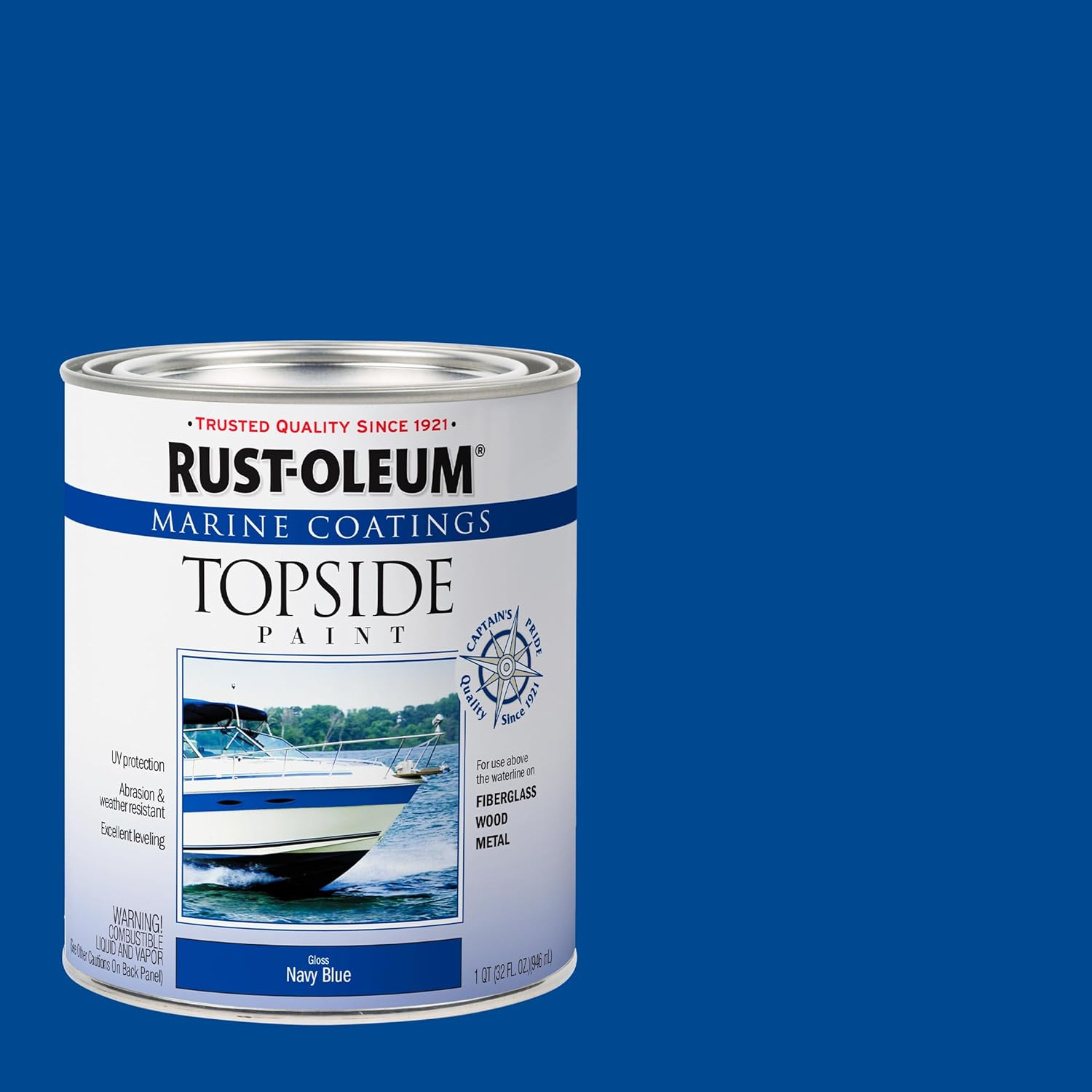
You’ve been staring at the hull of your fiberglass boat for two weekends now. The old finish is chalky and oxidized, the color is faded past caring, and you’ve committed to a repaint. You’ve narrowed it down to two names that keep appearing in the same breath: Rust-Oleum Marine Topside Paint and TotalBoat Wet Edge. Both are one-part polyurethane topside paints — meaning they’re single-component (no mixing a separate hardener), designed for brushing or rolling on the topsides (the part of the hull above the waterline) of fiberglass, wood, and aluminum boats. Both land in the $30–$60 range per quart. And both have passionate advocates in the owner review ecosystem.
But “similar category, similar price” doesn’t mean interchangeable. These two paints behave differently in the can, on the roller, and after a season of UV exposure and wake wash. This article pulls apart those differences using published manufacturer specifications, technical data sheets, aggregated owner reviews from multiple retail platforms through Q1 2026, and editorial guidance from Practical Sailor — so you can make the right call for your specific hull, your skill level, and your finish expectations.
What Owners Actually Report: The Pattern Across Reviews
Before getting into the mechanics, it’s worth establishing what the review record consistently shows, because the patterns are instructive rather than noise.
Rust-Oleum Marine Topside earns consistent praise for two things: its hardness after full cure and its price-per-quart value. Owners reviewing it across multiple retail platforms describe a finish that resists abrasion well for a one-part paint. The coverage shortfall is a recurring theme in the aggregated review data: reviewers consistently note that two coats are the absolute minimum and three coats are the practical standard for solid, even coverage. A pattern of cratering complaints also appears when the primer step is skipped or inadequately executed — a system-level warning, not merely user error.
TotalBoat Wet Edge tells a different story in the review record. The dominant praise is for self-leveling — the paint’s ability to flow out and eliminate brush marks and roller stipple without much technical skill from the applicator. First-time painters describe results they characterize as near-spray quality from a foam roller, which is a meaningful claim for a brush-and-roll product. According to the TotalBoat Wet Edge Technical Data Sheet published by Jamestown Distributors, the formulation is specifically engineered for extended flow-out on fiberglass and gel coat surfaces. The finish quality ceiling, according to the owner review consensus reviewed through Q1 2026, is meaningfully higher than what Rust-Oleum Marine Topside achieves in the hands of an intermediate applicator.
The divergence is real: Rust-Oleum is harder and cheaper per quart; TotalBoat Wet Edge finishes smoother.
Three Ways These Paints Differ Where It Counts
Self-Leveling and Finish Quality
Self-leveling is TotalBoat Wet Edge’s defining characteristic, and it’s backed by both the manufacturer’s published technical data and the owner review record. The paint is formulated with a longer open time than most one-part polyurethanes, which allows it to flow out after application rather than locking in roller stipple or brush strokes as it begins to skin over. Practical Sailor has noted in its coverage of one-part topside systems (practicalsailor.com, various issues) that self-leveling formulation quality varies significantly across this paint category, and that products with genuinely longer open times produce measurably smoother results in brush-and-roll application.
Rust-Oleum Marine Topside does not carry the same self-leveling reputation in its review record. The finish is described by owners as serviceable and even, but not glassy. For a workboat, a hard-use runabout, or any hull where abrasion resistance outranks mirror-finish quality, that’s an acceptable trade. For a sailboat where the finish is part of the point, it’s a limitation worth knowing in advance.

Rust-Oleum
$43.65
In stock on Amazon
Check price on AmazonThe Thinner Variable: Why TotalBoat Brushing Thinner 100 Changes the Equation
Here’s the detail that separates a TotalBoat Wet Edge system from a casual one-quart purchase: TotalBoat Brushing Thinner 100. According to the TotalBoat Brushing Thinner 100 product description and usage notes published by Jamestown Distributors (2025), adding this thinner to Wet Edge specifically slows the paint’s flash time — the rate at which it begins to skin over and lose its ability to self-level. This matters because topside paint applied in warm or breezy conditions can start to set before it has time to flow out, locking in roller stipple and brush marks.
Reviewers who specify Thinner 100 in their accounts consistently describe better results than those who either thin with mineral spirits or skip thinning altogether. It’s not a minor upgrade — it’s the difference between achieving the near-spray-quality result the product is capable of versus getting a passable but unremarkable finish. Jamestown Distributors’ published application guidance for Wet Edge explicitly recommends Thinner 100 over generic mineral spirits for this reason: the formulation is matched to the paint’s specific solvent chemistry in a way that off-the-shelf thinners don’t replicate.
If you’re buying TotalBoat Wet Edge and not budgeting for Thinner 100, you’re leaving the product’s primary strength on the table.
Rust-Oleum Marine Topside does not carry the same thinner-specific dynamic in its review record. Owner accounts show that finish quality variance is more tied to coat count and primer prep than to thinner choice, making its application process somewhat less system-dependent.
Rust-Oleum
$43.65
In stock on Amazon
Check price on AmazonPrimer Prep: Where Rust-Oleum Is Most Demanding
The cratering complaints in the Rust-Oleum Marine Topside review record share a common denominator: skipped or inadequate primer. Rust-Oleum Marine Wood & Fiberglass Primer appears repeatedly in positive review accounts as the prep layer that makes the topside paint perform as advertised — improving adhesion, eliminating cratering, and reducing the coat count needed for solid, even coverage. Rust-Oleum’s own Technical Data Sheet for Marine Topside Paint (Rust-Oleum Corporation, 2025) lists their marine primer as the recommended system primer on fiberglass substrates.
Practical Sailor’s coverage of one-part topside paint systems reinforces the general principle: adhesion-promoting primer formulated for marine use is not optional on fiberglass when long-term durability is the goal. On a raw or previously painted fiberglass surface, a proper primer coat levels out porosity, gives the topside paint a mechanically sound surface to grip, and reduces the risk of adhesion failures at the edges of dings or repaired areas. Practical Sailor’s editorial guidance on this point, published at practicalsailor.com, specifically cautions against assuming cross-brand primer-to-topside compatibility without confirming manufacturer system recommendations.
For Rust-Oleum Marine Topside, the dedicated marine primer is the difference between a finish that holds for multiple seasons and one that begins cratering or peeling before the summer is out. Budget for it as a line item, not an optional add-on.
TotalBoat Wet Edge also benefits from proper primer prep — the TotalBoat Wet Edge Technical Data Sheet from Jamestown Distributors recommends appropriate surface preparation and priming — but the cratering complaints tied specifically to inadequate primer are far more prominent in the Rust-Oleum review ecosystem.
Rust-Oleum
$43.65
In stock on Amazon
Check price on AmazonSide-by-Side Summary
| Rust-Oleum Marine Topside | TotalBoat Wet Edge | |
|---|---|---|
| Finish strength | Higher abrasion resistance per owner reports | Smoother self-leveled finish ceiling |
| Practical coat count | 2–3 coats standard | 2 coats typical over proper primer |
| System thinner | Standard mineral spirits or naphtha | TotalBoat Brushing Thinner 100 (strongly recommended per Jamestown Distributors TDS) |
| Primer sensitivity | High — cratering reported without proper primer (Rust-Oleum Marine Wood & Fiberglass Primer recommended per manufacturer TDS) | Moderate — standard marine prep applies |
| Best-use fit | Hard-use hulls, budget refits, abrasion-priority applications | Finish-quality priority, first-time rollers, display boats, sailboats |
Rust-Oleum
$23.83
In stock on Amazon
Check price on AmazonRust-Oleum
$43.65
In stock on Amazon
Check price on AmazonHead-to-Head: Where Each Paint Wins
Choose Rust-Oleum Marine Topside if you’re painting a hull that takes regular physical abuse — a canoe dragged up gravel beaches, a runabout that spends time on a trailer, a tender that gets banged against dock pilings. The abrasion resistance advantage is real per aggregated owner review data through Q1 2026, the price per quart is lower, and the application process is more forgiving in terms of thinner choice. You’re accepting that you’ll need a dedicated primer step, that three coats is your realistic baseline, and that the finish quality ceiling is lower than TotalBoat Wet Edge. The Rust-Oleum Marine Topside Technical Data Sheet (Rust-Oleum Corporation, 2025) documents the recommended system as primer plus two to three topcoat passes on fiberglass.
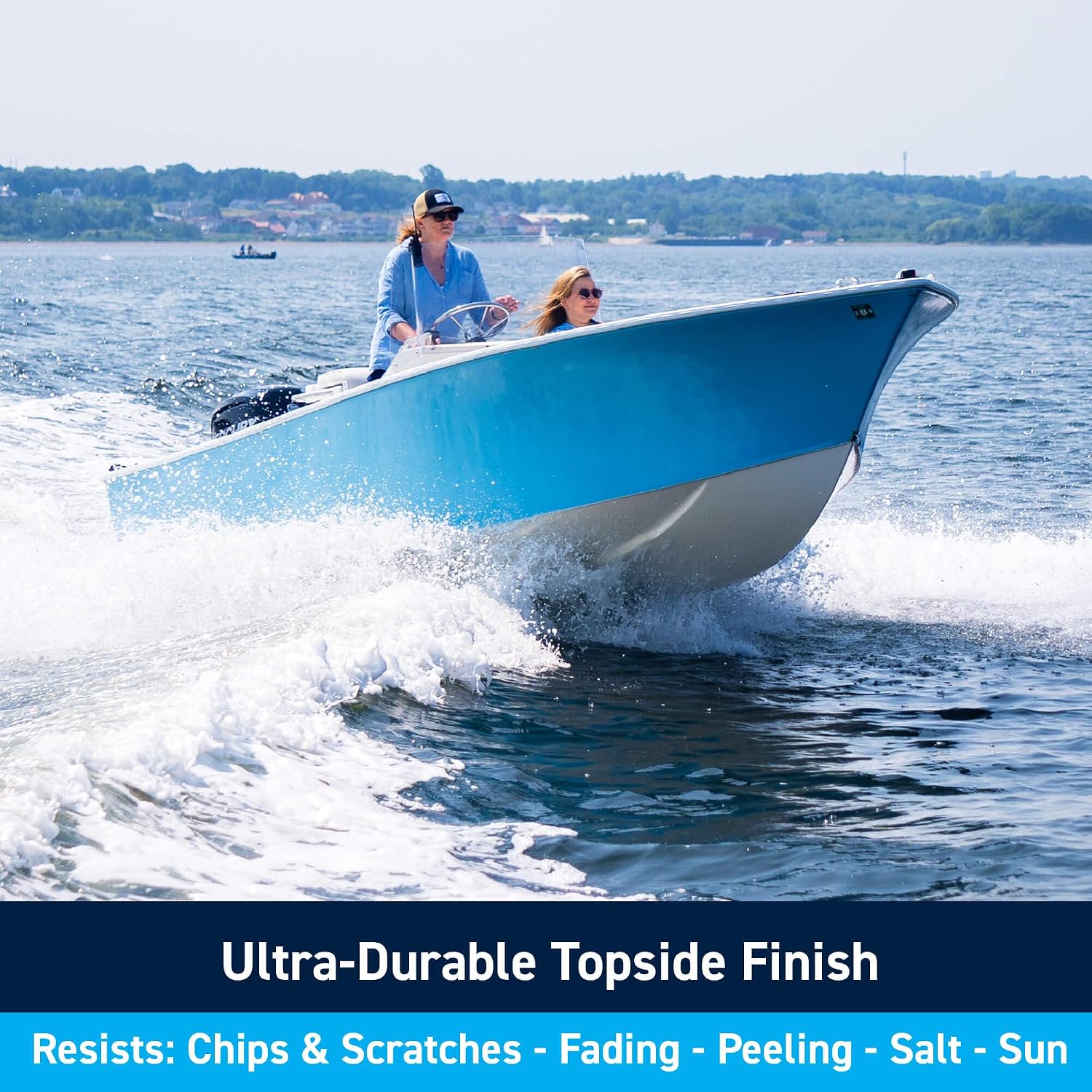
Choose TotalBoat Wet Edge if your priority is finish quality and you’re willing to work the system correctly. That means budgeting for TotalBoat Brushing Thinner 100 per Jamestown Distributors’ application guidance, applying in conditions that respect the paint’s flash time (cooler temperatures, lower wind), and using a quality foam roller with the right nap. The self-leveling capability is the product’s defining strength, and owners who engage that capability describe results that punch above the one-part price tier. If you’re painting a sailboat that spends more time at anchor than grinding gravel, or if this is a project where the finish quality is the point, Wet Edge is the more capable tool in better-trained hands.
TotalBoat
$45.89
In stock on Amazon
Check price on AmazonFrequently Asked Questions
Can Rust-Oleum Marine Topside be used on a fiberglass canoe or kayak? Yes. The aggregated owner review record through Q1 2026 specifically supports this application, with multiple accounts describing successful use on fiberglass canoes and composite hulls. Use the Rust-Oleum Marine Wood & Fiberglass Primer as specified in the manufacturer’s Technical Data Sheet, plan for three coats, and the finish holds well for hard-use contexts where abrasion resistance matters more than a mirror finish.
How many coats does TotalBoat Wet Edge actually need for full coverage? Two coats is the practical standard per owner accounts and the TotalBoat Wet Edge Technical Data Sheet published by Jamestown Distributors (2025), provided the surface is properly primed and the first coat is fully cured before the second is applied. Some reviewers note that covering a dark existing color may warrant a third coat. Wet Edge’s self-leveling behavior works best with thinner application passes rather than a single heavy coat.
Does TotalBoat Brushing Thinner 100 really improve the finish enough to be worth buying separately? Based on both the owner review pattern through Q1 2026 and Jamestown Distributors’ published application guidance, yes — treat it as part of the system, not an optional accessory. The functional reason is flash time: Thinner 100 is formulated to extend the paint’s open window in a way that generic mineral spirits doesn’t replicate. If the finish quality ceiling is why you’re choosing Wet Edge over Rust-Oleum, don’t undercut that investment by skipping the thinner.
Can either paint be applied with a standard foam roller, or do you need a specific nap? Both paints are foam-roller compatible. For TotalBoat Wet Edge specifically, a 3/16” or 1/4” nap foam roller is the standard recommendation for smooth fiberglass surfaces per the Jamestown Distributors product guidance — the short nap minimizes stipple introduction and lets the paint’s self-leveling properties do more of the work. Rust-Oleum Marine Topside can be applied with a similarly short-nap foam roller on fiberglass. Avoid longer-nap rollers on either product over smooth fiberglass; the extra texture counteracts the finish quality both paints are capable of.
Is Rust-Oleum Marine Primer necessary, or can you use a hardware-store primer? The cratering pattern in the Rust-Oleum Marine Topside review record points strongly toward using a marine-grade primer with confirmed formulation compatibility. Rust-Oleum’s own Technical Data Sheet (Rust-Oleum Corporation, 2025) calls for Rust-Oleum Marine Wood & Fiberglass Primer in the system. Practical Sailor’s guidance on one-part topside systems, published at practicalsailor.com, echoes the general principle: adhesion and compatibility between primer and topside should never be assumed across product lines. Using an incompatible primer to save a few dollars is how you end up repainting the entire hull within two seasons.
The Bottom Line
Both paints are legitimate tools for intermediate-level repaints. The decision frame is straightforward:
If durability and price efficiency are your primary metrics, and you’re willing to run three coats over Rust-Oleum Marine Wood & Fiberglass Primer as specified in the manufacturer’s Technical Data Sheet, Rust-Oleum Marine Topside is the harder-wearing choice. It demands more prep discipline, but it delivers real abrasion resistance at a one-part price point.
If finish quality is the primary metric and you’ll work the system — proper primer, TotalBoat Brushing Thinner 100 per Jamestown Distributors’ application guidance, and correct roller technique — TotalBoat Wet Edge achieves results that will surprise you for the price tier. The self-leveling capability is genuine, not marketing language, and the owner review record from first-time painters confirms it.
What neither paint forgives is skipped prep. Surface condition and primer compatibility are the variables that separate a lasting marine finish from a repaint you’ll be scheduling again next season.