July 13, 2026 • Carmen Reyes • 11 min reading time • Specs verified June 25, 2026
Spar Varnish vs. Teak Sealer vs. Teak Oil: Which Wood Finish Actually Lasts?
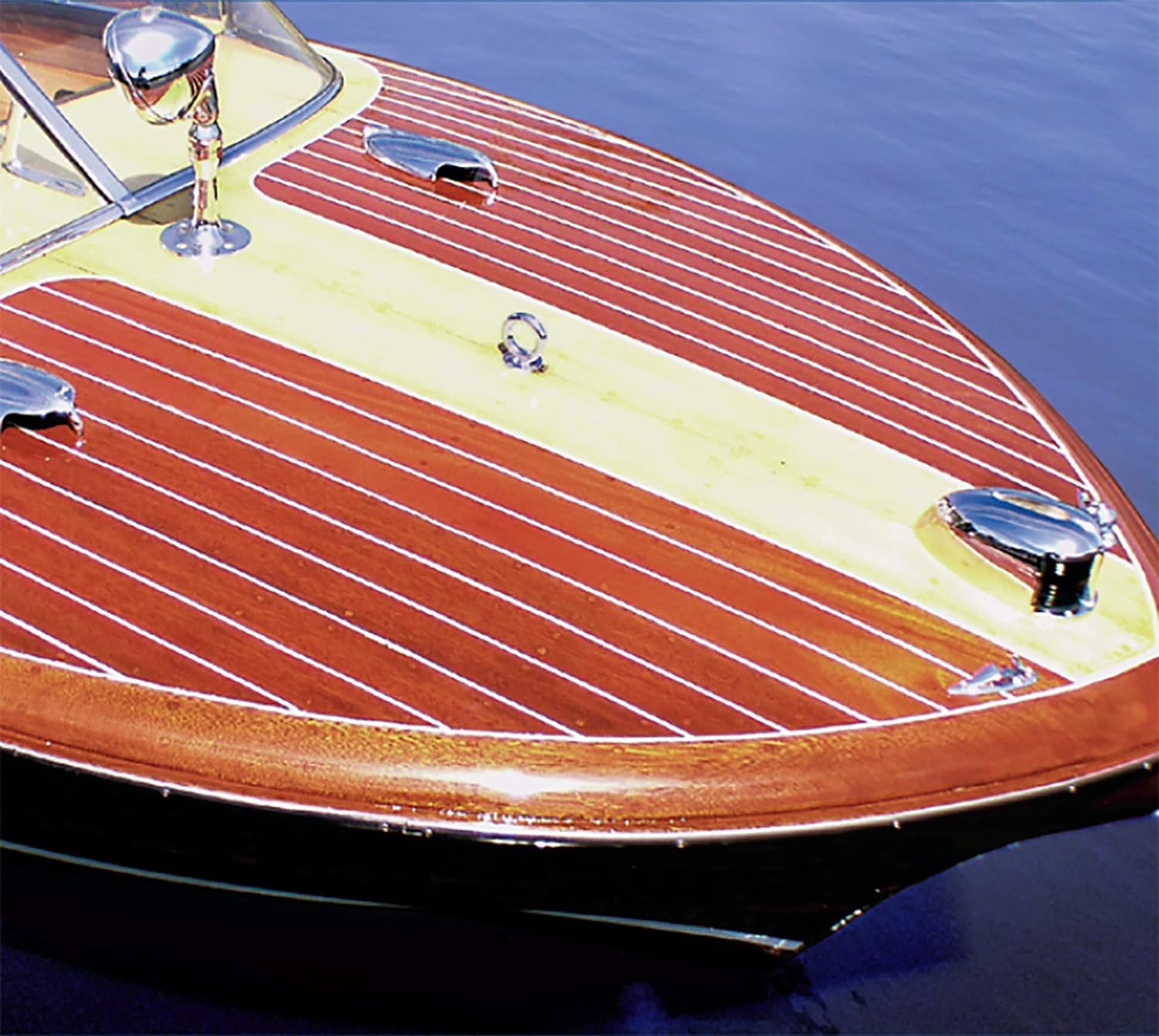
You bought a boat with beautiful teak trim — the warm, honey-colored wood you see on handrails, swim platforms, cockpit furniture, and companionway trim on a huge percentage of production sailboats and powerboats. Now it’s starting to look grey and tired, and you’re standing in the marine store aisle trying to figure out whether to grab a can of teak oil, a bottle of teak sealer, or a tin of spar varnish (a flexible, UV-resistant outdoor varnish formulated specifically for marine wood). They’re all labeled for teak. They’re priced anywhere from $15 to $60 a quart. And they will produce completely different results — with completely different maintenance commitments attached. This article breaks down exactly what each product does, where it earns its keep, and which one makes sense for your boat and your schedule.
What Each Product Actually Does to the Wood
Before you can compare durability, you need to understand how these three finish categories work. They are not just different strengths of the same thing.
Teak oil (sometimes labeled “teak and tung oil”) is a penetrating finish — it soaks into the wood fibers rather than sitting on top. It feeds the wood, restores color temporarily, and provides a modest moisture barrier. It does not build a film. The tradeoff: because there is no protective film on the surface, UV and water break it down relatively fast. Reapplication is the cost of admission.
Teak sealer is a hybrid — it penetrates partially but also deposits a thin surface layer, usually an acrylic, alkyd, or modified-resin binder that hardens as it cures. The goal is longer durability than a raw oil without the build-up and brittleness risk of full-film varnish. Sealers are the category that has grown most in the past decade, and product quality varies significantly.
Spar varnish (the word “spar” refers to the poles and booms on traditional sailing vessels — it is where the product category got its name) builds a full protective film on top of the wood. Done properly, multiple coats create a hard, glossy, UV-filtered shield that keeps weather off the wood entirely. The wood looks encased. Durability at its best is dramatically higher than the other two categories — but the application process is more demanding, prep errors are unforgiving, and when it does fail, it peels rather than fading gracefully.
How the Three Finishes Compare: Durability, Maintenance, and Color
Penetrating Teak Oil
Penetrating oils are the honest short-duration option. A quality marine teak oil absorbs fast, dries without stickiness, and produces noticeable color improvement on weathered wood within a single application session. That fast-absorption characteristic matters more than it sounds — a penetrating oil that stays tacky becomes a dirt and grit magnet on a working deck or handrail.
The durability ceiling is real, however. In a temperate-to-tropical marine environment, expect to reapply every two to four months. Prep at reapplication is minimal — a light clean and dry time is typically all that is needed before the next coat. That simplicity is the category’s genuine advantage. BoatUS’s Teak Care and Maintenance Guide notes that penetrating oils are best suited to owners who want fast color restoration with a straightforward maintenance routine and accept frequent reapplication as the tradeoff.
Failure mode: No film means no peeling, which sounds like a win — and it is, in the sense that the wood degrades gracefully back toward grey rather than failing catastrophically. But it also means there is no point at which the finish is “done” for the season. You are perpetually maintaining.
Color impact: All penetrating oils shift teak toward a warmer amber or honey tone. Some products — particularly those marketed with heavier binder content — produce a deeper golden-orange to warm brown shift that surprises owners who expected a more natural weathered-teak grey. WoodenBoat Magazine’s finishing guidance on teak notes that surface prep — cleaning off the natural silica and oils from the wood surface before application — matters more on dense tropical species than the specific brand of penetrant used. If color consistency with adjacent sections matters, test in an inconspicuous area before full application.
Best for: Teak decking (horizontal, walked-on surfaces), quick pre-season touch-ups, boats being prepped for sale, owners who prefer frequent light maintenance over periodic heavy refinishing.
Rust-Oleum
$18.52
In stock on Amazon
Check price on AmazonTeak Sealer
Teak sealers occupy a genuinely useful middle position — longer durability than a penetrating oil without the full prep and application demands of spar varnish. A quality sealer typically lasts six to twelve months before color and protection degrade noticeably, which for most boat owners in seasonal climates means one application per season with a possible mid-season touch-up in high-UV environments.
The best sealers in this category lay down streak-free across multiple coats and resist the lap-marking that cheaper products produce when you are working in sections. That user-experience difference is real on a long handrail or a cockpit coaming where you are working in passes. Jamestown Distributors’ Boatbuilder Central wood finishing guides note that sealers generally outperform oils in UV resistance but underperform varnish at the two-year mark, particularly in tropical or high-UV deployments.
Failure mode: Sealers fail by fading and losing UV protection rather than peeling. The wood gradually returns toward grey under the depleted sealer layer. Prep at reapplication typically requires cleaning plus a light scuff — more than oil but less than stripping varnish. If the sealer has been left too long without maintenance, some products require a full strip before the next application to avoid adhesion problems with the new coat.
Color impact: Most sealers move teak toward a warm amber tone similar to oils, though the color tends to hold more evenly over time because the surface binder slows UV bleaching. Some products produce a significantly deeper color shift — closer to golden-orange or warm brown — which is a design characteristic rather than a defect. Owners who are color-matching a section of a larger deck should test before full application. This is the most common source of dissatisfaction with sealers: not product failure, but outcome surprise when the color lands darker than expected.
Best for: Above-deck brightwork (handrails, coamings, toe rails, tiller, cockpit trim) on owners who want annual-ish maintenance without the prep demands of varnish. Also the right call for owners who have honestly assessed that they will not sand and recoat varnish on schedule.
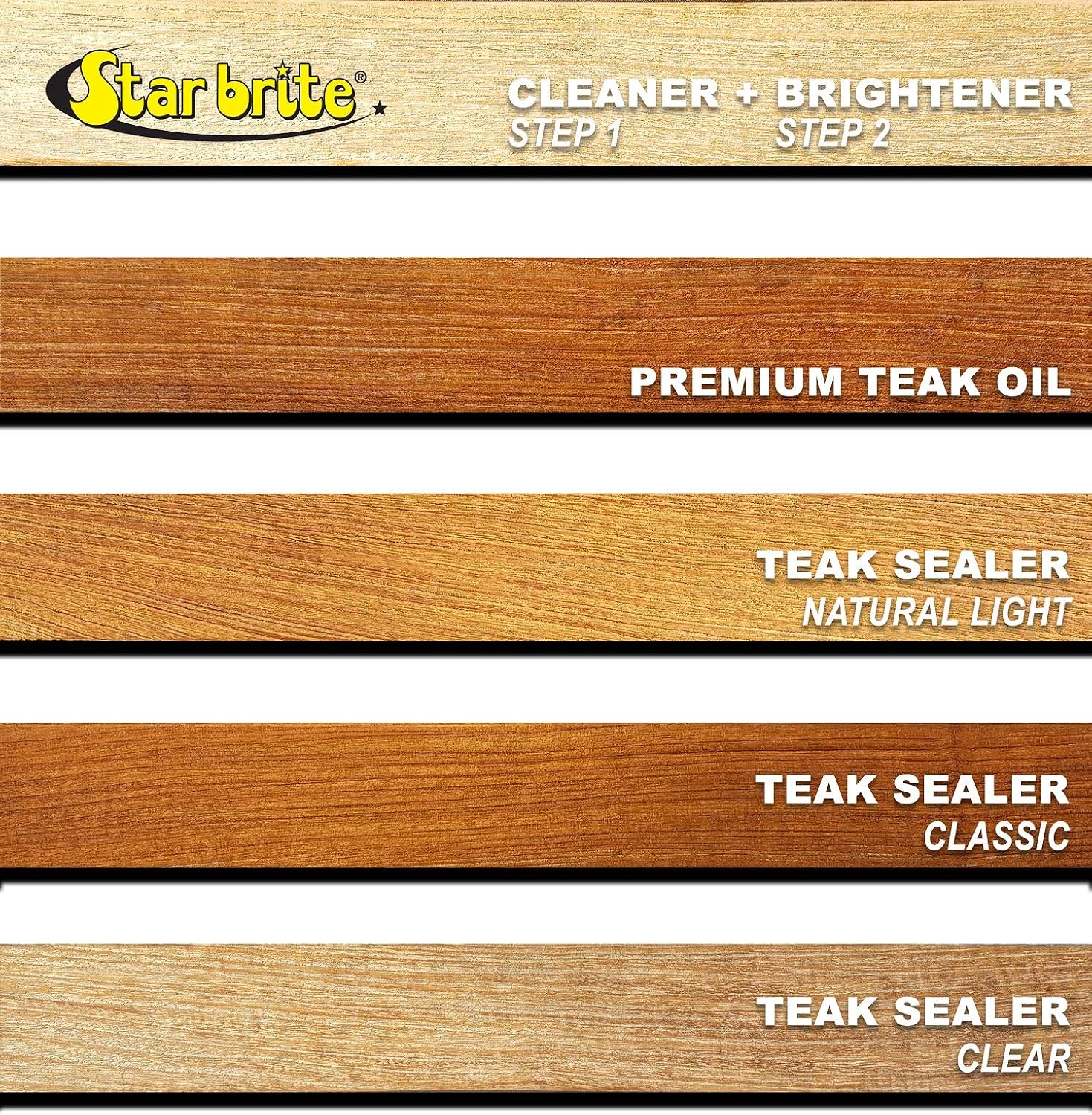
Star
$23.78
In stock on Amazon
Check price on AmazonSpar Varnish
Spar varnish is the high-commitment, high-durability option. Multiple coats of a quality marine spar varnish produce a hard, glossy, UV-filtered film that keeps weather off the wood entirely. Maintained correctly — which means sanding and applying a fresh maintenance coat before the existing film begins to crack or peel — a varnished brightwork installation can go twelve to twenty-four months between full refinishing sessions, with annual touch-up coats serving as the ongoing maintenance task rather than a full strip. That longevity substantially outperforms any sealer or oil.
Practical Sailor’s Teak Deck Treatment Shootout evaluations have consistently drawn a distinction between deck applications (where film finishes are unsuitable on walked-on horizontal surfaces) and above-deck brightwork applications where varnish is the appropriate high-durability choice. That distinction is worth internalizing before you buy.
The caveat is unambiguous: spar varnish is unforgiving of skipped maintenance. A film finish that cracks and admits moisture does not degrade gracefully — it peels, often in sheets, and getting back to bare wood for a fresh start is a significant labor investment. The wood also looks different under varnish — encased and formal rather than natural. Owners who prefer the look of oiled or sealed wood sometimes find the high-gloss varnish appearance too formal for a casual daysailer.
One performance note for owners with white painted surfaces nearby: some oil-based spar varnish formulations yellow over time as the resin system ages. This is a non-issue on isolated brightwork — a tiller, a transom cap, a standalone handrail — but worth considering if your teak trim sits directly adjacent to white painted cabin sides. Water-based spar varnish formulations reduce but do not fully eliminate the yellowing risk; they also tend to carry lower VOC solvent loads, which matters for enclosed application spaces.
Failure mode: Peeling — which is dramatically more labor-intensive to remediate than a faded oil or sealer. The maintenance schedule must be taken seriously; deferred maintenance is where the economics of spar varnish go wrong.
Safety note: Most oil-based spar varnish products contain petroleum distillate solvents and are classified as flammable. Application in enclosed spaces requires forced-air cross-ventilation and a solvent-rated respirator at minimum. Always check the product’s safety data sheet before application. Water-based formulations reduce solvent exposure but still require ventilation.
Best for: Handrails, coamings, companionway trim, toe rails, tillers, and any brightwork where you want maximum durability and are prepared to maintain it annually. Not appropriate for horizontal, walked-on decking.
STAR
$70.59
In stock on Amazon
Check price on AmazonReapplication Intervals at a Glance
| Finish Type | Avg. Reapplication Interval | Prep at Reapplication |
|---|---|---|
| Penetrating teak oil | 2–4 months | Light clean, let dry |
| Teak sealer | 6–12 months | Clean + light scuff or strip |
| Spar varnish (maintained) | 12–24 months (annual touch-up coats) | Sand between coats; full strip if peeling |
Sources: Practical Sailor, “Teak Deck Treatment Shootout”; BoatUS, “Teak Care and Maintenance Guide.” Both cited as plain-text named sources.
The Non-Teak Question: Acacia, Ipe, and Other Hardwoods
One question that comes up regularly on boats with mixed or replacement wood: do products labeled “teak oil” or “teak sealer” actually work on other dense tropical hardwoods? The short answer is yes, for penetrating products. West Marine’s Inspiration editorial on teak care and maintenance notes that most penetrating teak oils and sealers formulated for dense tropical hardwoods perform comparably on ipe, iroko, or Acacia, because the chemistry targets tight-grained, oily wood broadly rather than anything teak-specific. WoodenBoat Magazine’s finishing guides reinforce that surface prep — removing natural silica and surface oils — matters more on dense tropical species than the specific brand of penetrant used.
Film varnish works on any cleanly prepped hardwood, teak or otherwise. The category is labeled “teak” because that is where the retail marine market is concentrated, not because the chemistry is species-restricted.
Decision Framework: Match the Finish to Your Actual Habits
Teak decking (horizontal, walked-on): Do not use spar varnish. A film finish on a walked-on deck becomes dangerously slippery when wet and cracks under foot-flex loading. Penetrating oil or a purpose-formulated deck sealer is the correct category. Practical Sailor’s teak deck treatment evaluations draw this distinction explicitly.
Above-deck brightwork (handrails, trim, tillers): All three categories are applicable. Choose based on your maintenance tolerance. Spar varnish for maximum durability with annual upkeep. Sealer for seasonal maintenance without heavy prep. Oil for simplicity and frequent light application.
Quick prep before sale or charter season: Penetrating oil. Fast application, immediate appearance improvement, no prep drama.
Badly weathered, greyed-out teak: Clean it first — always — before applying any finish. A two-part teak cleaner (typically an oxalic acid system) opens the grain and removes grey oxidation. Applying oil or sealer over deeply weathered, uncleaned teak produces dark, splotchy results regardless of product quality. Skipping this step on heavily weathered wood is the single most common reason owners get uneven results from an otherwise quality product.
Switching from varnish to oil or sealer: Strip the old film completely — sand to bare wood — before applying a penetrating product. Oil cannot penetrate a varnish film, will not cure properly over it, and produces a tacky, peeling mess. Jamestown Distributors’ Boatbuilder Central finishing guides call out this exact incompatibility as one of the most common and most avoidable refinishing errors.
Frequently Asked Questions
How often do I need to reapply teak oil vs. sealer vs. varnish? In a temperate climate with regular use: penetrating oils every two to four months; quality sealers six to twelve months; maintained spar varnish twelve to twenty-four months between full refinishing, with annual touch-up coats in between. BoatUS’s Teak Care and Maintenance Guide uses similar intervals as general benchmarks.
Will teak oil darken my wood? Yes — all penetrating oils and most sealers shift the wood tone toward a warmer amber or honey color. Some products produce a deeper golden-orange or warm brown shift that is more pronounced than the category average. If color consistency with adjacent wood matters, test in an inconspicuous area before full application.
Can I use these products on Acacia or ipe? Generally yes for penetrating oils and most sealers. The chemistry targets dense, oily tropical hardwoods broadly. Spar varnish works on any cleanly prepped hardwood regardless of species.
Is spar varnish safe to apply in enclosed spaces? No — not without forced-air ventilation and a solvent-rated respirator. Most oil-based spar varnish products are classified as flammable. Check the product’s safety data sheet before application.
The Bottom Line
Maximum durability with annual upkeep: spar varnish on brightwork, applied in multiple thin coats over properly prepped bare wood. Reasonable protection with low-effort annual maintenance: a quality teak sealer is the honest middle ground for most owners. Fast color restoration with minimal commitment: penetrating teak oil, with clear eyes about the reapplication cadence.
The wrong finish is not a disaster, but switching categories mid-project is. Pick your maintenance philosophy first, then pick the product.