July 14, 2026 • Carmen Reyes • 11 min reading time • Specs verified June 25, 2026
Teak Oil vs. Teak Sealer vs. Danish Oil: Which Finish Fits Your Maintenance Reality?
Picture this: you’ve just hauled out for the season, and the teak swim platform on your 32-footer looks like driftwood — gray, dry, and almost chalky to the touch. You know it needs something, but the product shelf at the marine store offers teak oil, teak sealer, Danish oil, teak cleaner, teak brightener, and about six variations of each. A buddy swears by one brand. A forum post from 2019 swears against it. You pick the bottle with the nicest label and hope for the best.
That’s the exact trap this article is designed to help you avoid. Teak is a dense tropical hardwood prized on boats for its natural oil content and slip resistance — but that same oil content makes it finicky about what finish products actually bond to it and how long they last. The three finish categories you’ll encounter — teak oil (a penetrating oil blend), teak sealer (a surface-forming barrier product), and Danish oil (a drying-oil blend originally developed for furniture) — work through fundamentally different mechanisms, demand different prep, and require very different reapplication schedules. Choosing the wrong one doesn’t just waste money; it can lock you into a maintenance cycle that doesn’t fit your actual boating life.
Here’s what you’ll get from this article: a plain comparison of how each finish category works, an honest look at what long-term users and independent testers report, specific numbers on application rates and reapplication frequency, and a clear decision framework at the end.
How Each Finish Category Actually Works
Understanding the mechanism matters because it determines prep requirements, failure modes, and your total maintenance commitment.
Teak Oil: Penetrating, Forgiving, Frequent
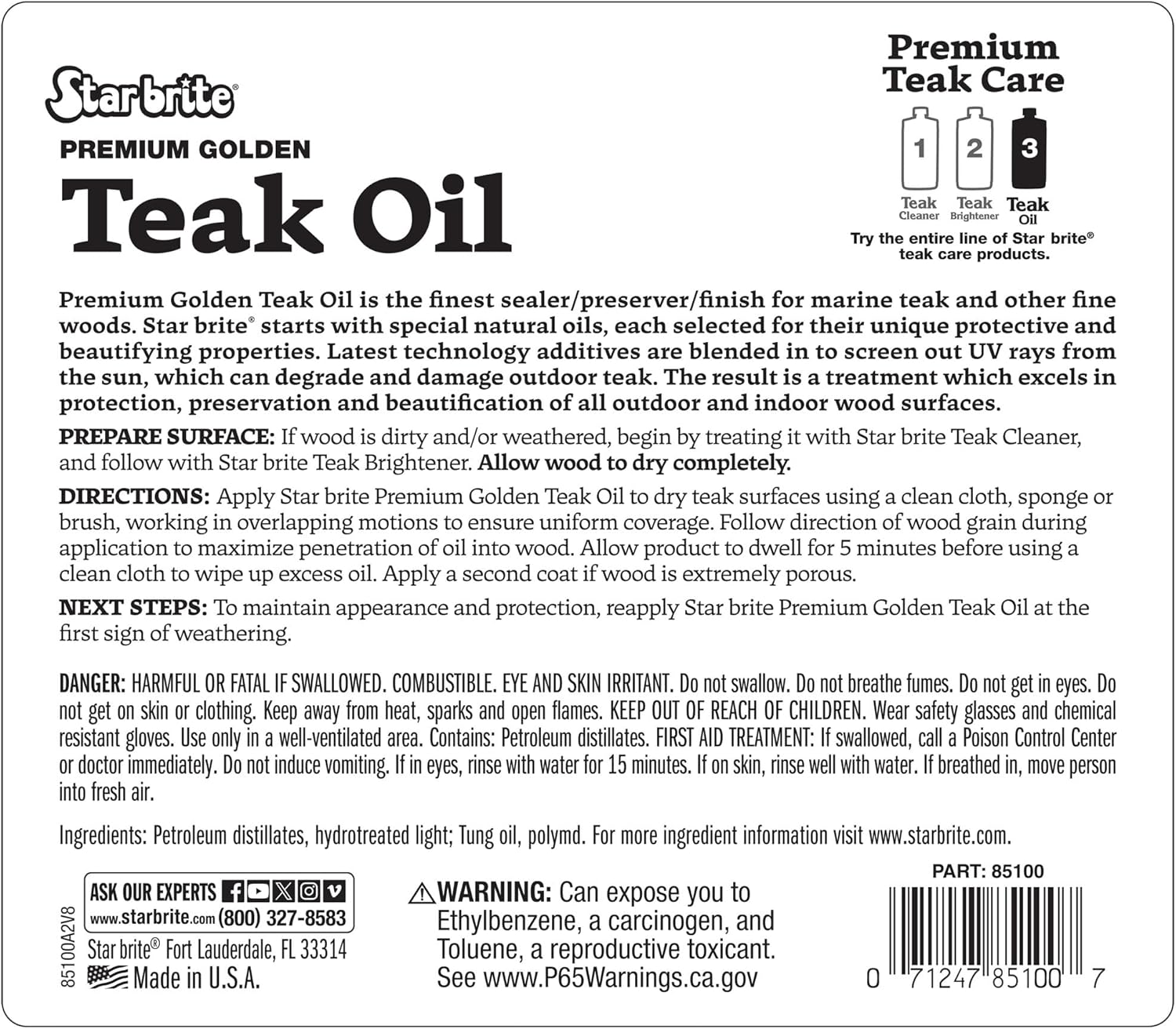
Teak oil is a penetrating finish — it soaks into the wood grain rather than forming a layer on top. Most commercial teak oils are blends of linseed oil, tung oil, mineral spirits, and UV stabilizers. Because they penetrate rather than film-form, they’re forgiving to apply, relatively easy to recoat, and they don’t peel. The tradeoff: that same permeability means water, sun, and salt work at them continuously.
In regular marine use on a sun-exposed swim platform, reapplication windows can be as short as 4–8 weeks. According to Practical Sailor’s teak finish comparison testing, penetrating oil products consistently showed the shortest durability window of the three finish categories when tested on horizontal exterior surfaces under UV and saltwater exposure — but also the lowest barrier to recoating, since there is no film layer to sand or strip before adding another coat.
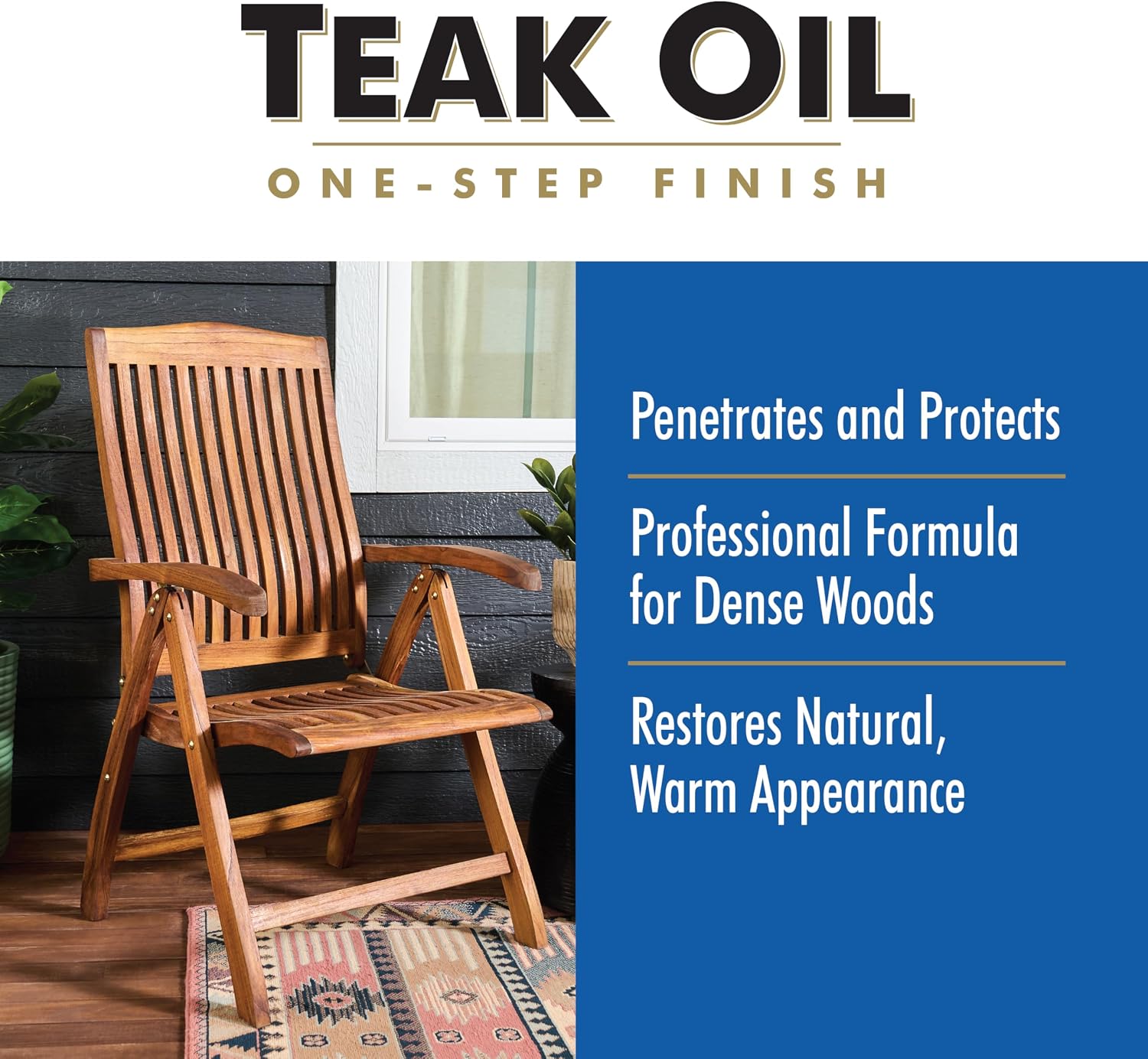
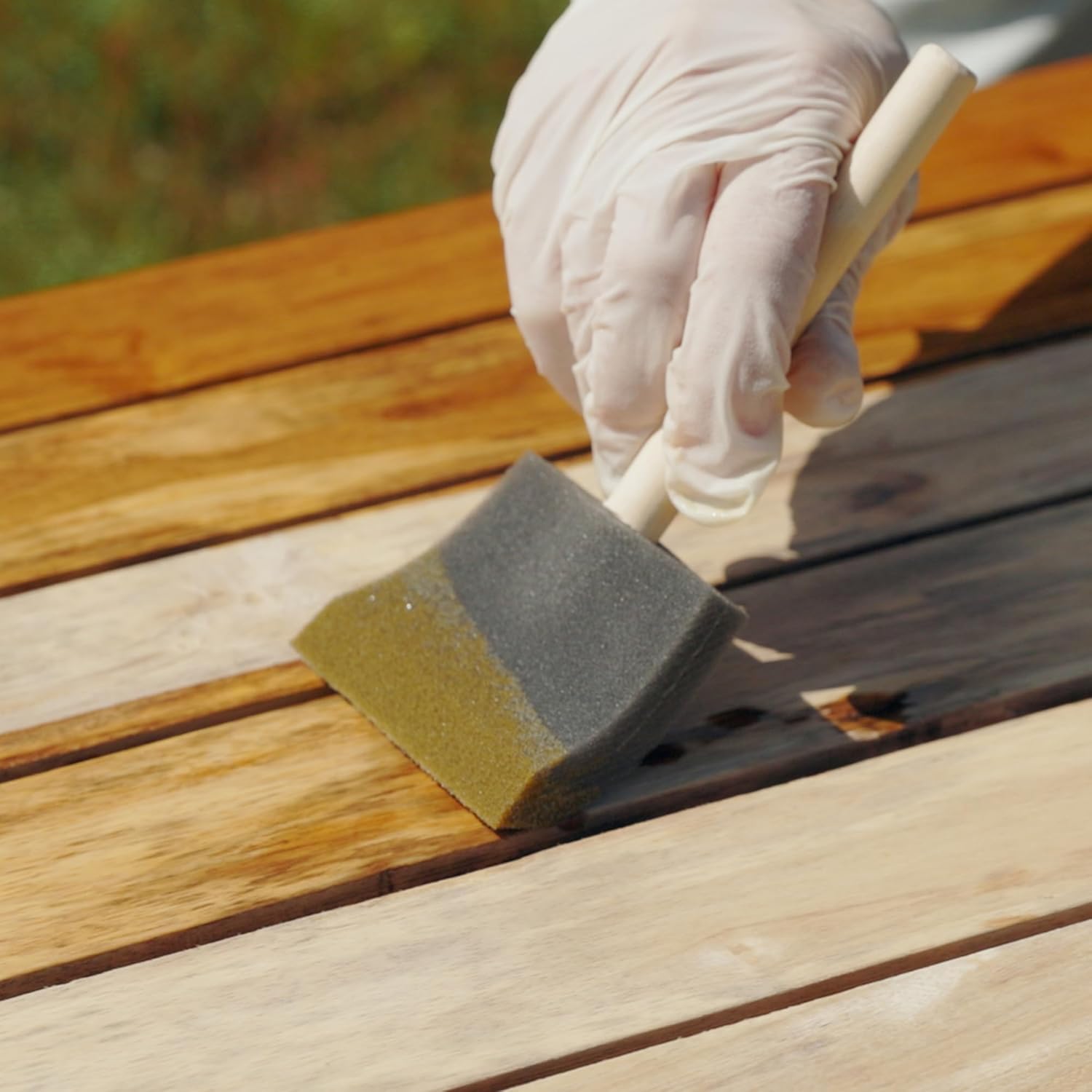
Products in this category include Star Brite Golden Teak Oil and Watco Teak Oil, both widely used and frequently compared in marine maintenance reviews. Per Star Brite’s published application instructions, Golden Teak Oil should be applied in thin coats with excess wiped off within 15–30 minutes. Over-application does not accelerate penetration — teak’s dense grain absorbs only so much per application cycle. Excess oil sitting on the surface dries tacky, attracts dirt, and can impede adhesion of the next coat.
Coverage reality check: A quart of penetrating teak oil covers approximately 75–100 square feet per coat on properly prepped teak. A typical swim platform on a 32-foot boat runs 12–20 square feet, meaning a single quart should yield 4–8 full application cycles — not one heavy seasonal coat.
Watco
$18.92
In stock on Amazon
Check price on AmazonTeak Sealer: Surface Barrier, Lower Frequency, Prep-Sensitive
Teak sealer forms a barrier coating — a thin, flexible resin layer that sits on top of the wood and blocks moisture and UV rather than absorbing into the grain. Because it sits on the surface, it is more durable per application than straight oil, typically requiring reapplication once or twice per season on exterior surfaces rather than monthly.
The catch is that surface-forming products are more sensitive to prep quality and application conditions. They can trap moisture if applied to wet or contaminated wood, and adhesion failures in the first weeks of service are disproportionately linked to inadequate prep — not product defects. A product like DITEC Triton illustrates this pattern directly: one-star reviewers describe water marks appearing within a month after what they describe as thorough prep; five-star reviewers report consistent results over multiple seasons with twice-yearly applications. Same product, dramatically different outcomes. The variable most likely to explain the spread is surface state and conditions at application.
Per BoatUS’s teak care guidance — published in their boating and maintenance resources — applying any sealer to teak that hasn’t been through a two-step clean-and-brighten cycle is one of the most consistent causes of premature failure and uneven appearance. Teak sealer is the right choice for owners who want fewer annual applications and are willing to invest in thorough prep to earn that benefit.
TotalBoat
$26.18
In stock on Amazon
Check price on AmazonDanish Oil: Interior Applications, Hybrid Chemistry, Exterior Limitations
Danish oil is a blend of tung oil and/or linseed oil with varnish resins and driers — historically developed as a furniture finish. It penetrates and partially film-forms, which sounds like the best of both worlds but creates its own complications on exterior boat teak specifically.
Teak’s high natural oil content can interfere with the drying and curing chemistry in Danish oil’s varnish component. On exterior horizontal surfaces, WoodenBoat Magazine’s coverage of teak brightwork care notes that the film-forming fraction of Danish oil blends tends to break down under UV and wet/dry cycling faster than dedicated marine sealers, while also being less easy to recoat cleanly than a straight penetrating oil. The varnish component can also leave a slightly plastic-looking sheen that reads poorly on weathered deck teak.
Danish oil performs substantially better on interior teak — cabinetry, handrails below decks, cabin trim — where UV demand is lower, the natural teak oils don’t break down aggressively, and the richer appearance reads as a feature rather than a mismatch. If your application is interior, Danish oil is a reasonable and cost-effective option. If it’s exterior and horizontal, it is not the right tool for the category.
TotalBoat
$26.18
In stock on Amazon
Check price on AmazonThe Prep Failure You’re Probably Attributing to the Product
Here is the uncomfortable truth that independent testing and long-term user data keeps surfacing: most teak finish failures are prep failures, not product failures.
Teak that has been allowed to gray and oxidize carries a contaminated surface layer — salt crystals, mildew, tannin deposits, and oxidized wood fiber — that resists penetrating finishes and blocks sealer adhesion. The silvered appearance of weathered teak, as WoodenBoat Magazine’s teak care coverage explains, is a surface oxidation effect, not the wood’s actual color. Oil or sealer applied over that layer does not bond correctly regardless of product quality.
The correct baseline — described by both BoatUS’s teak care guidance and Jamestown Distributors’ Boatbuilder Central product documentation — is a two-step prep sequence before any finish application:
- Teak cleaner (typically an oxalic acid or surfactant-based wash) removes surface contamination, mildew, and the oxidized fiber layer.
- Teak brightener (typically a dilute acid rinse) opens the grain, neutralizes pH after cleaning, and returns the wood to a consistent light-tan color that accepts finish evenly.
The wood should be allowed to dry fully after this process — ideally 48 hours minimum — before any finish is applied. If the wood is not clean, consistently light-colored (not gray), and genuinely dry, no finish will perform to spec. This is not a caveat; it is the mechanism. Applying finish to inadequately prepped teak and attributing the failure to the product is among the most common and expensive mistakes in teak maintenance.
Practical Sailor’s teak finish comparison coverage reinforces this point: in controlled testing, the same finish products applied to properly prepped teak versus inadequately prepped teak showed dramatically different durability results — the prep variable outweighed product formulation differences in several test categories.
The Color Shift You Need to Know About Before You Buy
Penetrating oil products restore the wood’s natural warm amber-brown tone — which can look dramatically different from the pale silvered gray of weathered teak. This is the intended result of the product, but owners consistently report being surprised by the degree of color shift, particularly on teak that has been left unfinished for multiple seasons.
The shift is not a defect. As WoodenBoat Magazine’s brightwork care coverage explains, weathered gray is oxidized surface material, not the wood’s actual color. The oil is revealing the wood underneath it. On golden teak species, that underlying tone is a rich amber. On some darker teak varieties, the shift can read as quite dramatic compared to the silvered baseline.
If you want to protect your teak without significant color alteration — preserving a natural, matte, low-tone appearance — a water-based teak sealer is the appropriate choice. These products are formulated to protect without substantially altering tone, and they are also the correct choice for any application in enclosed or poorly ventilated spaces, where solvent-based oil products with high VOC content present real inhalation and skin absorption hazards.
The Watco Teak Oil Technical Data Sheet, for example, specifies ventilation requirements clearly and lists inhalation and skin absorption hazards as primary concerns. These are not boilerplate disclaimers — working with any solvent-based teak oil in a boat cabin or below-decks space without forced ventilation is a genuine hazard.
The Decision Framework
If your teak is exterior, horizontal, and sees regular sun and water exposure (swim platform, cockpit sole, toerails): Choose a dedicated teak sealer. The reapplication burden is lower, UV protection per application is higher, and you’ll spend less time on the water maintaining the surface. Prep is non-negotiable — two-step clean and brighten before application.
If you want the lowest per-application cost and can commit to a 4–8 week reapplication cycle on hard-use surfaces: A penetrating teak oil is viable. Apply thin, wipe excess within 15–30 minutes, and budget coverage correctly — a quart goes significantly further than most buyers expect. Plan around the 2–3 week cure window before the surface sees heavy use or full water exposure.
If your teak is interior — cabinetry, handrails, cabin trim — and you want a richer appearance finish with minimal UV demand: Danish oil is appropriate here and performs more predictably on interior surfaces where the teak’s natural oils don’t degrade the film-forming chemistry as aggressively.
If you are working in an enclosed space: Do not use solvent-based teak oils without forced ventilation. A water-based sealer with a low VOC profile is the correct choice for any confined application environment.
If you are experiencing finish failure after following label directions: Examine your prep before examining the product. Per Jamestown Distributors’ Boatbuilder Central product guidance and the pattern documented in Practical Sailor’s finish comparison testing, a failed finish on inadequately cleaned teak is a prep failure the substantial majority of the time.
Frequently Asked Questions
Does teak oil really need a cleaner and brightener step first, or can I apply it to bare wood? Yes, the prep step is required — not optional. Bare wood that has weathered, even slightly, carries an oxidized surface layer that blocks penetration and causes blotchy absorption. Per BoatUS’s teak care guidance, a cleaner removes contamination and a brightener opens the grain and neutralizes pH before any finish is applied. Skipping this step is the leading documented cause of premature finish failure.
How often do I need to reapply teak oil on a boat swim platform versus patio furniture? A swim platform in regular marine use — UV exposure, salt spray, wet/dry cycling — typically needs reapplication every 4–8 weeks in season with a penetrating oil. Outdoor patio furniture in a temperate climate may go 3–6 months between applications. Per Practical Sailor’s finish comparison testing, the marine environment is categorically more demanding on exterior finishes than residential outdoor use.
Will teak oil significantly darken my teak? Yes, especially if the wood has silvered. Penetrating oils restore the wood’s natural warm amber-brown tone, which can look dramatically different from the weathered gray — this is the intended result of the product, not a defect. If you prefer the low-tone matte appearance with minimal color shift, a clear water-based sealer is the appropriate choice.
Is solvent-based teak oil safe to use below decks in a boat cabin? Not without forced ventilation. Solvent-based teak oils — including products like Watco Teak Oil — carry specific ventilation requirements in their technical data sheets and list inhalation and skin absorption as genuine hazards. For interior cabin or below-decks work, a water-based finish is the appropriate choice.
What is the most important single factor in teak finish performance? Prep quality. Independent testing by Practical Sailor and product guidance from Jamestown Distributors’ Boatbuilder Central both consistently identify inadequate prep — not product formulation — as the primary variable in early finish failure. No product performs to its rated durability on improperly cleaned or incompletely dried teak.