August 5, 2026 • Carmen Reyes • 10 min reading time • Specs verified June 25, 2026
Topside Paint Application Thinners and Additives: Getting a Near-Spray Finish With a Brush or Roller
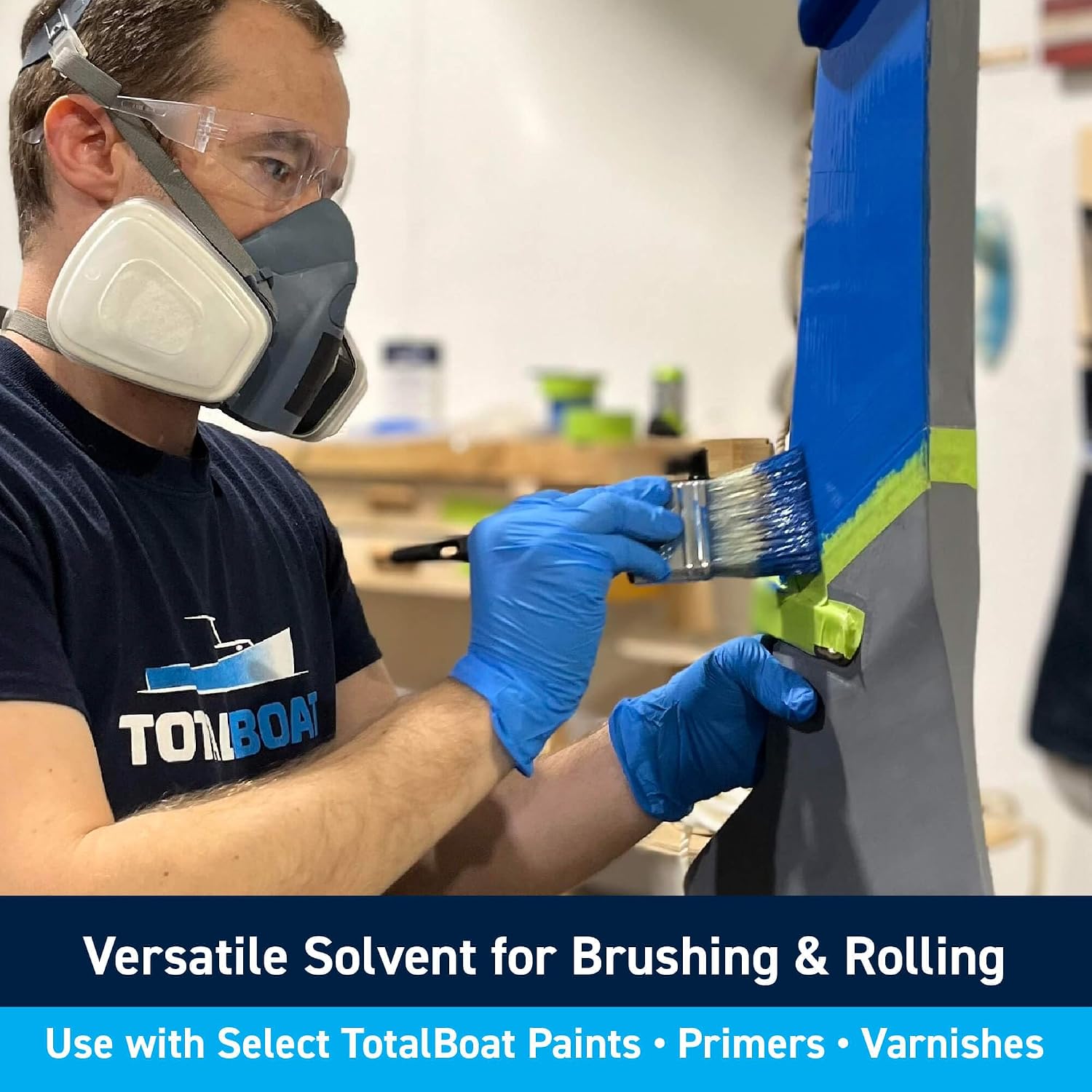
If you’ve ever watched a freshly brushed coat of topside paint — that’s the paint applied to the sides and deck of a boat above the waterline — sit on the hull looking streaky and brush-marked, only to dull down as it dries, you already understand the problem this article solves. Topside paints are formulated to cure hard and gloss up to a weather-resistant finish, but achieving spray-gun quality using a brush or roller requires more than just good technique. It requires understanding thinners (solvents added to reduce paint viscosity, or thickness, so it flows and levels before it sets) and additives (compounds that slow drying time, reduce surface tension, or aid flow). Used correctly, they’re the difference between a finish that looks like a competent DIY job and one that makes yard professionals ask what sprayer you used. This guide breaks down which products to use, exactly how to use them, and where the traps are — drawn from published manufacturer technical data sheets (TDS), owner consensus across aggregated review platforms, and coverage by Practical Sailor and Jamestown Distributors’ Boatbuilder Central editorial resources.
| EDITOR'S PICKTotalBoat Wet Edge Topside Mari… | Mid-tierRust-Oleum 396969 Marine Coatin… | Budget pickRust-Oleum 396958 Marine Coatin… | |
|---|---|---|---|
| Paint Type | Polyurethane | Primer | Enamel |
| Gloss | — | — | Gloss |
| Container Size | 32 Fl Oz | Quart | Quart |
| Color | White | White | Gloss Navy Blue |
| Material | — | Wood, Fiberglass | — |
| Use | Boats, RVs | — | — |
| Price | $45.89 | $43.65 | $23.83 |
| See on Amazon → | See on Amazon → | See on Amazon → |
Why “Flash” Is the Enemy of a Brush-and-Roll Finish
Before you can solve a problem, you need to name it. Flashing is the term painters use when a solvent evaporates out of a paint film so quickly that the surface skins over before the paint has time to level itself. On a hot fiberglass hull in direct sun — common conditions during a summer refit — flashing can happen in under two minutes after application. Once the surface skins, brush marks, roller stipple, and lap lines are locked in. No amount of re-rolling will fix it; you’re just dragging a wet brush across a surface that’s already beginning to cure.
The chemistry reason: most one-part polyurethane topsides (like TotalBoat Wet Edge or Rust-Oleum Marine Topside) and two-part linear polyurethanes (like Awlgrip or Interlux Perfection) rely on solvent evaporation as the first stage of film formation. The paint manufacturer calibrates the evaporation rate for ideal spray application — typically in a controlled environment at around 70°F. When you’re rolling a hull on a 85°F afternoon with a light breeze, you’re working outside those parameters entirely.
The fix is retarder or a brushing thinner: a slower-evaporating solvent system that extends the open time (the window before the surface skins) so the paint can self-level. TotalBoat’s published TDS for their Special Brushing Thinner specifically identifies its purpose as reducing flash rate during brush and roller application — and reviewers consistently confirm it. One owner reviewing TotalBoat Wet Edge noted that the paint’s self-leveling quality surprised them given their skepticism going in, and credited careful adherence to the mixing instructions, including thinner addition, as the reason the finish came out right.
Key rule: never substitute a faster thinner for a slower one. Using standard lacquer thinner or acetone to thin a topside paint because it’s what’s on the shelf will accelerate flashing, not reduce it. You need the manufacturer-recommended thinner, or a compatible retarder designed for that paint chemistry.
Matching Thinners to Paint Systems: What Works, What Doesn’t
This is where most intermediate refitters make expensive mistakes. Thinners are not interchangeable across paint systems. The solvent chemistry has to be compatible with the resin in the paint, or you risk fish-eye (surface tension craters), blushing (a milky haze from moisture contamination), or adhesion failure.
TotalBoat Wet Edge and the Special Brushing Thinner
TotalBoat Wet Edge is a one-part alkyd-urethane (a hybrid resin combining alkyd oil chemistry with urethane durability). Per TotalBoat’s published TDS, the recommended thinner for brush and roller application is their Special Brushing Thinner, added at up to 10% by volume. For straight brush application, owners report that 5–8% is the sweet spot in warm conditions. For foam roller application, 8–10% is more commonly cited, since roller application lays down a thicker initial film that needs more time to level out before skinning.
Do not exceed 10%. Over-thinning drops the solids content — the actual paint pigment and resin — below the threshold needed for good hiding and build per coat. You end up needing more coats to achieve the same film thickness, which defeats the purpose.
Rust-Oleum Marine Topside: A Different Animal
Rust-Oleum Marine Topside is an alkyd enamel — no urethane component — which means it has a fundamentally different cure mechanism and solvent tolerance. Per the Rust-Oleum Marine Coatings TDS, the recommended reducer is VM&P Naphtha or mineral spirits for cleanup, with thinning at 10–15% for application. Reviewers note it covers differently than polyurethane products — it’s a bit more forgiving on lap lines but doesn’t achieve the same depth of gloss without meticulous technique.
Critical point: TotalBoat’s Special Brushing Thinner is formulated for alkyd-urethane chemistry. It is not validated for use with Rust-Oleum’s enamel system. Mixing them risks compatibility issues including poor adhesion and surface defects. West Marine’s Inspiration editorial content on painting topsides echoes this: always stay within the paint system’s recommended solvent family.
Two-Part Systems (Awlgrip, Interlux Perfection, Pettit Flagship)
Two-part linear polyurethanes are their own category. They cure by chemical crosslinking — a reaction between the base and the activator — not primarily by solvent evaporation. This means you have even less margin to introduce the wrong chemistry. Awlgrip’s published application guide specifies T0006 Brushing Reducer for brush and roll application, explicitly different from their spray reducer. Interlux Perfection specifies 2333N Brushing Thinner. These are not interchangeable. Jamestown Distributors’ Boatbuilder Central application guides for two-part paints are explicit on this point: using a spray reducer in a roll-and-tip application dramatically shortens pot life and open time to unusable levels.
The Roll-and-Tip Method: Numbers That Actually Matter
Roll-and-tip is the standard professional technique for brush-and-roller topside work: one person rolls a section with a foam roller, a second person immediately “tips” — lightly dragging a dry brush across the wet surface to break roller stipple and encourage leveling. The timing is everything.
By the numbers — roll-and-tip working parameters:
| Variable | Target Range | Why It Matters |
|---|---|---|
| Air temperature | 60–80°F | Below 50°F, cure stalls; above 85°F, flash accelerates |
| Relative humidity | Below 65% | High humidity traps moisture in film, causing blushing |
| Section width per pass | 18–24 inches | Keeps wet edge live for tipping |
| Time between roll and tip | Under 60 seconds | Surface must still be wet enough to level |
Practical Sailor’s coverage of topside paint rollout evaluations consistently identifies section width management as the most common failure point for solo applicators attempting roll-and-tip without a partner — the rolled section flashes before the applicator can circle back to tip it.
Cratering, Fish-Eye, and Surface Prep Chemistry
One of the most instructive patterns in aggregated reviewer feedback on topside paints is how often surface defects — cratering (small circular depressions in the cured film), fish-eye (larger surface tension failures), and pinholes — are blamed on the paint when the actual cause is substrate contamination.
Cratering typically occurs when silicone, oil, or wax contamination on the substrate creates localized surface tension differentials that the wet paint film can’t bridge. One reviewer of a Rust-Oleum topcoat product reported cratering issues that resolved completely when they switched to proper priming — in that case, Stix primer under tile work — suggesting the issue was substrate chemistry, not paint quality. The pattern holds broadly: per published marine coatings guidance from both West Marine’s editorial content and Jamestown’s Boatbuilder Central, a single contamination event (touching the hull after applying hand lotion, for example) can seed cratering across an entire wet panel.
The solution is sequential:
- Wash with a detergent wash (Joy or equivalent) to remove biological contamination
- Solvent wipe with the paint system’s recommended reducer to remove wax and oil
- Sand with appropriate grit (typically 80–120 for primer coats, 220 for final primer before topcoat)
- Solvent wipe again immediately before paint application — do not touch the surface with bare hands afterward
On primer coats: the reviewer who sanded for two weeks and applied two full primer coats before topcoating reported results “beyond expectations.” That’s not incidental. Each primer coat fills micro-scratches, builds a uniform base for the topcoat to adhere to, and isolates the topcoat film from substrate surface energy variations. For fiberglass in anything other than perfect original condition, two coats of primer is the floor, not the ceiling.
Frequently Asked Questions
How much should I thin TotalBoat Wet Edge for brush application vs. roller application?
Per TotalBoat’s published TDS, the recommended range is up to 10% by volume of Special Brushing Thinner. In practice, owners applying by brush report 5–8% works well in temperatures between 65–80°F. Roller application — which deposits a thicker initial film — benefits from 8–10% to give the paint adequate open time to level before the foam roller stipple locks in. In high heat (above 80°F), go to the higher end of that range regardless of application method.
Can I use TotalBoat Brushing Thinner 100 with Rust-Oleum Marine Topside enamel, or only with TotalBoat products?
Stick with TotalBoat’s thinner for TotalBoat products only. Rust-Oleum Marine Topside is an alkyd enamel — a chemically different resin system — and TotalBoat’s thinner is optimized for alkyd-urethane chemistry. Using an incompatible thinner risks adhesion failure, poor leveling, and surface defects. For Rust-Oleum’s topside enamel, the manufacturer’s TDS recommends VM&P Naphtha or mineral spirits for thinning.
How do I avoid cratering or fish-eye when rolling topside paint?
Cratering and fish-eye are almost always surface contamination issues, not paint failures. Silicone, wax, and skin oils are the primary culprits. Solvent-wipe the entire surface with the paint system’s recommended reducer immediately before application, and avoid touching the surface with bare hands afterward. If cratering persists, sand back the affected area, re-prime, and re-solvent-wipe before topcoating.
How many coats of primer do I actually need before topside paint on a fiberglass boat?
Two coats of primer is the practical minimum on fiberglass that has been sanded, repaired, or stripped. One coat can leave micro-scratches and surface energy variations that telegraph through the topcoat as texture. Three coats is appropriate if the hull has significant repairs or if you’re chasing a high-gloss finish on a hull with a history of blistering or gelcoat crazing. Each coat should be sanded lightly with 220-grit before the next to ensure inter-coat adhesion.
What roller nap thickness works best for a high-gloss polyurethane finish?
Published guidance from multiple marine paint manufacturers, echoed by Jamestown Distributors’ Boatbuilder Central application resources, consistently specifies a 1/8-inch or 3/16-inch nap foam roller for high-gloss topside work. Thicker nap (1/4-inch or more) deposits too much texture and creates stipple that’s difficult to tip out. Woven rollers are not appropriate for gloss topcoats — they introduce fibers and excessive texture. Use a solvent-resistant foam sleeve rated for the paint system you’re using; standard latex-paint foam rollers can dissolve in strong solvent systems and contaminate the paint film.
The Decision Rule
If you’re choosing between paint systems and application strategies, here’s the clean frame:
- If you’re using TotalBoat Wet Edge in warm conditions (above 75°F): use Special Brushing Thinner at 8–10%, work in 18-inch sections, and find a tipping partner.
- If you’re using Rust-Oleum Marine Topside: thin with mineral spirits per the TDS, adjust your technique expectations (this is an enamel, not a urethane — gloss ceiling is lower), and plan for an extra coat to compensate for lower build per pass.
- If you’re stepping up to two-part linear polyurethanes (Awlgrip, Interlux Perfection): use only the manufacturer’s designated brushing reducer, not the spray reducer, and do not attempt brush-and-roll in direct sun above 80°F without a retarder additive.
In every case: two coats of primer, a proper solvent wipe immediately before topcoating, and a foam roller at 1/8-inch nap. The finish quality is cumulative — it’s earned at every layer, not rescued at the final coat.